Like with most overconfident leaders, reality is difficult to swallow, especially when it stares in the face. This is precisely what is happening to Donald Trump, the US President, who thought that his theatrics, tantrums, tariffs, and trade wars would bring the Chinese economy down to its knees. He felt America could once again emerge as the undisputed hegemon in the Asia Pacific region, and the rest of the world, not just militarily but in economic terms. He probably had an inkling, which may partially explain his decision to agree to a temporary truce with the Chinese counterpart, Xi Jinping.
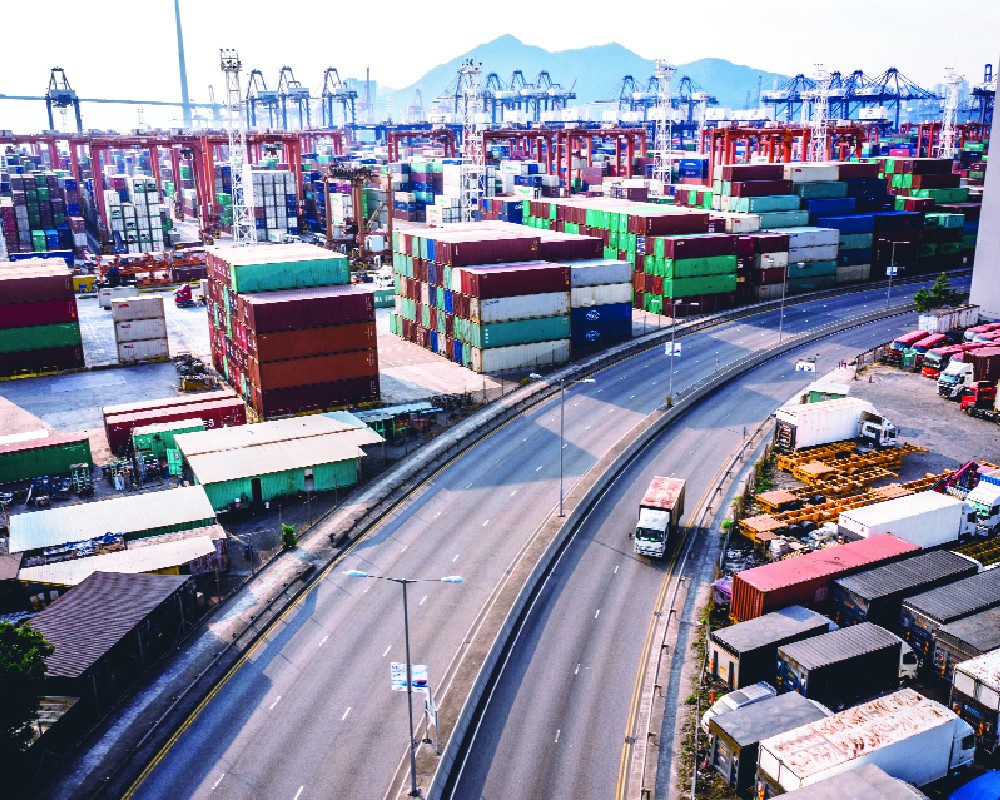
However, the latest China’s trade data proves that Red Dragon is winning the trade war against Uncle Sam. In the first 11 months of 2025, China created a historic record, and generated a trade surplus of more than $1 trillion. Let us put this number in perspective. The figure is 2.5 times India’s nominal GDP in dollar terms. It is almost 30 times the GDP of Pakistan. This is the nature of success against all odds, and it has deep lessons for India.
If one considers the monthly numbers, the trade surplus in November 2025 was more than $100 billion, or the highest since June 2025, and higher than the $90 billion in October. Yes, China’s exports to the US fell by 25 per cent in October 2025, and close to 29 per cent in November. These were huge blows since America is, and was, one of the largest and most promising markets for Chinese products over the past few decades. But, on an overall basis, Chinese exports grew by 5.9 per cent in November, thanks to higher non-US shipments, after a more than one per cent decline in October.
This is indeed a phenomenal achievement. No country in the world, no global economy has ever achieved it in history. To do it despite lower exports to the US implies, maybe proves, that China has clearly and decisively won the trade war. Trump can huff and puff. He can threaten more action, despite the so-called trade truce. He can yell and scream some more. But China has demonstrated that even the most powerful nation cannot beat the Red Dragon in a trade war. You can dub this as famous or infamous depending on ideology.
What are the reasons for Trump’s failure to contain China economically via excessively high tariffs? One, unlike India and other nations, China had prepared for this situation, and scenario for a long time. Most nations were blindsided during Trump’s second term, and his ever-increasing, and ever-changing trade-tariff threats. Even allies like Europe, Japan, South Korea, and others felt the heat of the president’s anger and actions. These nations capitulated because they were very dependent on the US for military and economic support. In different ways, they quietly surrendered.
Not China, which refused to blink. Since Trump took oath for the second time, it launched a strategy to diversify the export basket. The results are clear. Exports to the European Union, which is a counter to the American market, increased by 15 per cent. There were similar spectacular increases in shipments to Latin America, despite Brazil’s opposition, Southeast Asia, and Africa. Even with a partner-adversary nation like India, the bilateral trade went up to $115 billion, and India stares at a trade deficit of more than $100 billion. Clearly, China knew what it was doing.
Two, the Chinese economy is too strong for any nation to bully it. There are more than 150 economies in the world, whose largest trading partner is China. Thus, any attempts to stall, stop, or dissuade these nations from dealing, negotiating, and trading intensively with China, are bound to fail. China offers cheap, competitive, and good quality products, something that the US cannot do. Chinese trade partners realise that the Red Dagon’s manufacturing juggernaut will benefit them. Despite the American fears, they negotiated decent, though defeatist, trade terms with the US, even as they enhanced the links with China.
The third reason for Trump’s failure is perhaps the president’s ill-conceived notions that his opinions can sway the world. Perhaps, if he really wanted to contain Chinese manufacturing, he could have focused on creating a practical China+1 consensus among the nations. Instead, he hectored, threatened, and got angry with the allies. Nations such as Vietnam, India, and Malaysia, which could have emerged as potential counters to China’s manufacturing, were antagonized by the theatrics, arrogance, and tantrums of Trump. The US president can still turn things around, but it will take more time, more effort, and better negotiations to create a consensus.
Of course, one needs to watch whether the November trade performance is sustainable, and carries momentum. This is because China’s exports were more than two percentage points higher than a poll survey among experts by a news agency. Similarly, imports were lower than predicted. This pushed up the monthly trade surplus, and resulted in the over $1 trillion figure in the first 11 months. Thanks to America’s inability to ink bilateral trade deals, some nations like India were forced to buy more from China in the recent past.
However, one can safely assume that China has decisively won this round of the trade wars and, even in the future, there is not much that Trump can do. Indeed, by recently meeting Xi at a summit in South Korea, the US president gave the indication that he is no longer able to absorb the economic and political costs of the trade wars with several nations, especially China. For India, it is a sobering wake-up call that manufacturing needs to be a priority. If the economy does not produce globally-competitive world class products, and in volumes, it is likely to be in trouble, sooner or later.
Let us take a few lessons from the China example. Even today, Chinese experts, quoted in the western media, contend that the trade surplus will not come down, but widen in the next year. Exports were “likely to remain resilient” due to three reasons. First, China has re-routed products to increase its share in other nations and regions. Second, it offers more attractive prices to non-US buyers, including America’s allies. Finally, deflation has pulled down the currency’s real effective exchange rate. Still, the growing surplus may result in a backlash. Already, France has threatened higher tariffs if the bilateral surplus is not balanced.
The author has worked for leading media houses, authored two books, and is now Executive Director, C Voter Foundation; views are personal