Beyond the headlines and noise, momentous and tectonic shifts are taking place in the global order, particularly in the global financial ecosystem. Even as the US President Donald Trump thumps his chest, and his aides threaten allies, the world is quietly beginning to contemplate an environment where the dollar will remain the dominant currency but no longer be the invincible behemoth.
The more the MAGA (Make America Great Again) “patriots” threaten to sanction countries, and cut off cheap access to the US market, the faster the world will start looking for currency and market alternatives. This will accentuate the ongoing shift away from the dollar, which too took some time to concretise and develop. For more than a decade, different nations, for varying mixes of reasons, sought to counter the sole superpower status of the United States. The erosion happened surely, but gradually, in different forms.
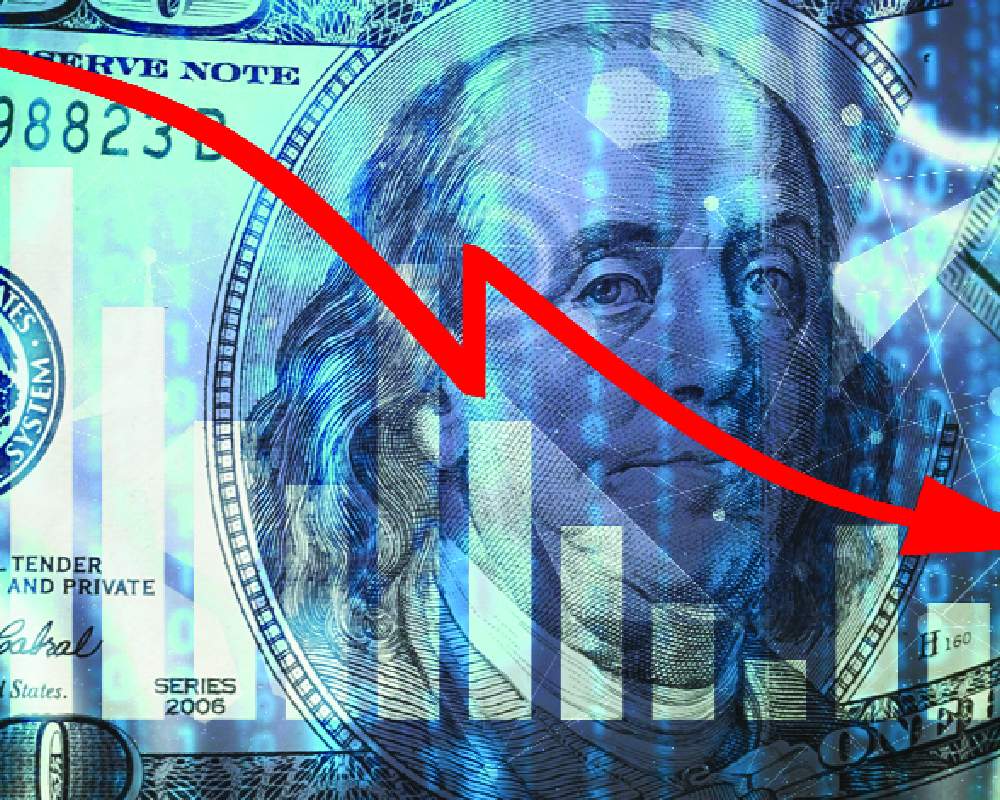
For instance, the share of the US dollar held by the major economies of the world, as part of the respective foreign exchange reserves, was 66 per cent a decade ago. In 2025, it dropped to 58 per cent, or a decline of a substantial eight per cent. The reason is clear: central banks of the major economies did not buy state-backed Treasury Bills (T-Bills) issued by the US as readily as they had done in the past. In 2015, a third of the US -issued T-Bills were held by these central banks. By 2025, the figure had dropped to
25 per cent.
Simultaneously, for a decade, especially after the pandemic, major economies bet big on gold as a possible safe-haven alternative to bonds. Take India and China. A decade ago, gold as a share of the foreign exchange reserves of the two nations was six per cent, and 1.7 per cent, respectively. By 2025, the figures jumped to 6.7 per cent for China, and more than 13 per cent for India. The same pattern was witnessed among the other economies, including Poland, whose central bank was one of the main buyers of the yellow metal.
The US continues to be reckless and profligate in its spending. Annual deficits of $2 trillion no longer cause dismay or shock among the policy makers. From $18 trillion a decade ago, the country’s public debt doubled to $36 trillion. As deficits continue to spiral, the debt keeps mounting. The annual interest payments to service the gargantuan and still-growing debt was $882 billion in 2024. The trillion-dollar payment milestone is not far off.
After Trump’s “Big, Beautiful Budget Bill,” which was passed by the Congress, the nation indicated that it had no inclination or desire to curb and clip its fiscal profligacy. Discerning analysts understand why the US president is publicly upset with the Federal Reserve for not cutting interest rates. A cut would not only send positive signals about the US economy, but reduce the country’s interest payments by tens of billions of dollars every month.
Recently, Trump’s move to sack the Federal Reserve’s governor, Lisa Cook, was stalled by the courts. But it is only a matter of time before a new chief replaces her. Cook is a member of the board that sets the interest rates, and will decide its next move on September 17. A federal judge remarked, “President Trump has not identified anything related to Cook’s conduct or job performance as a board member that would indicate she is harming the board or the public interest by executing her duties unfaithfully or ineffectively.”
The big question is: If more central banks move to gold, switch to trading in other currencies, as the BRICS members aim to do, and reduce their share of the US T-Bills holdings, who will buy the American bonds to fund the American profligacy? More importantly, as this trend has accentuated in the recent past, who has funded the purchases? The domestic institutional investors, including the mutual funds, it seems. They have purchased a lot of bonds, especially since the Russian invasion of Ukraine as the US investors withdrew from several emerging markets.
But herein lies the biggest potential threat and danger. When you are consistently profligate and reckless, the day of reckoning is inevitable. There is nothing to suggest that another financial meltdown, like the Financial Crisis of 2008, or the Great Recession, is not possible. What if such a situation recurs in the future? Remember that the world was a far more benign and far less hostile and polarised place in 2008. Even Russia and China cooperated with the western developed economies to save the global financial system.
Today, this level of trust has eroded, and expecting such a level of cooperation will be foolish, given the extent of actual sanctions by Europe and the US, and repeated threats of more sanctions, against Russia and China. It would be naïve to expect the latter two to side with the US and its allies in the event of another meltdown. In fact, the scenario will offer opportunities to Moscow and Beijing to retaliate, and further scuttle the US’ dominance.
Ponder on this question: When the next global financial crisis happens, who will save and rescue America, and buy the T-Bills? Even if the crisis is staved off, the process started by several central banks to wean their economies away from the dollar, will continue unabated. It will be slower, but there is no stopping it. The fact remains that the global economic order is changing remorselessly, whatever Trump may say, and his supporters may elaborate, and whether the US likes it or not. Nations are regrouping and morphing into newer multilateral, regional and bilateral blocs. Many are adopting and adapting to active non-aligned positions, where they can be friends with both the US and Russia, or the US and China, and yet forge links among themselves to counter the two.