Donald Trump has had a running feud with the Federal Reserve Chairman, Jerome Powell, for months. But he could learn a lesson or two from another leader, Recep Erdogan of Turkey. The US president would realise the consequences of toying with the country’s federal bank, and using the latter as a house pet. But then, for him, the implications do not matter. In fact, the results are bent as per his will, at least in the court of the masses, even if the facts are wrong.
After six months of temper tantrums and threats to sack the Fed Chair (Trump does not have the executive authority to do so), the US Fed cut base interest rates by 25 basis points, even as the US economy showed signs of higher-then-targeted inflation and unemployment. Trump, of course, is still unhappy as he wanted deeper cuts at a faster pace to Make America Great Again.
As the Erdogan and Turkey example illustrates, America is perhaps fortunate that Trump does not wield untrammelled authoritarian power the way Erdogan does. In 2018, the latter appointed his son-in-law, Berat Albayrak, as the Treasury and Finance minister. The chairman of the federal bank was Murat Uysal. A feud ensued between the political leaders and central banker over interest rates.
Uysal was reluctant to cut rates because of a depreciating Lira (Turkish currency) and rising inflation. Between 2008 and 2018, the Lira feel 400 per cent against the US dollar. The Erdogan-Albayrak duo was adamant. In 2018, Erdogan, like Trump now, publicly berated the Fed and said, “High interest rates are the mother and father of all evils… the central bank cannot set this independence, and set aside signals given by the president.” The Fed refused to comply, and raised the rates even further.
Fed up with the “intransigence,” Erdogan sacked Uysal. In the political outrage that followed, his son-in-law resigned. The next central bank head was fired within a year as Erdogan did not get what he wished. What happened to the Turkish economy? The Lira fell another 30 per cent, and inflation rose beyond 20 per cent in 2021. By 2022, peak inflation rate was an unbelievable 84 per cent. Luckily for Turkey, sanity prevailed. Erdogan decided to listen to the bankers and experts. Still, due to the leader’s reckless behaviour, Turkey reported an inflation of 32 per cent in 2025.
In the US, Powell’s tenure is till March 2026, unless he chooses voluntarily to resign, or is caught in a earth shaking scandal. For all his tantrums, there is nothing much that Trump can do. As stated earlier, this is perhaps good for the US as Trump and his MAGA minions are quite capable of wrecking the economy with their maverick ways. Trump has severely disrupted global supply chains by an inexplicable policy of imposing, withdrawing, reimposing and raising tariffs. Only the naïve would think that these disruptions would not harm the US economy or the consumers.
Possibly, the US president needs to realise that instead of tussles between politicians and central bankers, it is wiser to negotiate, listen to sober, conservative advices, and come to acceptable agreements. A case in point is Xavier Milei, who campaigned on a radical free-market agenda, and became the president of Argentina. Apart from promising to dismantle ministries and departments, lock stock and barrel (a precursor to the DOGE in the US), he threatened to dismantle and shut down the central bank.
Wiser counsel prevailed, and Milei picked up a conservative economist, Santiago Bausilli, as the central bank head. Milei did slash and dismantle the Argentina bureaucracy. But working in tandem with Bausilli, he steadied the economy. In 2023, when Milei was elected, inflation ran at 215 per cent. Now, it is down to 30 per cent. From being almost in ruins, the economy recovered smartly, and reported a healthy GDP growth rate of 5.5 per cent in 2024-25.
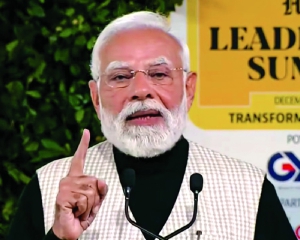
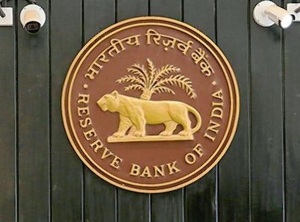
Differences and disagreements between central bankers and the political leadership is common in large countries. India is not immune to it. There is enough information to suggest that Raghuram Rajan, the governor of the Reserve Bank of India (RBI) was not in sync with the demonetisation decision taken by Prime Minister Narendra Modi. There were many disagreements and disputes with Finance Minister Arun Jaitley. At the end of his three-year tenure, it was evident that Rajan future as the RBI head was sealed.
His replacement was a low-profile and low-key personality, Urijit Patel, who was the deputy governor of RBI. For a while, it appeared as if the fights between the finance ministry and RBI were dissipated. Yet, suddenly, in December 2018, Patel resigned. The ostensible reason: Finance ministry wanted the central bank to transfer a huge amount of “surplus” reserves to the Exchequer.
When a record Rs 1.75 lakh crore was transferred, Patel resigned. There was criticism of the regime, as some claimed that the decision would run the economy to the ground. The country was struggling with a less-than-smooth implementation of the Goods and Services Tax regime. But India was fortunate. The late Jaitley, and his successor, Nirmala Sitharaman, consistently followed sensible fiscal policies, and did not succumb to profligacy, even in the aftermath of Covid when other major economies recorded huge deficits. India remains the fastest-growing major economy with moderate inflation. Besides, Patel is now the regime’s appointee to the IMF.
In countries like China, where the control of the Communist Party and Xi Jinping is absolute, the central bank does toe the line of the political masters. But unlike the US and Turkey, and like India, China adopted prudent policies, and cushioned the systemic shocks the economy periodically faced since Covid. In Japan, central banks and politicians have traditionally worked in tandem.
Post Script: Sometimes, the heads of central banks end up at the top of the political heap. When I was in college, some currency notes bore the signature of the then RBI governor, Manmohan Singh, who later became a finance minister. Two decades later, he was India’s prime minister, albeit an accidental one. The story of Mark Carney is fascinating. He was an investment banker, who became the governor of Bank of Canada. Then, between 2012 and 2022, he served as the governor of the Bank of England. Later, when a disgraced and unpopular Justin Trudeau was forced to resign as the prime minister of Canada, Carney was the surprise replacement. He led his party to a handsome electoral win despite 11 years of anti-incumbency. Ironically, Canada is the worst performing G-7 economy.