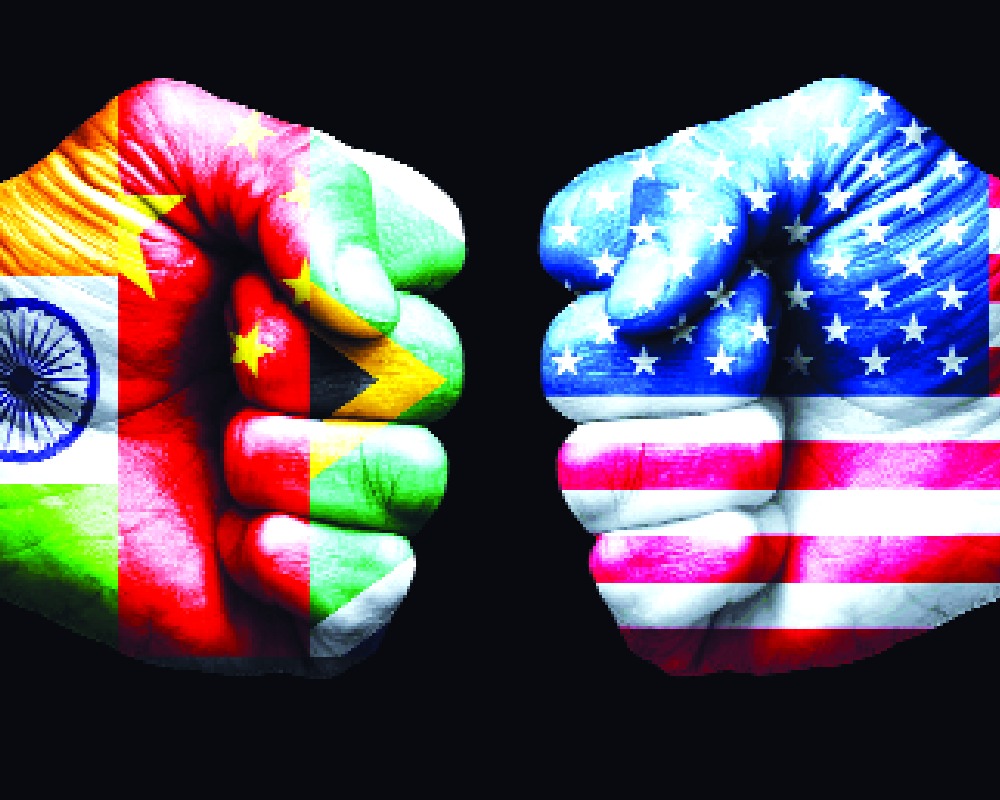
Gold’s global demand in the recent past is dictated by global disruptions due to America’s trade and tariff postures. This common perception is partially correct. One of the major reasons for the surging interest in the yellow metal is related to the dollar, and more specifically to BRICS. Next year, the global alliance between the five original members, Brazil, Russia, India, China, and South Africa, apart from several others who joined later, hopes to launch its own currency. According to currency experts, this may dilute the importance of the dollar, which has lost ground over the past few years. The next safest investment for nations, their central banks, and global institutional investors is, of course, gold. Even in America, investors on Wall Street have decided to take cues from the decisions of the Main Streets across the globe, and stack up the bullion.
Over the past few years, global central banks have emerged as the major buyers of gold. Some nations like Poland, and China (whose buying is partly shrouded) have accumulated large quantities. Even India is a major purchaser. Its official gold reserves have shot up from just above 500 tonnes to almost 900 tonnes within a decade. In the past three years, large and powerful financial institutions across the world have gobbled up 1,300 tonnes. Gold prices have shot through the roof to over $4,000 an ounce. In India, the price is almost `1,25,000 per 10 grams, which is two-and-half times the price in December 2021. Since August 2024, the increase seems unstoppable. In India, it is up by more than `50,000 in 14 months. After three years of outflows, last year marked the first time when the balances in America’s gold exchange-traded funds remained stable.
BRICS’ currency is expected to undermine the dollar as the world’s most preferred investment, and further boost the demand for gold. This is essentially because of three reasons. The dollar is no longer a preferred safe-haven for investors and central bankers. Since the end of World War II, the dollar has reigned supreme. Every nation, and investor kept a part of its investments in dollar assets. However, in the past two decades, dollar-based assets as a part of nations’ reserves slumped by 12 per cent to under 60 per cent. They are still substantial, but indicate an alarming trend. The foreign ownership of American debt, which indicated the love for the dollar, is the lowest in the past few decades. Recently, thanks to the American tariff twists, there are growing national and local demands to weave away from the dollar, and teach America a lesson. Sanctions on Russia and Iran have forced them to discard the globally-dominant currency.
Second, the bulk of the trade, which was designated in dollars, i.e., nations wanted to be paid in the currency, is shifting to local currencies for geopolitical, political, and economic reasons. Europe started the trend decades ago, when it wished to establish the influence of the Euro as a combined trading entity. This did not work. China entered the currency game, and initiated efforts to make Yuan a strong trading currency, and succeeded to an extent. Since the Ukraine war, imposition of sanctions, and freeze on dollar assets in the West, Russia has had no options but to deal in the bilateral partner’s currency. The same is the case with Iran, and several other nations. Now, BRICS has decided to do the same. Its currency will enable the members to bypass the dollar. At present, half of the trade volumes between the BRICS nations are not transacted in dollars.
Finally, there is no currency to match the prowess of the dollar. Thus, if the dollar loses its importance, there is no alternative to take its position. While BRICS may deal in its currency, Europe in Euro, China in Yuan with favoured nations, and Russia in the partner’s currency for bilateral trade, the cumulative expanse of each can never match the dollar, even at its current level. Minus a currency that is easily acceptable and tradeable between nations, the best recourse is the age-old gold. For centuries, it never lost its lustre. For decades, even after the death of the Gold Standard, it retained its shine, at least among the central bankers. Apart from the nations, institutions and individuals never gave up on gold, although the savvy investors shifted to equities and derivatives for better returns. But as risks increase, and the dollar declines, gold emerges as the safe option, at least till there is stability among currencies. As nations churn the portfolios of their foreign exchange reserves, and decide what is required, gold will offer an interim solution.
According to a recent article, “Understanding how the BRICS currency works, and its implications for dollar dominance explains why Wall Street’s 1,300+ tonnes of gold purchases signal a fundamental shift in global monetary power. The reaction to BRICS currency de-dollarisation on Wall Street has been swift, and the trend towards buying gold shows no signs of slowing down as 2026 approaches.” Like the pandemic, which forced investors and central banks to quickly realign portfolios in favour of gold, the decline of the dollar will achieve similar results over a few years. Like it or not, the currency supremacy of the dollar is done, even if America remains one of the major superpowers in the multi-polar world.