aYet another Tata is fighting to retain and regain his stranglehold over the country’s largest business empire. Not too long ago, the late Ratan Tata fought tooth-and-nail in an open warfare to wrest back control. Today, Noel Tata, his half-brother, and heir, initiates another battle to prevent fellow-Parsis from snatching away Tata Sons, the holding company that owns most of the crown jewels, from him. In the case of Ratan, the trust with the late Cyrus Mistry, whom the former anointed as his heir, broke down. In Noel’s case, there seems to be little trust among the trustees of the two major Tata Trusts, which together own two-thirds of Tata Sons’ equity.
While what happens today among the trustees in a crucial meeting, ostensibly to decide philanthropic funding of Tata trusts, may seem like infighting between Parsis, Ratan’s heir, and his loyalists, there are several layers to the overall war. Like an onion that can be peeled several times, what is going on inside Tata Sons, and with Tata Trusts, signals a family twist, community imbalance, boardroom jostling, and clash of egos. As we mentioned earlier, it is about personalities, corporate cultures, trust among friends and loyalists, open and hidden rivalries, and a wee bit of greed. Insiders need to choose sides. Outsiders can wait and watch, and some can have fun.
Like in an onion, each layer is linked to the one above, and the one below and, hence, it is not east to peel each one separately. One of the layers relates to the tussle between Parsis and Parsis. When Ratan died, and anointed Noel as his successor, the Parsis, who form majority of the trustees in the two main Tata Trusts, quickly ganged up to elevate Noel, and prevent any succession battle, or pressures from outsiders, who have remained Ratan’s loyalists for years. Slowly, the relationships soured for several reasons. Some of the Parsis saw Noel as a threat to their power and influence.
One of the reasons was that Noel appointed his three children, Leah, Maya, and Neville on the boards of several smaller Tata trusts. The non-Tata Parsis felt that this was a prelude to their induction in the two major trusts, which would give Noel a majority and upper-hand to run the trusts, as well as Tata Sons. Led by Mehli Mistry, a cousin of the late Cyrus Mistry, who supported Ratan during his public spat with Cyrus years ago, the Parsis decided to show their hands. They began to disagree with Noel on several matters. More importantly, Mehli saw himself as the true torchbearer of Ratan’s legacy, rather than Noel, who was invariably given a short shrift by Ratan.
The Parsi trustees were unhappy about Noel’s dependence on non-Parsis directors in Tata Trusts, and Tata Sons. The former thought that the old legacy of the Tata Group, which was rooted in Parsi culture, community, and relationships, was being ripped apart, as non-Parsis had a larger say in the operations, and future direction. Thus, they wanted to be firm about Tata Trusts’ appointments of independent directors on the board of Tata Sons. Remember, given the public separation of powers between the trusts and Tata Sons, though it does not exist in practice, the holding firm is managed by an outsider-technocrat, who was Ratan’s favourite. The Parsis were unable to digest this, and the bone stuck in their throats.
Noel, who was always underestimated by the Parsi community because of his lack of business successes, as was Ratan before he headed the Group in the early 1990s, wants to stamp his authority. Together with select technocrats in the trusts, and holding company, he wants to veer the group in a direction, which will establish his credibility and authority. In the future, to prevent undue interference from the Parsis, he wishes to introduce a clearcut succession plan so that his children become the automatic heirs. If he needs to fight the Parsis to achieve these objectives, so be it. Like Ratan stamped out the feudal technocrats from his group companies in the 1990s, Noel wants to sideline the trustees now rather than later.
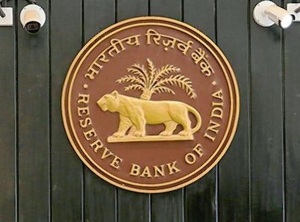
In the recent past, the Tata Sons’ chairman, N Chandrasekaran, initiated efforts to mend the relationship with the estranged Mistry family (minus Mehli), which was peeved ever since Ratan unceremoniously threw out Cyrus from the group. One of the main reasons for this is the Damocles’ Sword hanging over Tata Sons in the form of a directive from the Reserve Bank of India (RBI). The banking regulator wants the holding company to be listed on the exchanges. Tata Sons has resisted this, and Tata Trusts have opposed it categorically. Now, the deadline (September 30, 2025) to do the listing is gone. A rapprochement between Noel and Mistry family, which holds a sizable, though minority, stake in Tata Sons, can throw up a solution. If they join hands, the RBI may back off.
But this friendship, if it reemerges, is unpalatable to the Parsis. It will imply that Tata Sons buys off Mistry’s stake. It will result in a huge pay-off to the Mistry family, given the valuation of the Tata Empire. If the money comes out of Tata Sons’ coffers, or debt, it will undermine the dividends received by the trusts. If the consideration is in kind, i.e., shares in group companies, it will allow Cyrus’ family to be comfortably ensconced within the empire. This may turn out to be a future threat for the Parsis in the trusts. Or will it increase their powerbase, if Mehli shakes hands with his cousin’s family, and shifts sides? One is not sure how the corporate dynamics will play out in the future. Right now, the daggers are out, and the Parsis are up in arms against Tata-Parsis, and non-Tata outsiders.
At this point in time, there are open and bizarre accusations on both sides. The Noel side charges that it is a coup by the non-Tata Parsis, who wish to usurp power at Tata Trusts and, through it, exert control over Tata Sons, and the rest of the empire. The anti-Noel section wants to impose its desires on Tata Sons, and gain a majority within the boards of the Tata Trusts. The Parsis contend that it is a matter of corporate governance and Tata legacy. Noel is trying to run the group independently, along with his close confidantes. This was never the way it was managed during Ratan’s time. Hence, there is a need to act, and prevent the degeneration.