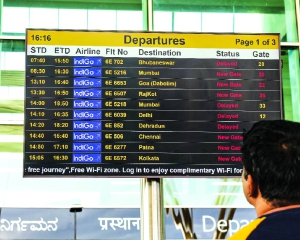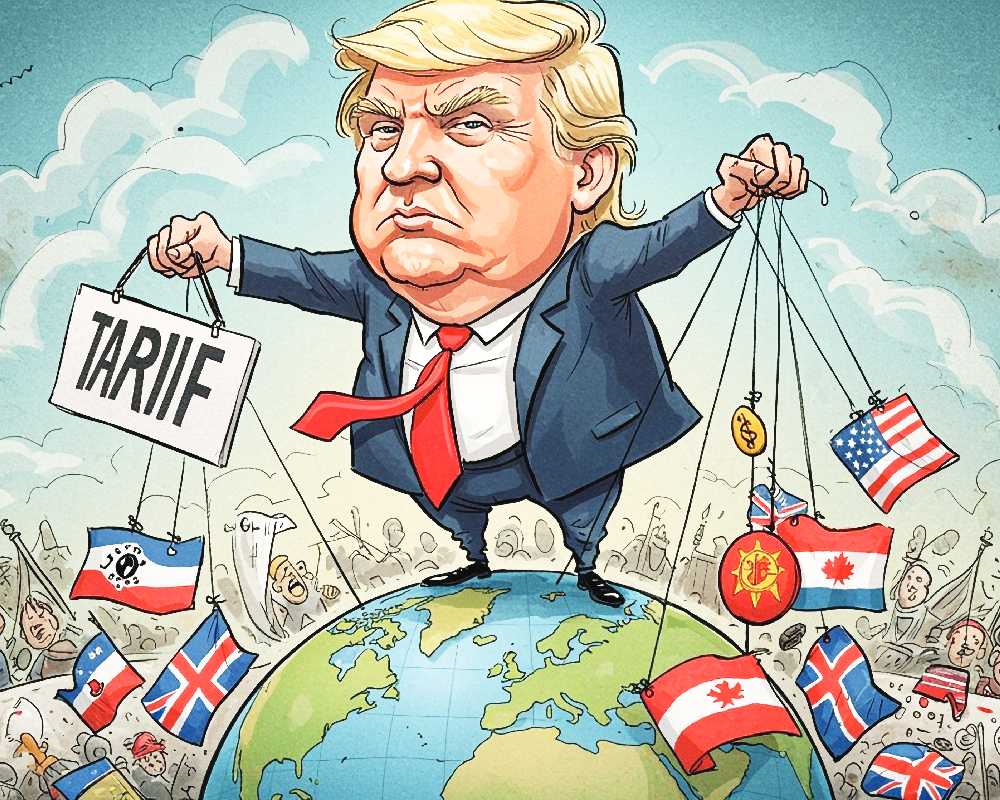
Donald Trump, US president is proving to be a major disruptor in the world economy in his second inning, which started in February 2025. Economists, Trade experts, geopolitical experts; and the common man, perhaps everybody is talking about the tariff tirade of President Trump. We know starting from April 2, 2025 President Trump imposed severely high tariffs, what he calls reciprocal tariffs on, on countries from all across the globe. The logic, these countries are imposing high tariffs, so he is also imposing tariffs in reciprocity. We understand that with high GDP, which is highest in the world, with almost no production in US, it happens to be the largest market in the world where almost every country has been exporting. China happens to be the largest exporter to US; and though India exports much less to USA, as compared to China, however, USA has been the top trading partner In India's fiscal year 2025 (FY25), India’s exports to the US were $86.5 billion, while imports were $45.3 billion, resulting in a goods trade surplus of $41 billion for India.
In FY25, India also had a services trade surplus with the US of approximately $3.2 billion, with exports of $28.7 billion and imports of $25.5 billion. This led to a total trade surplus for India of about $44.4 billion in FY25.
However, trade in goods and services may not give us complete picture. Some analyses suggest that when factoring in services like education (where Indian students spend billions annually), digital services, and royalties, the US could actually have a significant overall surplus with India.
If you look at the countries impacted by Trump’s tariffs, their response is not similar. There are some countries which have already arrived at a trade agreement with the USA, while there are others who are engaging with USA for an agreement at some future date and there are some countries Which have chosen to retaliate; and are not ready to budge before US even if it costs them a loss of US markets. India happens to be in the second category, which is engaging with US, but so far there is no agreement with US. China falls into the third category, which though initially had been engaging With US, but now is taking a retaliatory stand against US.
India’s Strategic & Policy Response
India has taken a calibrated and multi-pronged approach, balancing pressure, diplomacy, internal support, and reorientation.
While keeping its diplomatic and negotiating options open and signaling willingness to negotiate, resolve issues, and engage the US rather than immediately retaliate, it has tried to avoid escalatory trade war and preserved strategic relations. In this context India has shown flexibility, goodwill. India has even reduced tariffs on certain US goods (eg whiskey, motorcycles) to ease US pressure.
But at the same time India is pushing its exports (especially textiles) toward new markets, to reduce dependence on the US market. Though new markets may not match US scale or demand, it definitely will help in hedging risks arising out of US tariffs and possible loss of US market.
The government is considering or providing relief and support to exporters impacted. Though, in some quarters fear is being expressed that fiscal constraints may limit the scope of these reliefs, but we should not forget that one of the issues between US and india, is purchase of Russian oils, which is making India save more than one lakh crores of rupees; and if a fraction of this saving is used to provide relief to exporters getting impacted from US tariffs, India may still be a big gainer.
Though, reconciliatory approach, in some quarters may be seen as weakness, India’s positive approach has certainly helped in avoiding immediate tit-for-tat escalation. Indian leaders (eg Defence Minister Rajnath Singh) have said India did not react immediately to 50 per cent tariffs, citing “broad-mindedness and big-heartedness”. But, there is an understanding in intellectual circles that India’s approach is more mature, and is being appreciated accordingly; however prominent economists and voices have publicly criticised the US tariff policy, Gita Gopinath of IMF has even termed US approach as “negative scorecard.”
Disruptions by Trump’s Tariffs
First disruption by Trump’s tariffs is happening in USA itself. People in US have already started feeling the brunt of tariffs, as we know these tariffs are increasing the landed cost of the products being imported by US. Though, full fledged impact of Trump’s tariffs would be known in times to come, as the stock already in stores is being sold at the previous prices, and some shipments which were already underway, may also land, though at lower earlier prices, with higher tariffs, as most exporters from India and other countries have already negotiated with US buyers and therefore there will be a very little impact on prices for the time being. But later when full tariff would be imposed on all imports, impact on prices would be severe. There are many products, on which tariff is imposed, have to be imported, whatever the situation is. Higher tariffs on pharmaceutical products would raise the health cost. In any case US administration will not be able to compensate consumers, due to lack of resources. Even if Trump reduces direct taxes, it will benefit only the higher income groups; and people with low incomes or those who are living on governments dole, will bear the real brunt. Inflation in US is destined to raise interest rates, which may worsen this situation further for the US residents, as they will be forced to pay higher interest rates on the loans, raised previously, for housing and other household products. Tariffs are likely to impact the different sections in different degrees but for sure the people at the bottom of the pyramid will be impacted the most.
Second disruption is likely in US trade partner countries. Trade partner countries are trying to equip themselves to face this challenge. All countries, big or small, they are restructuring their production, taking into consideration, increase or decline in demand caused by US tariffs. Those who fall in lower tariffs category, may try to find opportunities of greater exports. Theoretically it is possible, but practically small countries of south east Asia which also include most ASEAN countries, understand it very well, that due to capacity constraints and their sheer size, hardly meet, the possible increase in demand from US. Economists suggest that tariffs generate revenue for the government, but at the cost of distortions in the economy — who ultimately bears the burden (consumers, firms, workers) becomes a political and distributional issue.
Some industries are much more exposed (steel, autos, high-tech, agriculture). Regions dependent on exports or imports are disproportionately harmed. In agriculture, US farmers have lost markets (eg China curtailing US soy purchases).
Thirdly, some economists fear that these tariffs will impact GDP and wages in US. A study by University of Pennsylvania (April 2025) concludes that reduce long-run GDP by about 6% and wages by 5 per cent. A middle-income household faces a $22K lifetime loss. These losses are twice as large as a revenue-equivalent corporate tax increase from 21 per cent to 36 per cent, an otherwise highly distorting taxes.
While many countries in the world understand that these tariffs will harm US more than others; and that MAGS is not working certainly, they are waiting for the real impact of these tariffs on USA economy to get clearer, especially GDP and wages. In this context India’s response to Trump’s tantrums is no less appropriate. While on the one hand Indian negotiators have clearly demonstrated that there are some issues, which are non-negotiable, what what we may call ‘red lines’. Final outcome in FTA talks are not in sight in near future. Rather, India has demonstrated its clear stand against the hegemony of US and unreasonable demands from US administration. Some of the responses of India. It’s worth understanding India’s response to Trump’s tariffs and the present set of disruptions.
Though, US administration seems to be overlooking the strategic importance of US India relationship, and making all types of statements, hurting cordial relations between two powers, which is being criticised, even in US, India, while protecting India’s interests, has been exercising utmost restraint in troubled India-US relations, which perhaps is considered to be a more judicious act.
The writer is National Co-Convener of the Swadeshi Jagran Manch