India is standing at a critical juncture in its climate trajectory, facing an alarming rise in extreme weather events that threaten both human lives and the nation’s ecological equilibrium. Over the past few years, cyclones, cloudbursts, and flash floods have not only grown in frequency but also in ferocity — marking a distinct shift in the country’s climatic rhythm. Once viewed as rare or seasonal occurrences, these disasters now form a near-continuous backdrop to India’s annual monsoon cycle, exposing its deep vulnerability to the evolving dynamics of climate change. Meteorological data show that the North Indian Ocean — which includes both the Bay of Bengal and the Arabian Sea — has experienced a steady increase in sea surface temperatures of 0.8°C to 1.2°C over the past century, with the Arabian Sea warming at nearly twice the global average in recent decades.
In recent times, Cyclone Biparjoy approached the Gujarat coast in 2023, necessitating the shifting of over 100,000 persons across Gujarat and Rajasthan. Later that year, Cyclone Mocha struck the Bay of Bengal, causing extensive flooding in Myanmar and Bangladesh; Cyclone Tej affected parts of the Arabian Sea coast; Cyclone Hamoon caused damage in Bangladesh; Cyclone Midhili impacted Odisha and West Bengal; and Cyclone Michung damaged coastal Andhra Pradesh and Tamil Nadu.
The following year, 2024, brought more devastating events. Cyclone Remal claimed over 33 lives across West Bengal, Mizoram, Assam, and Meghalaya, while Cyclone Fengal led to 19 fatalities in Tamil Nadu and Puducherry. The monsoon season triggered catastrophic events like the Wayanad landslides in Kerala, killing over 420 people. The Himalayan region too faced immense damage, with Himachal Pradesh enduring 51 cloudbursts and flash floods between June and August, resulting in 31 deaths and 33 missing persons, while deadly floods in Assam claimed more than a hundred lives.
The trend of extreme rainfall continued into 2025, particularly in the Himalayan region. Intense cloudbursts and flash floods hit Uttarkashi, devastating villages such as Dharali in Uttarakhand, Kishtwar in Jammu and Kashmir, and Sahastradhara in Dehradun. Cyclone Shakti unleashed heavy rains to cause floods in Maharashtra’s Marathwada region, a historically drought-prone area, highlighting how vulnerability is expanding across India’s diverse landscape.
The occurrence of extreme climatic events is related to the atmospheric transport of water vapour, metaphorically termed “flying rivers”, which causes a significant impact on regional hydrology, just like the terrestrial river systems. In the Indian subcontinent, two flying rivers are critical: one originates from the Arabian Sea and the other from the Bay of Bengal.
Cloudbursts typically occur when the warm, moist monsoon winds clash with colder air masses over the Himalayas, leading to the rapid formation of intense cumulonimbus clouds and thunderstorms. Strong updraughts trapping small raindrops allow a massive volume of water to accumulate. When these updraughts abruptly weaken, water precipitates all at once, resulting in a cloudburst. The torrential downpour in the rugged terrain and steep slopes with narrow valleys accelerates the flow and, with the land’s absorption capacity overwhelmed, devastating flash floods and debris flows follow.
The stability of flying rivers directly influences the health of India’s terrestrial hydrological systems and water security. Disruptions — such as shifts in their spread, timing, or intensity — have a cascading effect on ground rivers.
For a nation with a critical dependence on the monsoon, the interaction between these atmospheric moisture flows and the nation’s forest cover is exceptionally vital, representing a bidirectional dependence. The health and unique biodiversity of Indian forests are sustained by the flying rivers, and in turn, the forests themselves contribute to the sustenance of the regional hydrological cycle by influencing the formation, movement, and precipitation of atmospheric moisture.
Studies in tropical regions confirm that forests significantly influence precipitation by recycling a substantial portion of rainfall back into the atmosphere via evapotranspiration. Extensive forest covers modulate moisture circulation patterns by enhancing infiltration, reducing surface run-off, and promoting groundwater recharge, contributing to the stability of regional flying rivers.
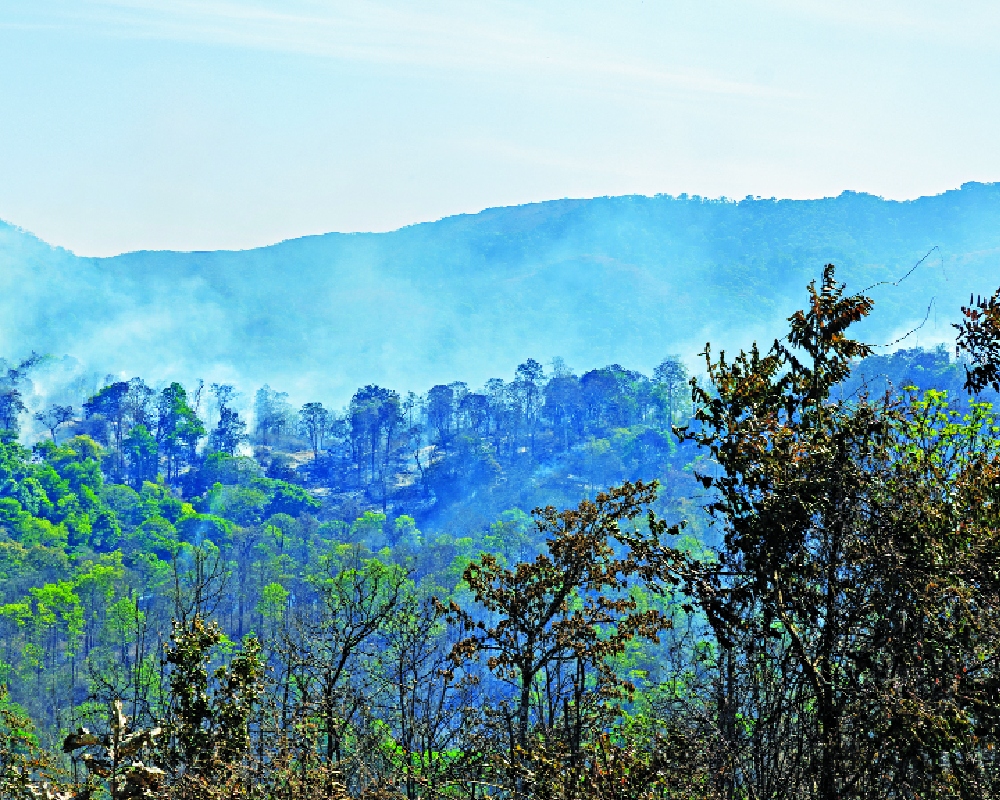
Deforestation and land-use change pose a significant threat to this crucial relationship. Altering forest cover can disrupt wind patterns, potentially changing the trajectory and intensity of the moisture-laden air masses. Specifically, forest degradation and the conversion of forests to agriculture or urban areas reduce evapotranspiration, thereby decreasing the amount of moisture recycled back into the atmosphere. Large-scale deforestation, particularly in critical regions like the Himalayas, Western Ghats, Central India, and the Northeast, risks altering the local and regional climate patterns — impacting monsoon onset, the number of rainy days, the duration of the rainy season, and the intensity of precipitation, thereby affecting the reliability of the flying rivers and the health of the agricultural economy. This vulnerability is further compounded by climate change, which can alter the dynamics of atmospheric moisture movements and increase the frequency of extreme weather events, placing additional stress on both the forests and the atmospheric moisture flows.
Heavy downpours escalate into disasters in India. The affected area spreads with river inundation and emergency dam discharge, leading to catastrophic losses in agriculture, widespread infrastructure failure, and the tragic loss of human and livestock life. Crucially, they are intensified by anthropogenic factors, including unplanned development, encroachments, deforestation (which accelerates erosion and landslides), and the obstruction of natural drainage systems. While immediate disaster management receives attention, there remains a significant policy gap so far as the prioritisation of addressing the deep-seated, human-driven root causes is concerned.
Recent studies reveal that India is grappling with a severe and intensifying pattern of extreme weather events. The Indian Institute of Tropical Meteorology in Pune has reported a 52 per cent increase in the frequency of Arabian Sea cyclones over the last four decades. Studies reveal a threefold rise in monsoon extremes between 1950 and 2023, and that seven of the ten deadliest floods in India from 1985 to 2020 were connected to the flying rivers.
Currently, an accurate prediction of extreme weather conditions is reported to be possible up to three days in advance, though fine-tuning the intensity and exact location remains a challenge. To effectively translate these forecasts into saving lives and property, India must urgently move beyond mere prediction to implement comprehensive early warning systems that integrate local factors like geography, demographics, and infrastructure with rapid communication and administrative response.
The ultimate goal must be the creation of hyperlocal climate action plans based on realistic risk assessments to achieve disaster-proofing in every city and district. One, however, cannot ignore the fact that forest conservation and restoration efforts are not only vital for biodiversity protection and carbon sequestration but are critically important for maintaining the health and stability of the flying rivers and the subcontinent’s ecological and economic well-being. The increase in the cases of encroachments of forests, forest land diversions for non-forestry purposes, and alarming indications by the Forest Survey of India’s State of Forest Reports regarding qualitative changes in forest areas must be taken seriously, and the restoration of forest ecosystems and watersheds prioritised.
Recognising the interconnectedness of flying rivers and forest conservation is a paradigm shift as it elevates the importance of large-scale, transboundary atmospheric phenomena in national water security and calls for framing nature-based strategies to address weather-related disasters. This necessitates the existence of a stronger forestry sector and an empowered National Disaster Management Authority for streamlined coordination across ministries, departments, between the Central and State governments, and even neighbouring countries; backed by a strong political will, financial commitment, and scientific expertise. By integrating this understanding into policy and practice, India can better prepare for the challenges of climate change and safeguard its ecological and economic future.
The writers are Former PCCFs of UP and Maharashtra