As the world marks the International Day for Disaster Risk Reduction on October 13, India faces a defining moment. Once-isolated natural events have become interconnected, human-driven crises. The need to shift from relief to prevention, from reaction to resilience, has never been more urgent
Each year on 13 October, the world observes the International Day for Disaster Risk Reduction, a global reminder that disasters are not mere acts of nature but reflections of human choices, planning, and preparedness. In 2025, this reminder is especially relevant for India, a country experiencing the brunt of escalating climate volatility. The recent monsoon season has underscored how unpredictable and destructive weather patterns have become, transforming natural events into prolonged humanitarian, economic, and governance crises.
The Changing Face of Disasters
From the towering Himalayas to the sprawling plains, India’s disaster map has shifted dramatically. Floods, cloudbursts, and landslides are now occurring with greater intensity and frequency, affecting both rural and urban landscapes. Cloudbursts that once struck isolated valleys now sweep through pilgrimage towns, disrupt highways, and paralyse modern cities. In the Himalayan states, once thought of as remote and sparsely populated, intense rainfall events have become almost seasonal. Himachal Pradesh and Uttarakhand have emerged as epicentres of recurring devastation. Meanwhile, Punjab — the heart of India’s agrarian economy — has endured vast floods that submerged fertile fields and shattered rural livelihoods. Even cities like Chandigarh and Ludhiana, designed for order and resilience, have faced crippling urban flooding, exposing the limits of outdated infrastructure. These patterns point to a sobering truth: India’s risk landscape is evolving faster than its systems can adapt.
The Rising Human Costs
The cost of this transformation is visible in lives lost and communities uprooted. In Himachal Pradesh, the 2025 monsoon inflicted massive destruction — hundreds of fatalities, washed-out bridges, destroyed homes, and economic losses running into thousands of crores. Between 2018 and 2025, the state recorded hundreds of extreme weather incidents, reflecting not anomalies but a new climatic norm.
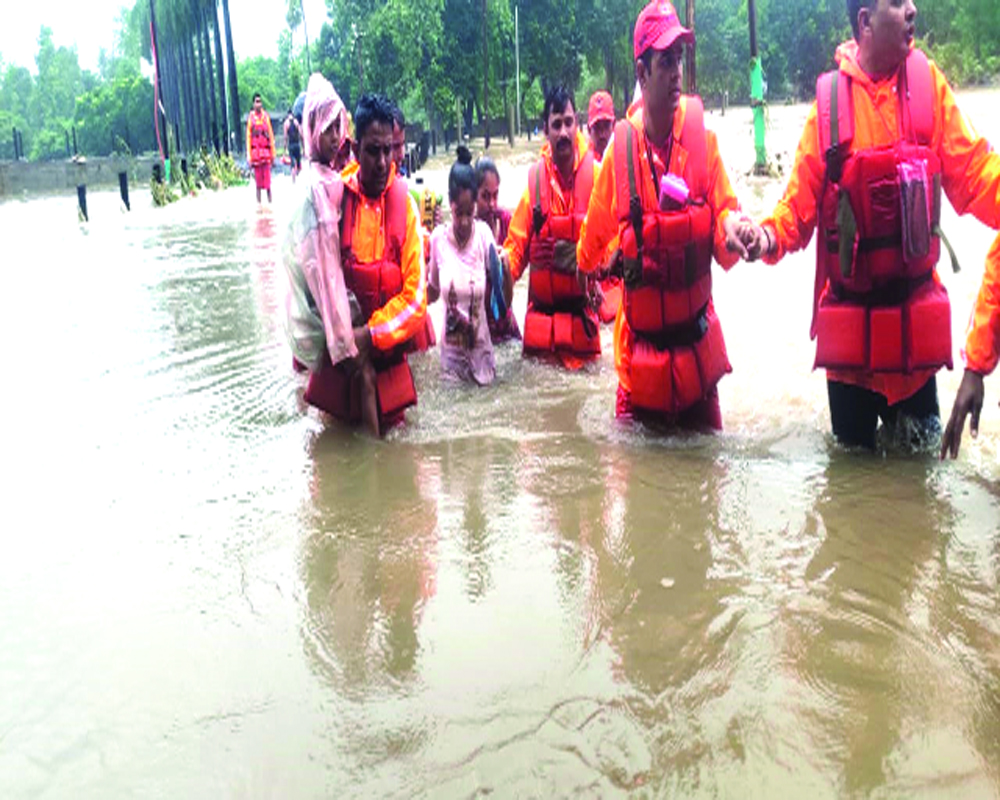
Behind these numbers lie countless personal tragedies: families swept away by landslides, towns cut off for weeks, and small businesses obliterated overnight. Infrastructure painstakingly rebuilt after earlier disasters has been destroyed again, trapping residents in a relentless cycle of loss and fragile recovery. Uttarakhand’s ordeal was equally grim. In August, a sudden flash flood tore through pilgrimage routes, sweeping away homes, lodges, and marketplaces. Entire valleys were submerged, and scores of people went missing. Military and disaster-response teams worked around the clock to rescue stranded pilgrims and villagers. But beyond the physical losses lay the economic ones — the collapse of tourism, the destruction of local economies, and the erosion of livelihoods that sustain thousands. In the plains, Punjab told a different but equally devastating story. Widespread floods submerged hundreds of thousands of acres of farmland, isolating villages and damaging irrigation systems. For farmers, the floods wiped out standing crops and stored produce alike, leading to soaring debts and market instability. Within weeks, rice prices rose, highlighting how local disasters can ripple through national food security and global trade.
The Mirage of Modernity
Even India’s most advanced cities — symbols of progress and aspiration — have proved alarmingly vulnerable. This monsoon, Chandigarh, Gurugram, and parts of Delhi-NCR were paralysed by severe waterlogging. Power failures, transport gridlocks, and business disruptions turned urban life into chaos.
The cause was not just intense rainfall but years of neglect. Wetlands and floodplains that once absorbed excess rainwater have been replaced by concrete. Stormwater drains remain choked with waste and are designed for rainfall patterns that no longer exist. As a result, every downpour turns into a civic emergency, revealing a critical failure in urban governance.
Urban flooding also magnifies systemic inequalities — with slum dwellers, informal workers, and low-income residents facing the harshest consequences.
Disasters Are More Destructive Now
The worsening scale of disasters is neither accidental nor inevitable. A warming atmosphere holds more moisture, intensifying rainfall and triggering cloudbursts. Deforestation, encroachment on wetlands, and rampant construction on riverbanks and hillsides have stripped away natural buffers. In many parts of the Himalayas, road widening, tunnelling, and hotel construction proceed without adequate scientific assessments. In the plains, unregulated sand mining and damming alter river courses, increasing flood risks. The result: natural hazards transformed into human-made catastrophes. Equally troubling is the weakness of local governance. Many municipal bodies and panchayats lack the expertise, funds, or authority to enforce land-use laws and environmental regulations.
Rethinking Disaster Strategy
India’s disaster management architecture has certainly evolved since the early 2000s, especially in early warning systems and post-disaster response. Yet, the current trajectory of loss shows that reactive relief measures are no longer enough. The country needs a preventive, community-based, and technology-enabled strategy — one that builds resilience from the ground up. At its heart must be local capacity building. Disasters begin locally, and so must resilience. Panchayats, ward committees, and local volunteers should be trained in first response, evacuation, and first aid. Schools and colleges can double as awareness hubs, teaching not just disaster science but the culture of preparedness. District Disaster Management Authorities must be empowered with funds and autonomy to develop locally relevant disaster plans.
Building Awareness and Trust
Public awareness remains the first line of defence. Campaigns must move beyond slogans to sustained, community-driven engagement. Hill communities need guidance on landslide and flash-flood preparedness, farmers require real-time weather data and insurance support, and urban residents must understand the importance of ecological conservation.
Communication should use diverse channels — community radio, local influencers, schools, religious networks, and digital alerts. Most importantly, it must be rooted in trust and local language, ensuring people act on warnings rather than dismiss them.
Technology and Infrastructure for the Future
Modern technology can revolutionise disaster preparedness. Artificial Intelligence, satellite data, and predictive analytics can provide early warnings for floods and landslides. Drones can survey damage and assist in relief logistics. Mobile-based alerts can reach millions instantly — but only if the systems are inclusive, covering rural and marginalised populations.
Nature: The Best Defence
Nature-based solutions offer durable, low-cost protection. Reforesting hills, restoring wetlands, and reviving ponds and tanks can significantly reduce flood risk. Allowing rivers to flood certain zones naturally prevents catastrophic breaches elsewhere. These ecological measures also improve biodiversity, groundwater recharge, and livelihoods — outcomes concrete walls can never achieve.
Governance Reforms
True resilience demands structural reform. Every new infrastructure project must undergo disaster and climate risk assessments. Land-use plans must be enforced rigorously, and local bodies equipped with the authority and resources to act.
Incentives such as tax benefits or insurance rebates can encourage builders and farmers to adopt resilient practices. Disaster risk reduction should be mainstreamed across ministries — from housing and transport to agriculture and education.
From Catastrophe to Continuity
As India observes the International Day for Disaster Risk Reduction in 2025, the lessons are undeniable. Disasters are no longer isolated or seasonal — they are a constant test of national resilience.
The country cannot stop cloudbursts or cyclones, but it can prevent them from becoming humanitarian crises. A truly disaster-resilient India will rest on five pillars: empowered communities, strong local governance, technological foresight, ecological restoration, and institutional accountability. Each life saved, each livelihood protected, and each community rebuilt stronger marks a step towards that goal.
Moving from reaction to resilience is not just an environmental or economic imperative — it is a moral one. As the climate crisis deepens, India’s ability to adapt will define its collective future. 13 October is more than a day of reflection; it is a call to action — to turn tragedy into transformation, and vulnerability into strength.
Only then can India emerge from the cycle of calamity into a continuum of continuity, stability, and hope — a nation truly prepared for the storms ahead.
The writer is former Executive Director of the National Institute of Disaster Management