The Karur stampede exposes India’s chronic failure in crowd management and public safety. As the nation heads into a season of rallies and festivals, the tragedy must serve as a catalyst for systemic reform, accountability and preventive planning
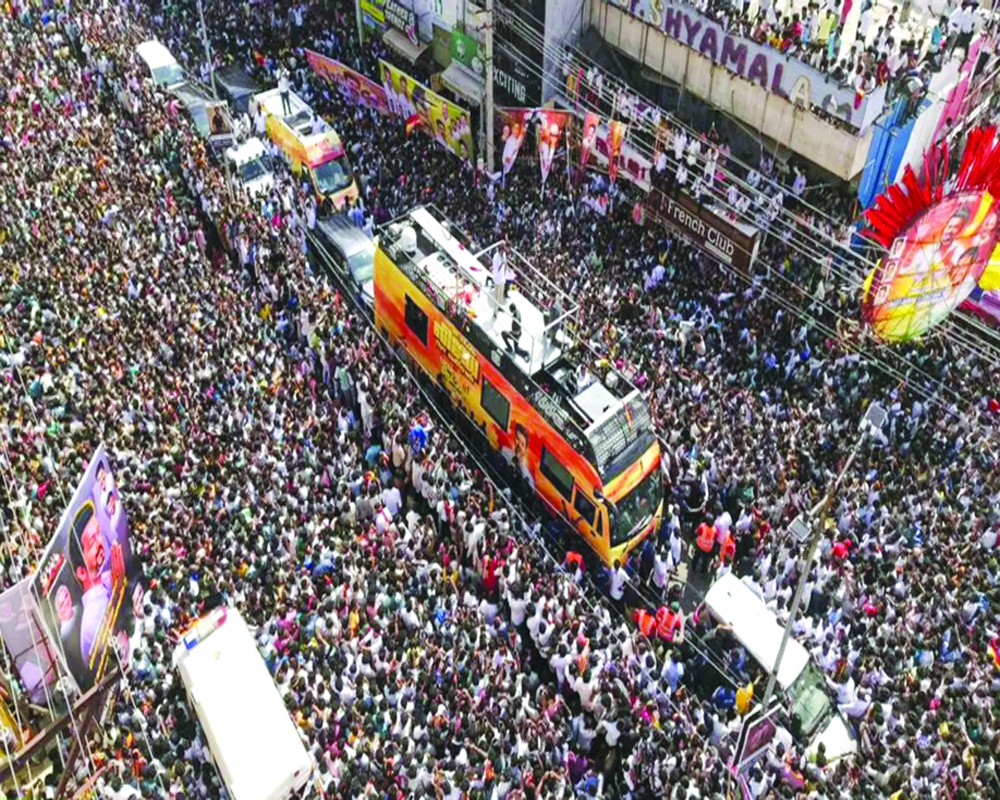
We had not yet forgotten the calamitous stampedes in Bengaluru and during the Puri Jagannath Yatra in June 2025, when yet another human-induced disaster struck — this time in Karur, Tamil Nadu. On 27 September 2025, a massive stampede at the Lighthouse Roundana (Uzhavar Sandhai Grounds) claimed over 35 lives, including many women and children, and left scores injured. The incident unfolded as actor-politician Mr Vijay addressed a swelling crowd during his party’s outreach programme ahead of the 2026 Tamil Nadu Assembly elections. With official estimates of 10,000 attendees dwarfed by an actual turnout exceeding 50,000, the tragedy underscores a recurring failure in India’s crowd management and public safety systems. The Karur incident is heartbreaking but, tragically, not unique. India has long been haunted by stampedes — whether at religious festivals, concerts, political rallies, or aid distribution sites. Despite the country’s painful history of mass-casualty events, systemic lapses continue. In Karur, early reports suggest that crowd numbers far exceeded expectations, and once panic spread, chaos became uncontrollable. Children were separated from parents, people fell under the crush, and hospitals soon filled with grieving families.
Chief Minister M K Stalin rushed officials, ministers, and medical teams to manage rescue operations, with doctors from nearby Tiruchi and Salem mobilised to treat the injured. Yet even as emergency relief efforts were swift, the fundamental question lingers: why do such tragedies keep repeating?
Stampedes in India are not isolated incidents; they form a tragic pattern. The Kumbh Mela in Prayagraj in 1954 claimed over 300 lives due to uncontrolled surges. The Mandhardevi Temple tragedy in Satara in 2005 killed about 290 devotees. The Chamunda Devi Temple in Jodhpur (2008) saw 224 deaths, and the Sabarimala incident in Kerala (2011) claimed 106 lives. More recently, the Hathras satsang stampede of 2024 exposed glaring weaknesses in crowd control.
Each disaster has stemmed from common failings: overcrowding, inadequate planning, poor coordination between agencies, and insufficient infrastructure for emergencies. And each time, promises are made to learn and reform — only for history to repeat itself. Crowd disasters are rarely caused by malicious intent; instead, they arise from human psychology in moments of fear. When large gatherings lack clear exits, controlled movement, or reliable communication, panic spreads like wildfire. Individuals instinctively surge forward or sideways, creating waves of pressure that overwhelm bodies. Even a brief stumble can trigger a chain reaction, trapping hundreds.
Understanding this psychology is vital. Effective management is not only about building barricades or posting policemen; it is about anticipating how fear, confusion, and urgency interact in dense human clusters.
Karur vs Prayagraj
Yet India has also shown that safe mass gatherings are possible. The Mahakumbh Mela at Prayagraj in 2025 hosted millions of pilgrims without major calamities, thanks to meticulous planning. Authorities divided the vast venue into zones, established designated entry and exit points, and used technology — CCTV, drones, real-time crowd density analysis — to monitor movements. Public transport was staggered, medical facilities were stationed strategically, and clear communication systems guided attendees.
While a single unfortunate incident occurred, the overall success marked a sharp contrast with earlier melas marred by deadly stampedes. The Mahakumbh demonstrated that scientific planning, technology, and disciplined coordination can make gatherings safe — even at unprecedented scales. The Karur disaster, by contrast, highlights what happens when such best practices are ignored. Smaller events and political rallies often lack the rigour and resources devoted to mega-events. This gap must be closed.
Modern technology offers powerful tools to prevent stampedes. Real-time surveillance, predictive modelling, and crowd density analytics can alert authorities before situations spiral out of control. Digital ticketing and controlled access can regulate entry, while mobile alerts and PA systems can guide attendees during emergencies. Drones can identify choke points from above, and rapid-response medical units can cut critical minutes from rescue efforts.
But technology alone is insufficient. Infrastructure — adequate barricades, clear signage, lighting, and evacuation pathways — is equally essential. Emergency drills, scenario planning, and coordination among law enforcement, medical teams, and local administration must be standard practice, not exceptions.
Perhaps the most overlooked dimension is public awareness. In many tragedies, panic escalates because attendees are unaware of safe practices. Teaching basic crowd safety — remaining calm, identifying exits, avoiding surges — can save lives.
Awareness campaigns, community drills, and clear instructions during events must become routine. Schools, colleges, and local organisations can play a role by integrating basic disaster preparedness into education. Volunteers trained in crowd management should complement police presence at all large gatherings.
Accountability and Institutional Reform
Every stampede demands not only condolences but accountability. Event organisers, political parties, and authorities share responsibility for anticipating risks and implementing safety measures. In Karur, where actual turnout vastly exceeded official estimates, questions must be asked: why were safety thresholds not recalibrated? Why were emergency exits inadequate? Why was crowd flow not monitored in real time?
India needs enforceable regulations mandating risk assessments, safety approvals, and the deployment of trained personnel for events exceeding certain attendance thresholds. These norms should not remain guidelines but carry legal consequences for violations. Institutionalising lessons from each tragedy is essential.
Stampedes are not inevitable acts of fate; they are preventable disasters. To prevent recurrence, safety must be seen as a shared duty. Authorities must plan, organisers must comply, and the public must cooperate. Social initiatives and media outreach can help instil a culture of responsibility where attendees follow directions calmly and avoid risky behaviours. At the same time, emergency readiness must be ingrained in governance. From mobile medical units to partnerships with hospitals, from pre-event rehearsals to post-event evaluations, safety planning must match the scale of human gatherings.
A Wake-Up Call
The Karur stampede is more than a tragedy; it is a wake-up call. It reminds us how quickly systemic gaps can turn festive or political gatherings into graveyards. It underscores that preventive planning, technological tools, public awareness, and accountability are not optional — they are essential.
As India moves toward a politically charged 2026, with rallies, yatras, and festivals multiplying, the risks will only intensify. Now is the moment to institutionalise reforms, mandate safety audits, and treat public safety as a sacred duty.
India’s history is full of painful reminders of what happens when lessons are ignored. But it also offers evidence of what works — seen in the relative safety of the 2025 Mahakumbh Mela. The challenge is to replicate those standards universally, not selectively. The Karur tragedy can either fade into the long catalogue of preventable disasters, or it can become the turning point that forces systemic change. The choice lies with our leaders, administrators, and citizens alike.
The writer is former Executive Director of the National Institute of Disaster Management