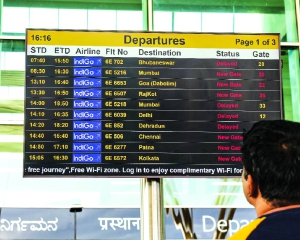
For years, IndiGo has lived off the reputation of being the airline that rarely slips. "On-Time, Every Time" wasn't just advertising; it became part of its personality, the shorthand for discipline in a country where delays, long queues, and fraying tempers at airports were almost a given. But today, that tagline feels like a relic from another era. It hangs awkwardly over a crisis that has unfolded in slow motion, then all at once, leaving passengers stranded, confused, angry, and wondering how a crisis of this magnitude blindsided the country's largest carrier.
What we are watching is more than a scheduling mishap. It is far bigger than pilots being unavailable or duty-time rules tightening. This is a communications collapse, one that exposes the hollowness of a brand that has long believed efficiency alone was enough to secure loyalty. The trouble with IndiGo right now isn't just that flights are being cancelled; it's that the airline seems strangely detached from the chaos it has created. The #Manmade #AviationCrisis dominating timelines and airport lounges is the direct result of an organisation that underestimated the new Flight Duty Time Limitation rules, miscalculated crew requirements, and then appeared genuinely shocked when the entire system buckled.
The DGCA's assessment was blunt: IndiGo simply didn't plan. It didn't forecast enough pilots for Phase 2 of the FDTL rollout, even though the norms were public knowledge for months. How does a carrier with over 400 aircraft, thousands of crew members, and a 60 per cent domestic market share stumble on something so fundamental? Perhaps this is what happens when a company begins to operate as though competition is merely decorative. When you behave as the marketplace's default airline, you stop imagining worst-case scenarios. And then, when the cracks appear, you act surprised.
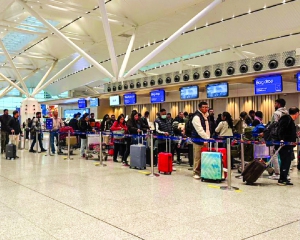
But IndiGo's bigger failure, and the reason public anger feels so visceral, is the vacuum in communication. People can understand delays. They can forgive the occasional cancellation. What people can tolerate, sometimes even with grace, is a delay. What they cannot stomach is the feeling of being dismissed. That is what has cut deepest in this crisis. Passengers have been treated as though their time, their plans, their money, and, in many cases, their simple dignity, are just footnotes in IndiGo's larger story. At airports across the country, travellers have been left to piece together their own understanding of what's going on. No proper announcements. No clear updates. No realistic timelines. No explanations that sound like they come from a place of honesty rather than corporate defensiveness. Social media has become the only functioning bulletin board in this mess, an accidental newsroom where stranded families are sharing videos of toddlers asleep on cold floors, elderly passengers leaning against walls after hours of standing, and frantic travellers being forced into last-minute, overpriced bookings simply to get home. Even the staff, who are often the first to face the public's fury, look lost, overwhelmed, under-prepared, and painfully unaware of what's happening behind the scenes. IndiGo hasn't just lost control of its operations; it has surrendered control of the story.
And this is where a brand's true nature surfaces. IndiGo, for all its scale and swagger, has looked strangely hollow during these last few days. Distant. Unfeeling. Robotic. As if admitting to the chaos would somehow bruise the pristine corporate image it has been polishing for years. What we got instead of clarity were stitched-together apologies that felt photocopied. Instead of a leader taking charge publicly, we got templated statements with all the warmth of an automated receipt. Instead of empathy, we got… nothing. Silence has its own tone, and in the service industry, it always sounds like indifference.
It is impossible not to think of Vistara in moments like these, an airline that understood something fundamental: people don't remember the aircraft; they remember how they were made to feel. Vistara wasn't faultless. No airline is. But it carried a kind of emotional intelligence in the way it engaged with passengers. There was a warmth, a steadiness, a transparency that said, "You matter." Even today, long after operations merge and brands evolve, people speak of Vistara with an affection they don't extend to most airlines. That's what IndiGo is missing in this moment: the simple humanity that travellers cling to when things go wrong. In today's world of reels, instant outrage, and hyper-amplified experiences, that human layer isn't a luxury; it is survival. If anything, this crisis has exposed a hard truth: communication is not a box to tick; it is the backbone of public trust.
Especially for a company as large as IndiGo. Especially in a country where millions depend on air travel. Especially in an era where every delay is filmed, posted, and dissected by thousands within minutes. The airline needs to tear up its crisis playbook and start again. It needs a real, unfiltered apology from someone whose name and face mean something, not a cold press release. It needs a crisis room that functions around the clock and pushes honest updates instead of rehearsed reassurance. It needs frontline staff who aren't left to guess answers under pressure but are trusted with information and trained to respond with clarity and calm. Above all, IndiGo needs to take responsibility, not hide behind jargon, not wait for the uproar to die down, but step into the crisis with accountability and humility.
This unfolding disaster is a ready-made case study for management schools, not because something went wrong, but because so much could have been prevented with foresight and honest messaging. The operational shortcomings are serious, but the communication shortcomings have magnified the anger tenfold. Students studying corporate communication, public relations, behavioural psychology, and crisis management will likely pore over this fiasco for years. They will analyse how a market leader failed to anticipate a regulatory shift, how leadership underestimated its dependence on human capital, and how a brand with such enormous influence couldn't find the words, or the will, to speak to its customers when they needed reassurance the most.
As consumers, we must also reflect on our role. Why do we tolerate dominance without demanding accountability? Why do we remember certain airlines fondly long after they're gone? Why do we accept transactional service so easily? And what does this crisis reveal about the fragile relationship between trust and repetition? IndiGo has long been a habit for Indian travellers: reliable, predictable, convenient. But habits break quickly when trust is shaken.
The airline can still recover, but it will not happen through technical adjustments alone. It must rebuild its identity not merely through punctual flights but through honest communication. It must show urgency, humility, and a willingness to admit that the situation spiralled out of its hands. Brands do not lose their reputation because they make mistakes; they lose it because they pretend not to.
Right now, IndiGo must prove that its famous tagline was more than clever marketing. "On-Time, Every Time" needs to be more than a nostalgic echo of better days. In the eyes of the travelling public, IndiGo's real flight path to credibility, to trust, to recovery begins not on the runway but in the way it speaks, apologises, and reconnects with the people who made it the airline it is today.
Until then, the crisis continues, not just in airports and departure halls, but in the way an entire nation perceives a brand that once defined efficiency and today stands exposed in silence.
The writer is a former civil servant, who writes on cinema and strategic communication. With inputs from Zoya Ahmad and Vaishnavie Srinivasan; views are personal