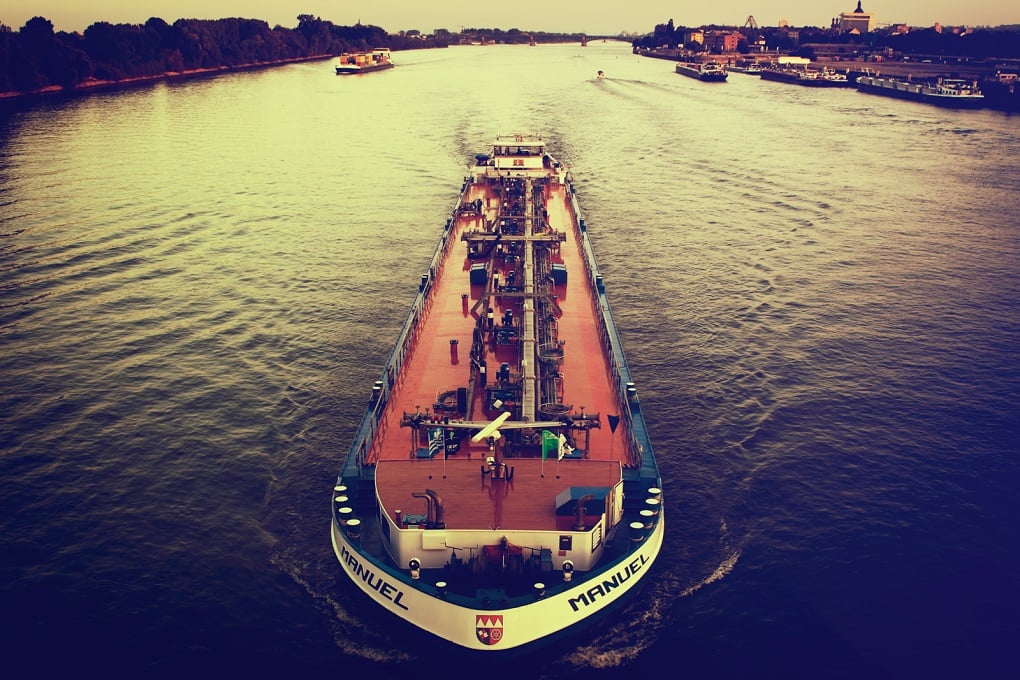
India’s rivers, once central to trade and civilisation, are witnessing a quiet resurgence. Once viewed as a dated concept, moving cargo through inland waterways is now re-emerging as a practical, sustainable, and economically viable solution to the country’s modern infrastructure challenges. For centuries, India’s rivers connected cities and trade centres. But with the advent of road and rail, that network faded. Now, rising fuel costs, traffic congestion, and growing environmental concerns have prompted a fresh look at this natural alternative.
The numbers tell a compelling story. In just over a decade, cargo movement on national waterways has grown from 18.1 million metric tonnes in 2013-14 to 145.84 million metric tonnes in 2024-25. This shift is not just about logistics, it signals a broader economic recalibration. Waterways offer measurable advantages: lower freight costs, higher fuel efficiency, and significantly reduced emissions. For instance, a litre of fuel can move 105 tonne-km by water, compared to just 24 by road. Inland water transport (IWT), therefore, holds strong promise for both the economy and the environment.
IWAI’s Expanding Footprint
The Inland Waterways Authority of India (IWAI), under the Ministry of Ports, Shipping and Waterways, has played a key role in this transition. Through projects such as the Jal Marg Vikas Project on National Waterway-1, stretches of the Ganga-Bhagirathi-Hooghly are now functional cargo routes. With support from the World Bank, the initiative has led to the creation of major terminals at Varanasi, Sahibganj, and Haldia, along with community jetties and navigational infrastructure. Cargo traffic on NW-1 has tripled in the past decade. Efforts are underway to improve integration with rail and road networks. Terminals at Kalughat, Varanasi, and Sahibganj are being developed as multimodal hubs in collaboration with agencies like NHLML.
In the North-East, National Waterway-2 on the Brahmaputra is unlocking new trade possibilities. The Pandu and Jogighopa terminals, tied to key logistics parks and connected via the Indo-Bangladesh Protocol Route, are improving market access for Assam and neighbouring regions. Heavy cargo movement through these channels is already underway. For instance, Numaligarh Refinery’s expansion project is leveraging river transport to move oversized equipment that would have posed challenges on road.
Incentivising the Shift
To make this shift commercially attractive, IWAI has launched the Jalvahak Cargo Promotion Scheme, offering up to 35 per cent cost reimbursement on eligible routes. Scheduled cargo services on routes like Kolkata-Varanasi and Kolkata-Pandu are helping demonstrate feasibility.
IWAI has also introduced the Jal Samriddhi Portal to simplify approval processes and encourage private participation in terminal development. So far, 29 entities have registered on the platform.
Encouraging Early Signs
The private sector is beginning to respond. Lower costs, better fuel efficiency, and a lower carbon footprint are proving valuable to businesses pursuing both cost optimisation and ESG goals. Employment generation in river-based logistics, from cargo handling to vessel operations, adds another layer of economic impact.
The partnership with Rhenus Logistics to develop 100 new barges across national waterways is one example of increasing investor interest in the sector.
Addressing the Challenges
Of course, challenges remain. These include depth fluctuations, dredging needs, and vessel availability. IWAI is responding with long-term dredging contracts, vessel upgrades, and digital tools like CAR-D, PANI, and NavIC to streamline route planning, tracking, and navigation. Green mobility is also a focus. IWAI has taken early steps towards cleaner vessel technology, including India’s first hydrogen fuel cell-powered craft and a growing fleet of hybrid-electric catamarans.
Looking Ahead
India has over 20,000 km of navigable river routes, but only a fraction is fully tapped. With the country’s Net-Zero goal for 2070 and growing logistics demands, inland waterways offer a scalable and sustainable solution.
The upcoming India Maritime Week 2025 in Mumbai will spotlight this transformation. It will bring together policymakers, investors, and global experts to shape the next phase of India’s riverine logistics. The goal is not only to revive the past but to build a greener, more efficient future for India’s supply chains. As India reimagines its rivers, from folklore to freight, the inland waterways sector may well be the quiet disruptor in the country’s growth story.
The writer is Vice Chairman and Chairman In-charge, Inland Waterways Authority of India (IWAI)