Taiwan, with its world-leading National Health Insurance system and pioneering digital health innovations, stands as a model for equitable, accessible healthcare. Yet, it remains excluded from the WHO due to political barrier
Health is a fundamental human right and a universal value. Improved health results in greater well-being for the people and has ramifications for the survival and development of a country and even the world.
At the 77th World Health Assembly, members adopted the World Health Organisation's (WHO) Fourteenth General Programme of Work for 2025–2028. The programme includes such strategic objectives as improving health service coverage and bolstering financial protections to ensure universal health coverage.
WHO has called on all countries to take action on these issues. As concerns universal health coverage, Taiwan launched the National Health Insurance (NHI) system in 1995. The scheme, which brought together already existing occupational insurance schemes, has reached its 30th year and now covers 99.9 per cent of the population.
The NHI system provides equitable, accessible, and efficient healthcare to all people in Taiwan. It is also an important pillar and guarantor of Taiwan's social stability as well as people's health and safety. It has, moreover, become a global benchmark for achieving universal health coverage.
In an annual survey carried out by Numbeo, Taiwan has been ranked first in the Health Care Index category for seven consecutive years.The NHI operates on a pay-as-you-go, self-sustaining model capable of addressing the financial challenges posed by an ageing population and rising healthcare costs. By reforming premium rates and adding additional funding sources, such as the tobacco health and welfare surcharge, the system is on a sound, sustainable footing.
To promote the health of our people, President Lai Ching-te articulated a vision of a healthy Taiwan in 2024. This aims to ensure that people are healthy, the nation is strong, and the world is ready to embrace Taiwan. Remaining focused on people, families, and communities, we are expanding health promotion operations and preventive healthcare.
Moreover, we are implementing a family physician plan, offering comprehensive care to patients with chronic diseases, and utilising telemedicine to improve healthcare accessibility in rural areas. By promoting integrated long-term care, palliative care, and ageing in place, we ensure holistic, lifelong, and dignified care for all people, realising health equity. In 2021, WHO released the Global Strategy on Digital Health for 2020–2025.
Under this plan, the global health body is seeking the development and adoption of person-centric digital health solutions to prevent, detect, and respond to infectious diseases. It also oversees the development of infrastructure and applications to use health data to promote health and well-being. Taiwan continues to utilise its prowess in information and communications technology to build effective, high-ROI health systems and services.
The NHI cloud facilitates the more efficient exchange of medical records, while the adoption of international standards such as Fast Healthcare Interoperability Resources enhances international medical data sharing. Additionally, the incorporation of AI-assisted technologies is advancing the development of smart healthcare.
The introduction of a virtual health insurance card and the My Health Bank app, which enables real-time management of personal health data, empowers people to make health-enabling choices. In 2008, Taiwan introduced the Health Technology Assessment to facilitate evidence — based policymaking. It also accelerated the inclusion of new treatments under the NHI system. For example, in 2023, gene and cell therapies were covered for the first time, marking a new era for precision medicine and offering patients enhanced treatment options. Taiwan also continues to leverage innovative technologies to improve the working environment for the medical workforce and to bolster the overall quality of medical service.
What’s more, despite facing political challenges, Taiwan has continuously participated in international health affairs and has been dedicated to supporting the global health system. During the COVID-19 pandemic, Taiwan played a crucial role in sharing supplies, strategies, and experiences, and proved to be a reliable partner of countries worldwide. Separately, Taiwan's success story in implementing universal health coverage offers valuable lessons for countries worldwide. As we continue to share our experiences in universal coverage, financial management, and digital health, we hope to facilitate other nations in reaching WHO's goal of universal health coverage.
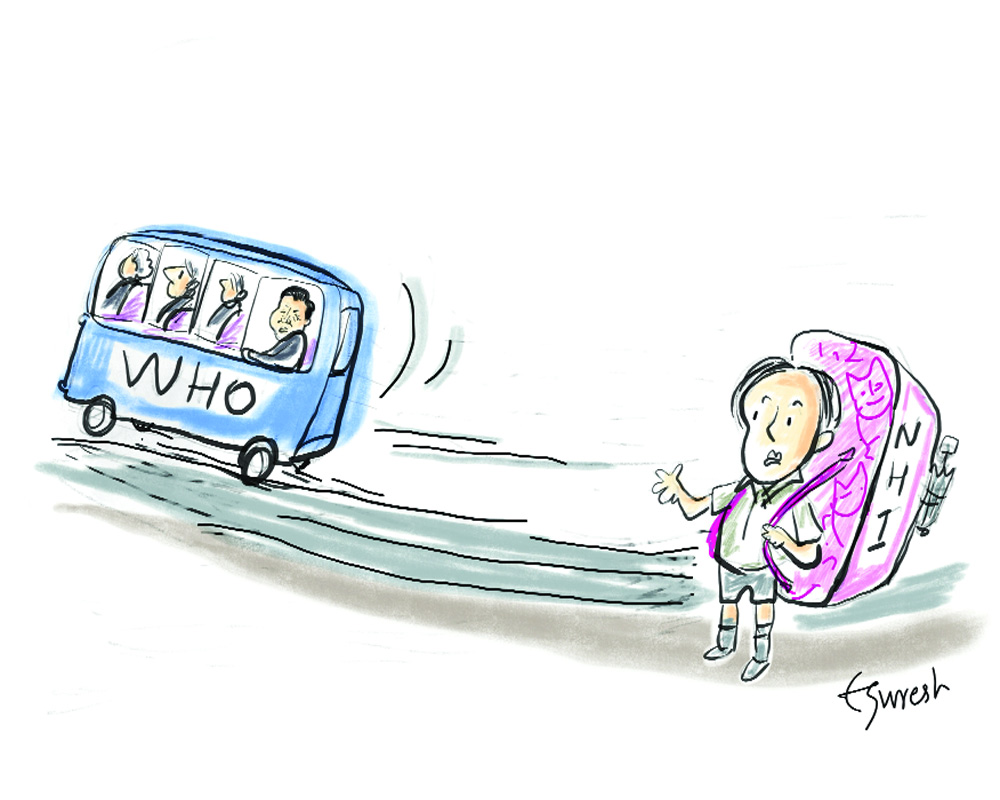
In this rapidly changing era, health challenges transcend borders, and global cooperation has become essential to addressing various health crises. However, Taiwan has been prevented from participating in WHO — the foremost global health cooperation body — due to China's continued distortion of United Nations General Assembly Resolution 2758 and World Health Assembly Resolution 25.1. Neither of these resolutions mentions Taiwan or declares that Taiwan is part of the People's Republic of China.
Therefore, these resolutions have no power to confer upon the PRC any right to represent Taiwan in WHO. In light of this, and to uphold the core UN values of inclusiveness and universality, we urge WHO and all relevant parties to recognise Taiwan's considerable contributions to global public health and the human right to health.
WHO must adopt a more open-minded approach and demonstrate flexibility, adhering to the principles of professionalism and inclusivity. Taiwan should be included, as a matter of pragmatism, in the World Health Assembly and all WHO meetings, activities, and mechanisms, particularly those concerned with the WHO pandemic agreement.
Taiwan earnestly hopes to work with the international community to create a future of borderless healthcare that realises the fundamental human right to health stipulated in the WHO Constitution and the vision of leaving no one behind espoused in the United Nations Sustainable Development Goals.
(The writer is Minister of Health and Welfare ROC Taiwan. Views are personal)