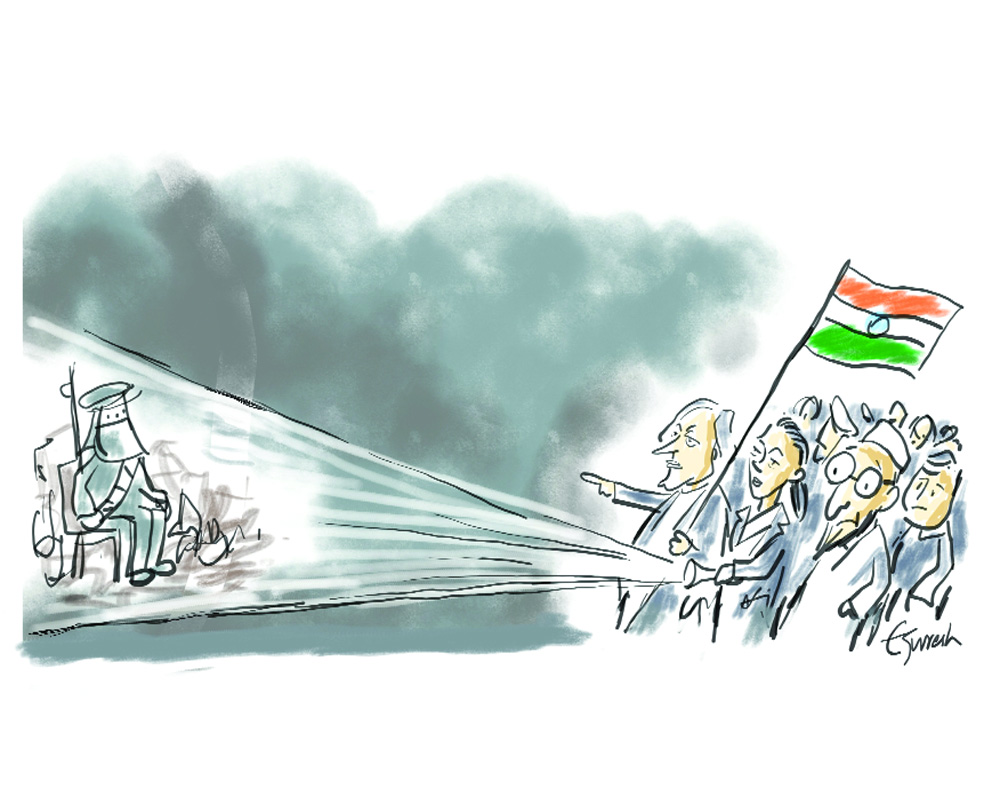
Across party lines, ideologies, and regional divides, the all-party delegation stood not as politicians but as patriots, sending a clear and powerful message to the world: when it comes to confronting terror, India speaks in one voice
In the cacophony of India’s bustling democracy — where debates are heated, elections are passionately fought, and ideological lines run deep — it’s easy to believe that political discord defines our national character. Yet, beneath this noisy surface lies a quieter, more powerful truth: when the sovereignty and safety of the nation are threatened, Indians — across party lines — stand as one. The recent formation and international engagement of an all-party parliamentary delegation, following the horrific Pahalgam terrorist ambush and the resolute military response in Operation Sindhoor, stands as a poignant and necessary reminder that in the battle against terrorism, unity is not an option — it is a national imperative.
The terrorist strike in Pahalgam was not just another act of senseless violence; it was an attack on the soul of India. When extremists target not only human lives but also the spirit of democracy, the very idea of India comes under siege. The appropriate response to such horror cannot be drawn along partisan lines; it must emerge from a shared national conscience. Operation Sindhoor, a swift and courageous military action against cross-border terrorist elements, demonstrated the Government’s readiness to act decisively. But it was what came afterward — the dispatch of an all-party delegation to take India’s voice to the global stage — that truly reflected a maturing democratic ethos.
This delegation, led by BJP MP Baijayant Jay Panda and comprising representatives from the Congress, DMK, TMC, and other parties, travelled to Bahrain and the United States. They met high-ranking officials, including Bahrain’s Deputy Prime Minister Shaikh Khalid bin Abdulla Al Khalifa, to present a united case against international terror networks. In their diplomatic engagements, the delegation did more than just speak; they represented a rare and powerful display of India’s multiparty consensus.
The symbolism was profound. When the world sees India’s political rivals — who often spar vociferously in Parliament — standing side by side to address a global issue, it takes notice. This wasn’t a Government delegation in the narrow sense — it was an Indian delegation. The message was clear: terrorism is not a political issue to be leveraged for electoral gain, but a shared threat that requires collective resolve.
That message was underscored by Congress MP Dr. Shashi Tharoor in Washington, D.C., where he made a pointed and statesmanlike observation. He clarified that the delegation did not represent just the ruling Government but the Indian people as a whole. He openly acknowledged that while Operation Sindhoor was not flawless, its necessity and purpose transcended political fault lines. His words captured the essence of true bipartisanship — not the denial of differences, but the prioritisation of national interest above all else.
This maturity in tone and intent marked a significant shift in our national dialogue. For too long, issues of national security have been fodder for political mudslinging. But terrorism is not saffron, green, or red — it is a dark and indiscriminate force. And to fight it effectively, we need all the democratic colors of India aligned.
The significance of this delegation goes beyond symbolism. The world today is interconnected, and terrorism is a transnational beast. Its networks operate across continents, its financing moves through shadowy channels, and its propaganda infects minds across cyberspace. No single party, no matter how strong, can confront this alone. Nor can a single Government shoulder this burden in isolation. India’s voice is strongest on the global stage when it emerges from a united Parliament, not just a ruling coalition.
BJP MP Daggubati Purandeswari’s comments before the delegation’s visit to Europe reflected this sentiment. She reiterated India’s zero-tolerance stance toward terrorism, not in the tone of a partisan leader seeking credit, but as a national representative. Her words were devoid of political jabs and rooted in conviction. That’s the kind of leadership India needs — firm, clear, and unifying.
India’s strength as a democracy is built on its diversity: linguistic, cultural, religious, and political. That we continue to function — despite these complexities — is a tribute to our institutional resilience. But moments of national crisis demand more than functionality; they demand cohesion. From the trauma of the 26/11 attacks to Pulwama and now Pahalgam, we’ve seen glimpses of this unity. We now need to make it a habit, not just a reflex. Critics often dismiss all-party delegations as symbolic or ineffectual. True, they may not pass binding resolutions or sign treaties. But in international diplomacy, symbols matter. They shape perception, and perception shapes outcomes. When the world sees India united — not fractured — it strengthens our moral argument, elevates our credibility, and earns the respect of allies and adversaries alike.
This unity also counters dangerous narratives. By bringing together MPs of different faiths, regions, and ideologies — be it a Muslim Congress leader, a Sikh BJP representative, or a southern regional party figure — the delegation visibly refuted the claim that India’s fight against terrorism is politically or communally driven. It underscored a critical truth: India’s fight is not against any religion or community, but against those who threaten democracy and peace through violence.
However, the bipartisan spirit must not remain confined to overseas missions or emerge only during tragedy. It needs to be woven into the fabric of our domestic political culture. Imagine a standing National Security Council that includes leaders from both the Government and opposition. Picture regular all-party briefings on counterterrorism, cybersecurity, and intelligence reforms. These aren’t utopian dreams — they’re pragmatic steps toward institutionalising cooperation in matters of national interest.
Bipartisanship, importantly, does not mean the end of criticism. On the contrary, constructive critique strengthens democracy. But the ability to differentiate between electoral contests and existential threats is what defines a mature nation. When terrorism strikes, there is no ruling party or opposition — there is only India. And in those moments, the tricolour must fly higher than any party banner.
India is fortunate to possess a formidable defence establishment, skilled intelligence agencies, and a diplomatic corps that punches above its weight. But these pillars of national strength can only reach their full potential when supported by a united political will. The all-party delegation, in its spirit and substance, offers a hopeful glimpse of what that political will can look like when freed from petty rivalry. As the delegation concludes its travels, it would be a mistake to file away this moment as a brief detour from routine politics. The unity it represents must endure. Because terrorism is not a passing storm — it is a persistent threat. And our response must be equally enduring. Let it be a call to action. A reminder that when the stakes are high, our divisions can — and must-give way to a deeper allegiance: not to party, not to ideology, but to the Republic. If we can stand together abroad, we can surely listen better at home. And if we can do that, we will not only defend the idea of India — we will elevate it.
(The writer is an author, political analyst and columnist. Views expressed are personal)