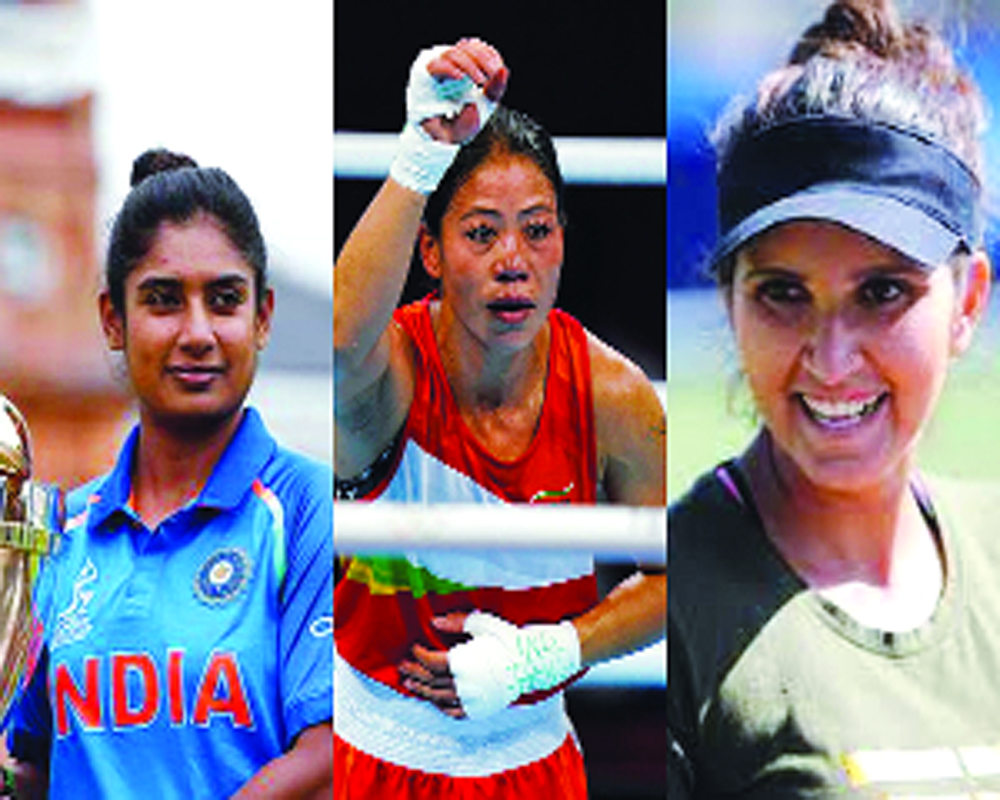
For decades, women in Indian sports have battled odds that go far beyond the playing field. Their journeys are marked not only by medals and records but by resilience against cultural bias, lack of infrastructure, unequal pay, and limited representation. Yet, time and again, they have proved that talent and tenacity can overcome even the toughest barriers. From P T Usha’s electrifying sprints that made India dream in the 1980s to Mary Kom’s world titles in boxing, Saina Nehwal and P V Sindhu’s Olympic glory, and Mirabai Chanu’s weightlifting triumphs, Indian women have redefined what was once seen as a man’s domain. More recently, athletes like Nikhat Zareen, Lovlina Borgohain, and Harmanpreet Kaur have taken the baton forward, proving that women are not just participants — they are pioneers. Yet, beneath these shining achievements lies a challenging reality.
A majority of female athletes in India, especially from small towns and rural areas, continue to face social and financial hurdles. Gender stereotypes persist — girls are often told that sports are “unfeminine” or a distraction from domestic expectations. Even those who make it to national or international platforms often struggle with poor training facilities, lack of sponsorship, and minimal media coverage compared to their male counterparts. The gap begins early. Many talented young girls drop out of sports due to inadequate support systems — from the absence of safe training environments and proper nutrition to limited access to quality coaching. While India’s sporting infrastructure is growing, inclusivity remains a challenge. The result: for every celebrated champion, countless others remain unseen, their potential stifled by circumstance.
It is in this backdrop that initiatives like the Stree India Sports Foundation (SISF) and events such as the Stree India Sports Conclave 2025 emerge as beacons of change. At Maharashtra Sadan, New Delhi, the Stree India Sports Conclave 2025 unfolded not just as an event, but as a movement to reclaim space and recognition for women in sports. Organised by SISF, the conclave united athletes, policymakers, educators, and social leaders under one vision — to create a fair, safe, and inclusive sporting ecosystem for women.
The conclave was inaugurated by Shri Pravesh Sahib Singh, Cabinet Minister, Government of NCT of Delhi, who set a powerful example by personally adopting five young women athletes, pledging to fund and mentor their journey. His commitment symbolised what genuine allyship looks like in action — not token acknowledgement, but sustained support. A major highlight of the conclave was the launch of SISF’s official podcast and website, envisioned as digital platforms to bring to light the stories of women athletes — especially those from small towns and marginalised communities — whose grit often goes unnoticed. The gathering featured an inspiring line-up of icons: Padma Shri Dr Deepa Malik, India’s first woman Paralympic medallist; Smt Rivaba Ravindra Singh Jadeja, MLA, Gujarat; Dr Jaideep Arya, Chairman of the Haryana Yog Aayog; Shri Ashok Kumar, Vice Chancellor, Sports University Haryana; and accomplished athletes such as Yogesh Kathuniya, Seema Tomar, and Arundhati Chaudhary. Their presence underscored the collective call for change — from policy to mindset. Smt Geeta Singh, President of SISF, captured the essence of this mission when she said, “When women choose sports, they are often told, ‘This is boys’ work.’ We want to change this mindset because change begins at the foundation. Our mission is to make sports a safe, inclusive space where every woman has the chance to dream, train, and win.” The conclave also included performances by children from Yogasana India, symbolising that the future of sports lies in early encouragement — where discipline meets joy, and ambition meets opportunity.
By the end of the day, the Stree India Sports Conclave 2025 had achieved more than celebration. It had reignited a conversation about equity and empowerment in Indian sports — one that acknowledges the extraordinary women who have paved the way, while demanding systemic reform for those yet to come. If India is to truly become a global sporting powerhouse, it must ensure that every girl with a dream gets the chance to chase it — not despite her gender, but because her nation believes she can win.
The writer is president Stree India Sports Foundation