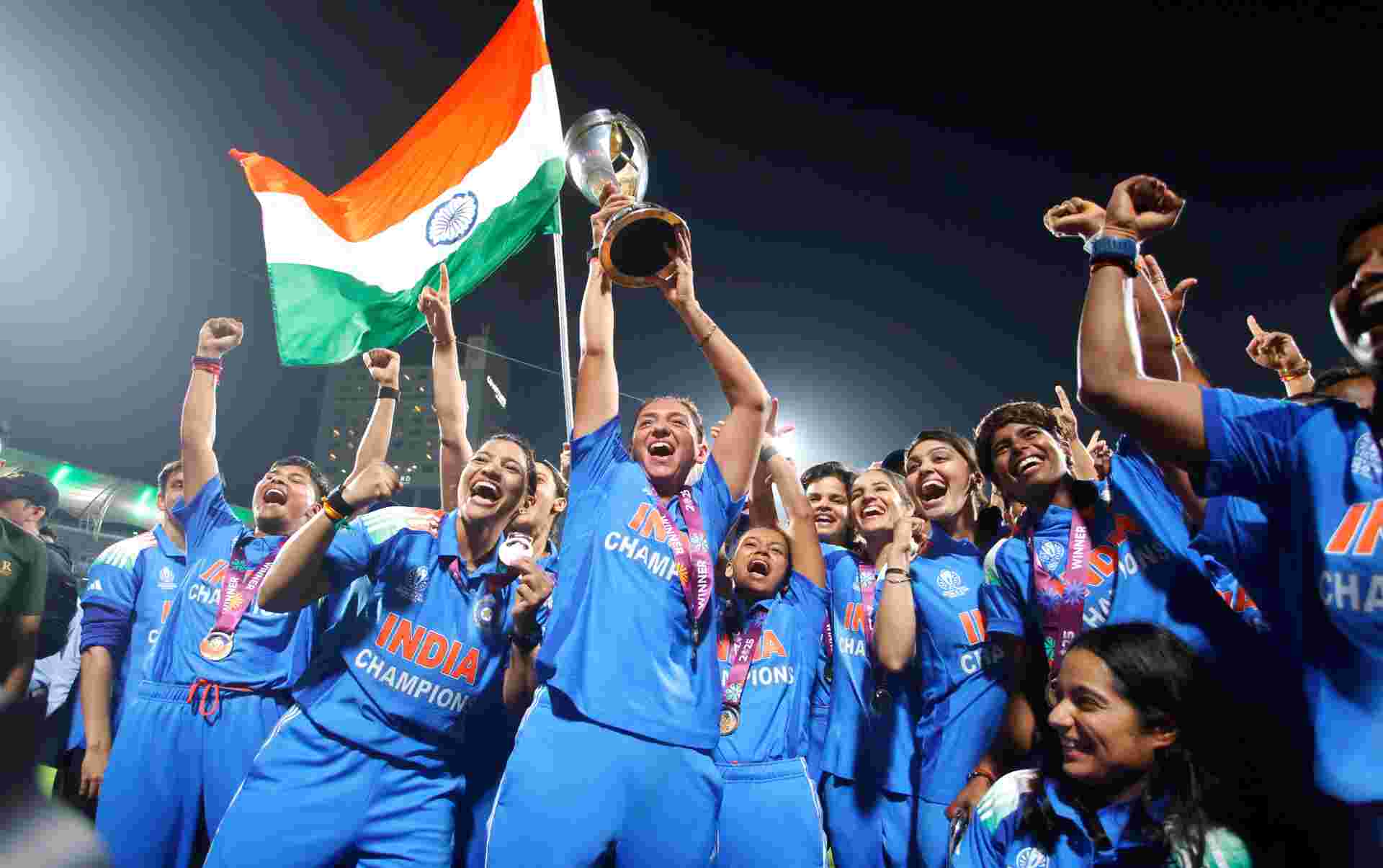
On Sunday, when the ball popped out of Amanjot Kaur’s hands once, twice, before nestling safely back in, more than a billion hearts went into overdrive. When Jemi dropped a crucial catch, the same multitude dropped their heads into their hands with a groan. And when the captain latched on to the ball to settle the match, a nation roared in unison. Reams will be written about this victory for decades to come, as they were after 1983. But this time, it means more than fireworks, confetti, and streamers. It reflects more than resolve, grit, and resilience. It could also become something greater than a new chapter in the book of empowerment.
Every hero has a story behind her or him, and the women in blue are no different. They are all part of a narrative of struggle and long toil. The fact that they are women must have only made it tougher for them to break barriers. They must have fought opposition on all fronts. The hurdles must have come in all forms-people, attitudes, belief systems, societal norms, and their own bodies.
Every time one of them lunged at a ball to stop it or swung the bat heavily for a shot, I was reminded of their physical staying power on the ground. Unlike football or tennis, which keeps players on the turf for not more than two or three hours, cricket demands humongous amounts of stamina, force, and muscle power. Let’s face it-a woman’s body is not designed for long duress. Fitness for women is not just about the brawn; it is also about their hormones. Their menstrual cycles and the discomforts that accompany them are things they have had to fight and win, match after match. It is a subject not discussed often, for when they are on the field, fielding or chasing a score, they are sportspersons determined to enthral and entertain. Few ever pause to think that they may be wearing pads other than the batting ones.
Their fixtures and schedules are not planned around their biology. They play through cramps, fatigue, and mood swings because they are fiercely focused on winning. They cannot let the world see them wince because they are heroes waiting to be haloed by their fans. Their preparation thus goes beyond mere practice; they must learn to manage what to most women is unmanageable.
Although tracking their menstrual cycles, nutrition, hydration, and other medical support are part of professional training for women in sports, it is not easy to carry the inevitabilities of the body to the field. They play on, finding recourse in pain management tools because they cannot let physical vulnerabilities come between them and their dreams. If confronting a formidable opponent requires immense mental strength, doing so during their monthly cycle demands Himalayan fortitude.
This victory is not just about how the girls made every Indian man-including the chauvinists, misogynists, and woman-haters-stand up and applaud Indian women in collective pride; it is also about how they defied nature’s intransigencies to redefine strength and endurance. It is a story of resilience that played out through a season of cramps, pain, and discomfort-a story that only a woman will fully understand. Seen in that light, this win transcends all realms of comparison and gender equations and sits in a league of its own.
The writer is a Dubai-based author, columnist, independent journalist and children’s writing coach