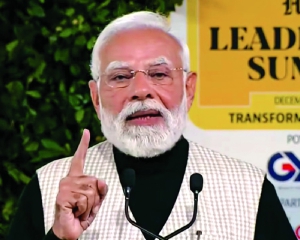





In recent weeks, the Bihar migrant labour issue has once again exposed the true face of DMK politics — a politics not of progress, but of manipulation. The controversy arose when the DMK’s media machinery tried to distort Prime Minister Narendra Modi’s remarks. What Modi Ji said was a clear criticism of DMK’s corruption, separatist
politics, and arrogance — yet the party attempted to twist it into an insult against the entire Tamil community. This old trick of the DMK — pretending that any criticism of the party is an insult to Tamil Nadu — has worked for some time. But this time, it failed. The people of Tamil Nadu have begun to think independently. They now see the difference between attacking a corrupt party and attacking a proud culture.
For years, many DMK leaders have spoken in derogatory tones about people from North India, especially those from Bihar and other Hindi-speaking states. In their speeches and interviews, they have ridiculed Hindi as a language and demeaned North Indian workers who come to Tamil Nadu seeking livelihoods. This deep-seated prejudice has created unnecessary tension between communities. Ironically, it comes from the same leaders who claim to stand for equality and social justice. What kind of social justice allows one to look down upon fellow Indians simply because they speak a different language? Once again, DMK’s politics stand exposed — it has always needed an enemy to survive. If it isn’t the Centre, it’s Hindi. If it isn’t the BJP, it’s the North Indians. Division is their oxygen.
When Prime Minister Modi criticised the DMK government, he spoke specifically about corruption, nepotism, and divisive policies. But within hours, DMK leaders and their propaganda outlets began spreading the false claim that Modi had insulted the Tamil people. This was nothing but a deliberate distortion — a desperate attempt to divert attention from their failures by invoking fake pride. They wanted to reignite the old “North vs South” fire once again. But the people didn’t fall for it. The citizens of Tamil Nadu clearly understood that Modi Ji’s statement was directed against DMK’s politics, not against Tamil Nadu’s identity. The failure of this propaganda reflects the growing political maturity of the Tamil people — they can now see beyond the noise.
It is now quite evident that DMK is trying to instigate enmity between Tamil citizens and Hindi-speaking workers in Tamil Nadu. Instead of encouraging social harmony, they spread suspicion and falsehood. However, the reality on the ground is very different. In everyday life, Tamils and workers from other states live and work together peacefully — in factories, farms, and households. The ordinary Tamil is kind, cooperative, and inclusive. It is only the political class that attempts to create division for personal gain. The hatred exists in speeches, not in the hearts of the people. To understand this mindset, one must revisit the origins of the DMK. Its foundation rests on a narrative of division -— separating Tamils from the rest of India in the name of a fabricated racial theory called “Dravidian versus Aryan.” There is no historical or scientific evidence that such races ever existed. Ancient Tamil literature never used the word “Dravidian” to denote a race. This idea was introduced during colonial times and later exploited by political opportunists to sow hatred and suspicion against North India. Dravidian ideology was never about Tamil pride — it was about political power built through alienation.
History records that early Dravidian leaders once demanded a separate Dravidanadu, backed by colonial forces. Yet, the Tamil people never embraced such divisive ideas—they remained proud Indians. The Nehru-era attempt to impose Hindi fuelled genuine anger in Tamil Nadu, which Dravidian ideologues cleverly turned to political advantage. What began as a protest against imposition soon morphed into resentment toward Indian unity. Ironically, those who once opposed Congress now stand beside it, echoing the very voices they once condemned. Today, the political landscape has changed. DMK’s traditional narratives — their protests against delimitation, their fake outrage, and their language-based fearmongering — no longer work.
The Modi government has completely redefined the approach toward India’s linguistic and cultural diversity. For the first time, every mother tongue is given equal importance through the National Education Policy. For the first time in history, textbooks are being printed in Bhojpuri, Maithili, and Bihari dialects, due to the National Education Policy. This is true respect for diversity — not fake Dravidian tokenism.
The truth is simple: the people of Tamil Nadu are far ahead of the DMK’s outdated politics. The youth today are well-informed, self-confident, and globally connected. They are proud of their Tamil heritage and equally proud of their Indian identity. Dravidian politics was built on division. Modern India is built on inclusion. That is why the DMK is struggling. Their fake narratives are collapsing one after another. Their emotional tricks — once powerful — no longer deceive anyone. The more they try to divide, the more united India becomes. The time for hatred is over. The time for truth, unity, and national pride has begun.
The writer is Tamil Nadu BJP State Secretary and Founder, Project Tamil AI and Integral Humanism Foundation