As Bihar prepares for its 2025 Legislative Assembly Elections, every vote becomes a voice of change. In the world’s largest democracy, participation is power — each ballot cast shapes governance, strengthens democracy, and builds a future rooted in equality, accountability, and progress
As Bihar approaches its 2025 Legislative Assembly Elections, its people find themselves at a key turning point. This is not merely a contest for seats; it is about defining the course of governance, progress, and public responsibility in one of India’s most dynamic and youthful states.
The vote of each individual is important in a democracy as big and diverse as ours. Victory margins in most constituencies in India have been as low as a few hundred votes. The democratic process will be fair, strong, and credible with the involvement of every citizen. over 7.4 crore registered voters in Bihar will have a chance to cast their ballots to influence the future of the state and, therefore, the effectiveness and vitality of the democratic process in India.
The Commission has also undertaken a Special Intensive Revision (SIR) of the electoral rolls to ensure accuracy, transparency, and inclusion. This constant revision of the voter list ensures that all eligible citizens, irrespective of their gender, geographical location, or social background, are able to exercise their franchise fairly. People are advised to check their information on the Voter Helpline App or National Voters’ Service Portal (NVSP) ahead of the polling day.
The Heartbeat of Indian democracy
The democracy of India is not measured by the number of registered voters but by the number of individuals who come out to vote. The 2019 General Elections were historic because India registered the highest turnout of 67.4 per cent. The 2020 Assembly elections in Bihar recorded a turnout of approximately 57 per cent, which was encouraging as well as promising for higher participation.
The vote is not merely a right but also a duty, and it is not only legal but also moral. Whenever a citizen decides to cast their ballot, they reaffirm the desire to be democratic and to share in the decision-making process. However, on the flip side, every uncast vote is a wasted opportunity — a voice that is never heard in a system that is supposed to hear all voices!
Voice for Change
The significance of an individual vote is much higher than it may seem. For many years in India, there have been frequent instances of a few votes altering the result of entire constituencies, and in some cases, the formation of governments. Picture a constituency in which there is only a voting majority of 200. That margin might be the distinction between two candidates, between two policy orientations, or between two forms of government. The power of democracy rests in the single household making the choice to take part.
Bihar, like other Indian states, has been experiencing close contests, with voter participation having a direct impact on the development priorities, budgetary allocation, and local development. By voting in large numbers, citizens will make sure that the government that is formed reflects the will of the citizens.
What Your Vote Can Do for You
Voting is not merely about pressing a button on the Electronic Voting Machine (EVM); it is an announcement of one’s voice, choice, and commitment to democracy. Every vote is the strength to influence the direction of the government and the destiny of the nation.
It is an expression of empowerment since every vote is a statement that each citizen matters — that his/her opinion influences the decisions concerning education, healthcare, employment, and welfare. By voting, people feel that they own and are involved in the country’s decision-making process.
Accountability is also a consequence of voting, since when there is a high turnout of citizens, officials are reminded that there is an observant and active electorate watching their actions and performance.
At its core, casting a vote is an act of equality — the heartbeat of democracy — giving every citizen, whatever their background, an equal say and an equal chance to shape the future.
High voter turnout enhances continuity in development, meaning that the government policies mirror the concerns and hopes of the citizens in issues that are of high priority like infrastructure, women’s safety, education, and employment.
Finally, the voting process is an effective nation-building tool that reinforces democracy, enhances transparency, and creates a governance system that actually reflects the general will of Indian citizens.
No Voters Left Behind
It is through the continuous efforts of the Election Commission of India that voting has become accessible and inclusive for all citizens. The Commission is also proactive in its flagship programme, Systematic Voters’ Education and Electoral Participation (SVEEP), to create awareness about the need to vote and participate in democracy in an informed way, reaching schools, colleges, workplaces, and even rural areas.
Particular focus is placed on the involvement of first-time voters and helping the younger generation understand the role they can play in the future of the country. The same attention is paid to the female voters, ensuring women feel safe, confident, and empowered to vote sans restrictions.
The Commission is also concerned with inclusiveness by paying special attention to persons with disabilities, such as providing ramps at polling points, EVMs fitted with Braille, and making postal ballot points available. In the case of older citizens, voting at the convenience of their homes is being introduced in isolated situations to ease the process.
The underlying goal of all such initiatives is simple, yet very powerful — No Voter To Be Left Behind.
Shaping Bihar’s Future
The advantage of India is its youth — over 65 percent of the Indian population is under 35 years of age — and Bihar is one of the youngest Indian states. Young voters are the agents of change, innovation, and dynamism. Youth are a dominant influence in the process of developing policies that impact their own lives by registering and voting, whether it is education reforms, job prospects, climate action, or digitalisation.
Each voter in a student body also helps to make the world a better and more responsible democracy.
Ghost of Enlightened and Righteous Voting
Democracy does not flourish solely where there is participation, but where there is informed participation. Voters have been encouraged to ensure that they find out about the candidates, their qualifications, and manifestos before voting. The other principle that is significant is the ethics of voting — voting without bias, inducement, or pressure.
A free and fair election is one that relies on the integrity of every citizen. Democracy is no longer a mechanism, but a national value when voters exercise their rights in a conscious and aware manner.
Voting Day: The Festival of Democracy
All elections in India have been dubbed the “festival of democracy”. It is an exultation of the will of the people collectively — citizens making up their minds about their own future. Millions of voters, polling officials, security staff, and volunteers toil on polling day in order to facilitate smooth, transparent, and secure elections.
Right from the deserts of Rajasthan to the villages of Bihar, every polling booth has been turned into a beacon of democratic India. The Election Commission of India is also using a fair, inclusive, and transparent polling process, and this reaffirms the global trust in the electoral processes in India.
One Nation, One Voice, One Vote
Democracy in India has been appreciated throughout the world because of its magnitude, openness, and inclusiveness. Its true power lies in the involvement of its people. With Bihar getting ready to elect its 2025 Assembly members, the vote of each citizen will play a larger role in the broader narrative of Indian democracy.
That is, a narrative of togetherness in dissimilarity, equality in choices, and power in participation.
Each time you vote, you are not only picking a representative, but also shaping the state/country’s future. One vote might not matter much, but when it adds up to millions, it becomes the movement of an entire nation.
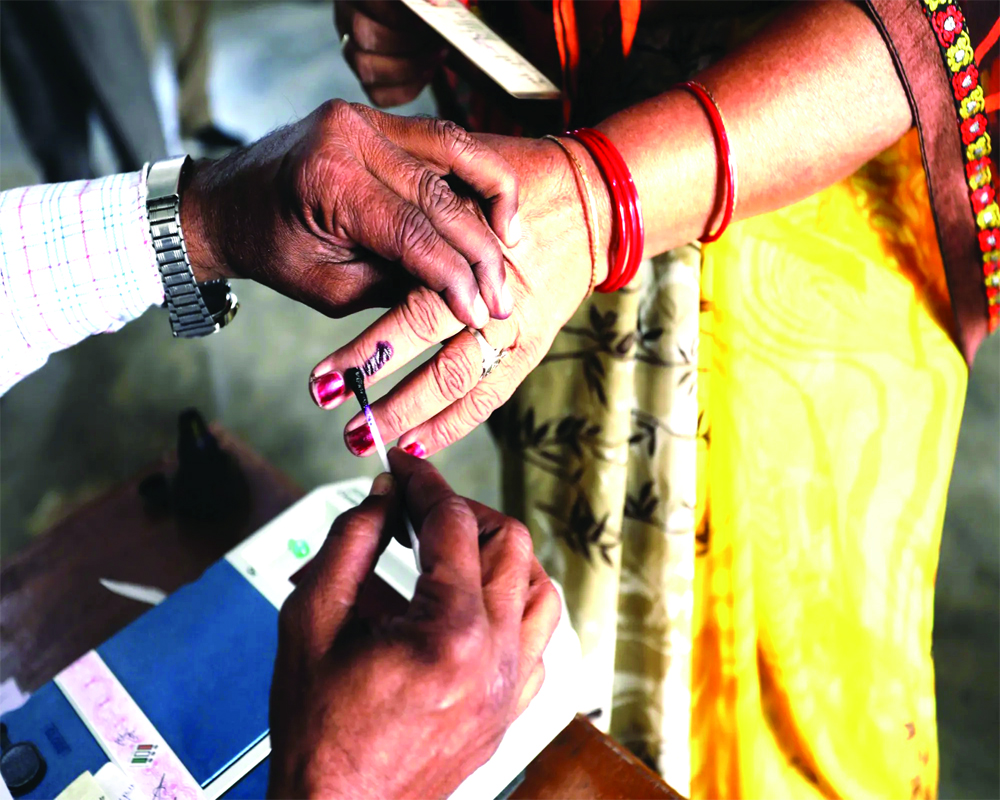
When the world’s largest democracy is once again galvanised with voting and stained fingers, though, keep in mind — your vote is your voice. Your voice is your power. Use it wisely. Participate with pride to strengthen democracy.
The writer is Folk Singer & SVEEP Icon, Patna, Election Commission