The Ministry of External Affairs (MEA) on Friday said that India is assessing the implications of the United States’ decision to revoke the sanctions waiver that had allowed New Delhi to operate the Chabahar Port project in Iran.
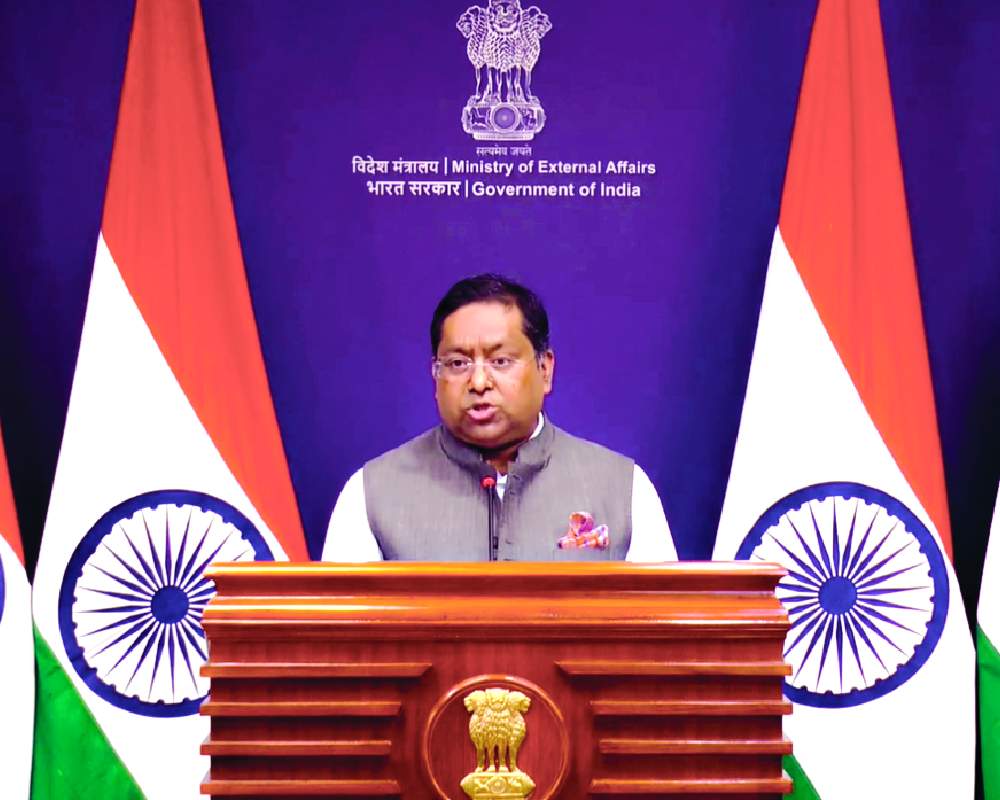
“We have seen the press statement which was issued by the US side on Thursday on the revocation of the sanctions waiver that applies to Chabahar Port. We are presently examining the implications that this revocation has for India,” MEA spokesperson Randhir Jaiswal told during a press briefing.
The move comes after the US State Department announced that it is terminating the special exemption that was granted to India in 2018 to develop and operate the Iranian port. The waiver, initially provided under the Trump administration, had allowed India to continue its involvement in Chabahar, citing its importance to regional development and humanitarian access to Afghanistan. India examining implications after US revokes Chabahar sanctions waiver According to the US State Department, the revocation will come into effect on September 29, 2025. After that date, individuals and entities operating in or supporting activities at Chabahar Port may be subject to sanctions under the Iran Freedom and Counter-Proliferation Act (IFCA).
“Consistent with President Trump’s maximum pressure policy to isolate the Iranian regime, the Secretary of State has revoked the sanctions exception issued in 2018 under IFCA for Afghanistan reconstruction assistance and economic development,” said State Department Principal Deputy Spokesperson Thomas Pigott.
The statement also included new sanctions against individuals and entities linked to Iran’s financial networks, which the US alleges are involved in funding the Islamic Revolutionary Guard Corps Qods Force (IRGC-QF) and Iran’s Ministry of Defence and Armed Forces Logistics (MODAFL). These funds, according to the US, support regional proxy groups and weapons development programs.
The Chabahar Port, located in southeastern Iran near the Pakistan border, is of strategic importance to India, especially as a counterpoint to Pakistan’s China-backed Gwadar Port. It serves as a vital trade and transit route to Afghanistan and Central Asia, bypassing Pakistan entirely.
In 2024, India and Iran signed a 10-year agreement giving India operational control of the Shahid Beheshti terminal at Chabahar. The agreement, between Indian Ports Global Ltd (IPGL) and Iran’s Port and Maritime Organisation (PMO), was hailed as a landmark moment for regional connectivity and trade.
With the US move now threatening to place that agreement in jeopardy, India is expected to weigh both its strategic interests in the region and the potential fallout from defying US sanctions.
So far, there has been no official indication from New Delhi on whether India would consider suspending or scaling back its operations at Chabahar.
According to the US State Department, the revocation will come into effect on September 29, 2025. After that date, individuals and entities operating in or supporting activities at Chabahar Port may be subject to sanctions under the Iran Freedom and Counter-Proliferation Act (IFCA).
“Consistent with President Trump’s maximum pressure policy to isolate the Iranian regime, the Secretary of State has revoked the sanctions exception issued in 2018 under IFCA for Afghanistan reconstruction assistance and economic development,” said State Department Principal Deputy Spokesperson Thomas Pigott.
The statement also included new sanctions against individuals and entities linked to Iran’s financial networks, which the US alleges are involved in funding the Islamic Revolutionary Guard Corps Qods Force (IRGC-QF) and Iran’s Ministry of Defence and Armed Forces Logistics (MODAFL). These funds, according to the US, support regional proxy groups and weapons development programs.
The Chabahar Port, located in southeastern Iran near the Pakistan border, is of strategic importance to India, especially as a counterpoint to Pakistan’s China-backed Gwadar Port. It serves as a vital trade and transit route to Afghanistan and Central Asia, bypassing Pakistan entirely. In 2024, India and Iran signed a 10-year agreement giving India operational control of the Shahid Beheshti terminal at Chabahar. The agreement, between Indian Ports Global Ltd (IPGL) and Iran’s Port and Maritime Organisation (PMO), was hailed as a landmark moment for regional connectivity and trade.
With the US move now threatening to place that agreement in jeopardy, India is expected to weigh both its strategic interests in the region and the potential fallout from defying US sanctions.
So far, there has been no official indication from New Delhi on whether India would consider suspending or scaling back its operations at Chabahar.