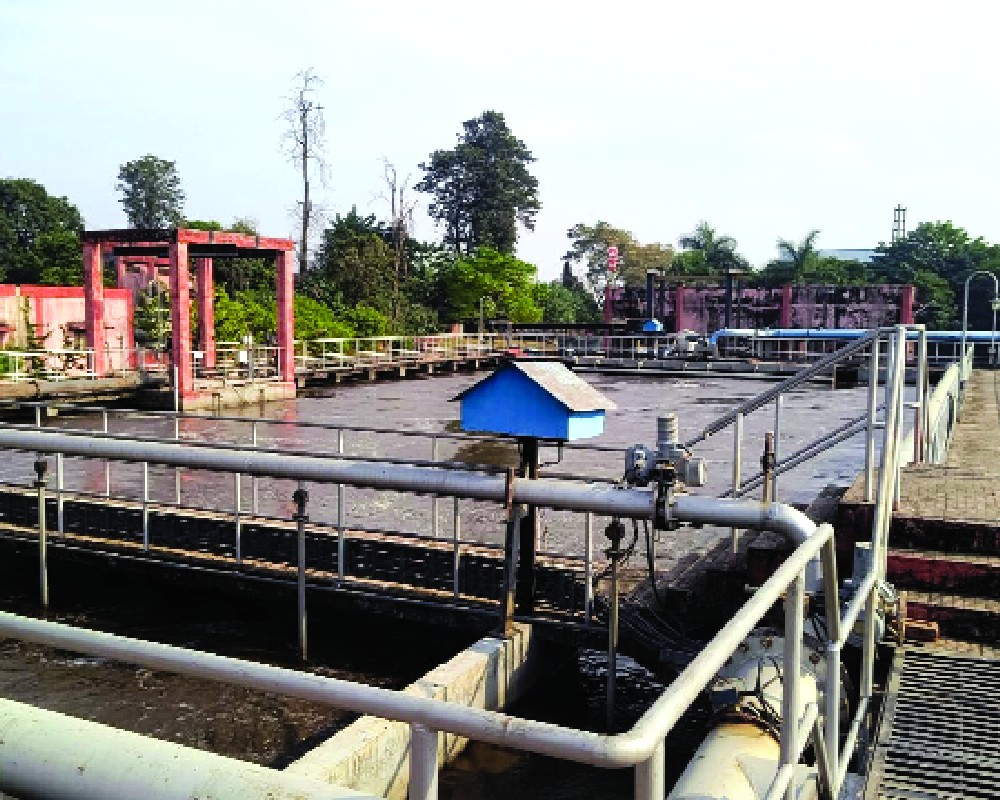
Major Sewage Treatment Plants (STPs) built in Haridwar to prevent contamination of the Ganga have started overflowing well before the design year. With the plants receiving more sewage than their capacity, locals are concerned about the holy river being contaminated in Haridwar. However, officials maintain that all sewage water is released after treatment.
Information sought under the Right To Information (RTI) Act by local activist Disha Sharma revealed that there is one 14 MLD capacity and another 18 MLD capacity STP in the Sarai area of Haridwar. The 14 MLD plant receives 15-16 MLD sewage, while the 18 MLD plant receives 20-21 MLD sewage for treatment.
The biggest STP is located in Jagjeetpur with 68 MLD capacity and this plant is receiving between 73 MLD and 75 MLD sewage. All the major STPs in this region are receiving more than their capacity for sewage, information received under the RTI Act reveals. On being asked about this issue, the Uttarakhand Jal Sansthan maintenance branch (Ganga) executive engineer Harish Bansal said, “All the overflow from the Jagjeetpur and Sarai STPs is transferred to the Peyjal Nigam STP. Their officials will be able to tell the exact quantity,” he said.
The Peyjal Nigam’s construction and maintenance unit (Ganga), project manager Meenakshi Mittal said that up to 75 MLD sewage is being received at the 68 MLD plant. “However, we treat all the sewage and do not release any sewage into the
Ganga without treatment,” she added. Meanwhile, observers point out that based on the RTI information, the design year of these plants is 2030-35, which means the STPs were engineered to remain functional and meet the intended treatment capacity and performance standards till these years. With the plants overflowing well before their design years, observers opined that an overloaded STP not only loses capacity but also increases the risk of contamination in the Ganga due to incomplete treatment of the sewage. The locals allege flaws in the design and planning of these STPs.