As Bihar gears up for the two-phase Assembly election, the focus has sharply turned to the state’s young and restless electorate—Generation Z. With nearly one in every four voters belonging to this age group (born after 1997), Gen Z has become the most decisive factor in determining who governs Bihar next.
Youth Power at the Ballot Box
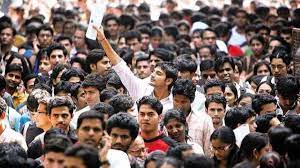
Bihar will vote in two phases—on November 6 for 121 seats and on November 11 for 122 seats. Out of the state’s 7.41 crore registered voters, about 1.75 crore are from Generation Z. That’s roughly 24 percent of the total electorate. In several districts, including Nawada, young voters form an even larger proportion—nearly 3.64 lakh out of 17.16 lakh total voters, according to the Election Commission’s latest roll revision. With over half of Bihar’s population under 40, this election is being shaped by the aspirations of a generation that has grown up in the age of smartphones, social media, and digital awareness.
Gen-Z: A Different Kind of Voter
Unlike their parents, Bihar’s Gen-Z hasn’t seen the Lalu Prasad Yadav or Congress-led governments. Their political memory starts and ends with Nitish Kumar’s rule. They are impatient, digitally savvy, and eager for measurable progress. For them, issues like unemployment, migration, poor education infrastructure, and corruption matter more than caste arithmetic or legacy politics. A 2020 Lokniti-CSDS survey showed that 21 percent of Bihar’s voters ranked unemployment and lack of industry as their top concern—a sentiment that remains even stronger in 2025.
What Each Side Is Offering to the Youth—NDA: Jobs, Skill Development, and Stability
Chief Minister Nitish Kumar has campaigned around employment and welfare schemes. Ahead of the polls, his government announced a `1,000 monthly allowance for unemployed graduates and promised one crore new jobs. Prime Minister Narendra Modi’s leadership and programs like Digital India and MUDRA Yojana continue to resonate with first-time voters.
BJP ally Chirag Paswan has also re-energised his “Bihar First” campaign, focusing on entrepreneurship and modern education to attract the young.
Mahagathbandhan: Tejashwi’s ‘New Bihar’ Vision
RJD leader Tejashwi Yadav, the chief ministerial candidate of the opposition alliance, has made jobs his central promise. He has vowed that every family in Bihar will have at least one government job if his coalition comes to power.
Tejashwi has also pledged to establish one medical and one engineering college in each district, besides expanding polytechnic and paramedical institutes. His casual, youth-friendly image—often seen in jeans and t-shirts—is part of his effort to connect directly with younger voters.
Jan Suraaj: Prashant Kishor’s Clean Politics Pitch
Political strategist-turned-leader Prashant Kishor (PK) has emerged as a challenger from outside the two main blocs. His Jan Suraaj campaign targets Gen-Z’s frustrations with corruption, delayed recruitments, and the lack of transparent governance. However, PK faces a tough road—his movement lacks the grassroots structure of major parties. Yet, his message of change and accountability has found some appeal among students and first-time voters.
Election Climate: Youth Engagement and Law & Order
As enthusiasm builds, the Election Commission has sought a report from Bihar’s DGP following the killing of a Jan Suraaj worker in Mokama, raising concerns over law and order. Political analysts believe such incidents could influence how young voters view the fairness of the electoral process.
At the same time, the rise in digital campaigning has brought new energy. All parties are heavily using social media platforms like Instagram, YouTube, and X (formerly Twitter) to reach Gen-Z voters directly, bypassing traditional rallies.
What Will Decide the Gen-Z Vote?
Jobs, education, and migration continue to be the most critical issues. While the NDA banks on continuity and national leadership, the Mahagathbandhan emphasizes change and opportunity. Prashant Kishor’s Jan Suraaj offers an alternative narrative of clean governance.
Political experts say that whichever alliance manages to convince young voters of its credibility on employment and transparency will likely gain a decisive edge.
The Verdict Lies with the Young
In 2025, Bihar’s election isn’t just about who wins power—it’s about which vision wins the confidence of its youth. Generation Z, with its tech-driven worldview and demand for real progress, may well decide not just the fate of the next government but the direction of Bihar’s political future. Whoever wins the hearts of Bihar’s Gen-Z wins the future of the state. w
New Delhi, The writer is an associate editor at The Pioneer.