The 20th anniversary of the Right to Information (RTI) Act should have been an occasion to reaffirm India's commitment to transparency and democratic accountability. Tragically, under the current government, the RTI Act, a once vibrant weapon for citizens, lies battered, diminished, and perilously close to obsolescence.
The RTI Act, passed by the UPA government in 2005, marked a watershed moment in India's democratic evolution. The genesis and passage of this Act bear the definitive imprint of Sonia Gandhi and Prime Minister Manmohan Singh. Under the UPA government led by Manmohan Singh, with vital backing from Sonia Gandhi's National Advisory Council, the RTI Act was swiftly introduced and enacted, fulfilling a long-standing promise in the Congress manifesto and transforming India's democratic architecture. For the first time, every citizen was equipped with a legal weapon to penetrate the wall of opacity surrounding the state. In its formative years, the RTI Act embodied the promise of democracy restored; information commissions at the Centre and states functioned as vigilant custodians of transparency. Citizens, activists, and journalists wielded the Act as a sword against corruption, forcing reluctant officials to cough up records, be it recruitment dossiers, land grab affidavits, or spending on welfare schemes.
However, this hard-won legacy of transparency has been bludgeoned and dismembered under the present government that exhibits unvarnished hostility toward accountability. Since 2014, the government's systematic onslaught against the RTI Act has been executed through far-reaching amendments and brazen politicisation of oversight bodies. Amendments rammed through Parliament in 2019 struck directly at the law's foundations. The statutory independence of Information Commissioners, once sacrosanct, has been desecrated; their tenure and salaries now at the mercy of government whim, turning watchdogs into supplicant lapdogs.
The government's most audacious assault emerged through the Digital Personal Data Protection (DPDP) Act, which stealthily ravages the core of the RTI Act. Earlier, the Act empowered citizens to access information about public officials, credentials, disciplinary actions, assets, and conduct, if public interest so warranted. Now, by amending Section 8(1)(j), the public interest override has been obliterated and 'personal information' is so broadly defined that the state can simply refuse any inconvenient query. This one stroke shields corrupt officials from disclosure, eviscerates the scope of investigative journalism, and blocks the pursuit of public interest litigation aimed at exposing government malfeasance. A glaring instance
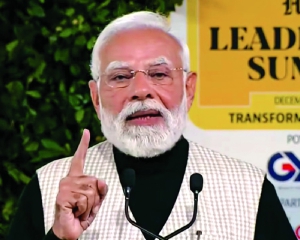
is the recent stonewalling of access to Prime Minister Modi's academic degree, an act of brazen opacity using this very amended section. What is truly diabolical is that the government deployed this fig leaf of privacy, even though the amendment itself had not yet been officially notified. Such deceitful manoeuvring lays bare the government's utter disdain for openness, proof of a governance philosophy rooted in duplicity and cover-up.
The government's contempt for accountability is perhaps most vividly manifested in its administrative sabotage. The Central Information Commission, which should have been a bastion of public interest, is intentionally left crippled, starved of eight members since last July, an act of administrative vandalism that has reduced it to a bureaucratic tomb, unable to deliver justice to the thousands of languishing petitioners. In place of impartial arbiters, the Information Commissions now resemble echo chambers for the Prime Minister's agenda, rubber-stamping government opacity and routinely rejecting RTI requests. These vacancies are not isolated lapses; they are part of a broader pattern of indifference and malice whereby the swift filling of these posts is deliberately forestalled, ensuring the RTI mechanism is reduced to a bureaucratic graveyard. Since May 2014, no new commissioners have been appointed unless forced by court orders, causing an uncontrollable backlog and delays that translate to information denied. This stalling is not administrative oversight but cynical exhaustion of public will.
Further, the present government has institutionalised a culture of "no information," routinely denying data on critical issues related to governance and public welfare. For instance, official refusals to disclose hospital oxygen shortage deaths during the pandemic, migrant worker fatalities, or unemployment statistics illustrate a shameful erasure of evidence and accountability. The government has also discontinued vital surveys, withheld consumer expenditure data, and refused to maintain or share basic administrative records
A recent and striking example involved the Election Commission of India (ECI). Under RTI queries asking for documents related to the Special Intensive Revision (SIR) of electoral rolls in 2025, the ECI shockingly admitted there were no files regarding the "independent appraisal" that supposedly justified the nationwide roll revision. It merely pointed to generic guidelines on its website, disclaiming any further information. When asked about the 2003 roll revision orders for Bihar, the commission again refused to provide archival documents and instead circulated recent guidelines, a blatant erasure of institutional memory.
This raises troubling questions about what is being hidden and why such fundamental governance decisions lack any recorded basis.
The brutal reality for those wielding the RTI Act under the present government is one of relentless danger and unmitigated violence, a testament to the government's utter disregard for transparency and accountability. Since 2014, the attacks on RTI activists have reached chilling proportions: 108 have been killed, 187 assaulted, 191 harassed or threatened, and 7 have died by suicide. These are not mere statistics; they represent a coordinated climate of terror, a deliberate scorched-earth campaign against those courageous enough to demand the truth from a state now addicted to secrecy and intimidation.
India's 'sunshine law' was once internationally lauded for compelling the state to submit to its citizens, the true masters of a democracy. Today, the present government treats the RTI Act as an intolerable nuisance, to be defanged and buried with impunity. The deliberate creation of an information asymmetry between rulers and ruled is not a mere administrative sleight-of-hand; it is a deliberate subversion of the constitutional promise of a citizenry.
Twenty years after the RTI Act, its journey is a cautionary tale, a chronicle of democratic promise mercilessly pillaged by the forces of regression. What began as a proud assertion of citizen power now lies in ruin, condemned by the present government whose aversion to scrutiny and addiction to secrecy has hollowed out Indian democracy. The government has not merely weakened the RTI Act; it has waged war on the very notion of accountable governance. Today, the RTI is little more than a relic, a faded reminder of what happens when those who would rule treat transparency as an intolerable nuisance, not a sacred duty.
Former Union Cabinet Minister & Rajya Sabha MP