It’s called the land of the gods, in Hindu mythology Lord Parashurama is credited with creating the land of Kerala by flinging his axe into the sea, causing the waters to recede and reclaim land between Gokarna and Kanyakumari. This legend holds that Parashurama, an avatar of Lord Vishnu, did this to repent for his sins and offered the land to Brahmins. Kerala is also known as Parasurama Kshetram (The Land of Parasurama) due to this story. From serene backwaters explored by houseboats in Alleppey, lush tea and spice plantations in Munnar and Thekkady, pristine beaches like Varkala and Kovalam, and a rich cultural heritage encompassing vibrant festivals such as Onam, classical dance forms like Kathakali, and delectable cuisine. Additionally, Kerala is renowned for its Ayurvedic wellness and healing traditions. Key prehistoric sites in Kerala include the Edakkal Caves in Wayanad, which feature ancient petroglyphs and offer insights into the Mesolithic and Neolithic periods, and Pandavanpara in Neyyattinkara, a rock shelter with engravings from the Neolithic age. Other significant discoveries include hero stones found in the Attappadi region of Palakkad and various megalithic burials and monuments throughout the state. The earliest evidence of established agricultural societies in Kerala appears during the Iron Age and Early Historic Period (c. 6th century BCE - 6th century CE), linked to the material remains from megalithic burials and excavated sites like Pattanam. While the introduction of rice cultivation may be much older, with some authors suggesting dates as early as 3000 BCE.
The earliest recorded mention of ‘Kerala’ is from the 3rd-century BCE Mauryan Emperor Ashoka’s rock inscriptions (2nd and 13th major rock edicts), referring to the region as ‘Keralaputra’, one of four kingdoms to the south of his empire. This indicates a significant political presence, likely referring to the ‘Chera’ dynasty, by this time. Further early evidence includes trade with Roman and Greek civilisations for spices and references in ancient texts, placing Kerala as a key global trade hub in the BC era. The Greek ambassador Megasthenes in his book ‘Indica’ mentions the Pandyas, who occupied the region which is now considered Kerala. Roman writers like Pliny the Elder discussed ancient port cities in what is now Kerala, such as Muziris and Tyndis, in his writings, particularly in his work ‘Natural History’.
He described Muziris (Kodungallur) as India’s “first emporium” and noted Tyndis (Thondi) as a major centre of trade with the Roman Empire. These descriptions provide valuable insight into the region’s importance in ancient trade networks, especially for commodities like pepper. In fact, pepper was so valuable that it was called the “king of spices” and served as the “Black Gold” of its time, fuelling exploration and contributing to economic shifts in the Roman Empire and beyond. The last few lines make it clear that spices and food have been an inalienable and integral part of Kerala’s journey through the ages. The state has a formidable and revered line-up of sub cuisines that make for a riveting and memorable experience. The primary sub-cuisines in Kerala’s diverse culinary landscape are ‘Malabar’ cuisine (known for its Arabic and Persian influences, like Thalassery biryani), ‘Travancore’ cuisine (heavily influenced by local traditions and the region’s culinary practices), and ‘Kuttanadan’ cuisine (distinguished by its use of duck, fish, and local spices, especially in the backwater regions).
These distinct styles are shaped by the diverse geographic features and historical foreign influences like those of the Aryans, Romans, Portuguese and the Dutch, along with varied local influences of different regions within Kerala. In this article I will focus on the Malabar cuisine with a promise of addressing the other two in the times ahead.
Flanked by the Western Ghats and the Arabian Sea, the Malabar region is responsible for having provided some of the most delicious and flavourful additions to Kerala cuisine. It has a wide range of vegetarian and non-vegetarian dishes, fulfilling important characteristics of any cuisine — balance of flavours, variety and nutrition. A cultural embodiment of the Mughal-Arab influence on the Malabar coast, reflecting centuries of trade and travel is the ‘Thalassery Biryani’. It is made with mutton or chicken, and unlike other biryanis that use long-grain rice, Thalassery Biryani uses the distinctive short-grain ‘Kaima’ or ‘Jeerakasala’ rice, which gives it a unique texture and aroma. It is infused with local spices such as green cardamom, cinnamon, cloves, fennel seeds, black peppercorns, mace, nutmeg, star anise, and caraway seeds (Shahi Jeera), which are roasted and ground into a unique garam masala. Other integral ingredients include ginger-garlic-green chili paste, fresh coriander and mint leaves, and turmeric powder- all of which contribute towards the dish’s distinctive aroma and flavour. ‘Kozhi Pacha Vattichathu’ is a traditional Malabar chicken dish known for its thick, spicy gravy made with coconut oil, coconut milk, ginger-garlic paste, green chilies, and a variety of other spices, all cooked down to a “vattichathu” — a cooking technique in which the gravy is dried up until it’s thick and rich. ‘Stuffed Chicken Fry’, known as ‘Kozhi Nirachathu’ or ‘Kozhi Nirachu Porichathu’, is another traditional dish of this area. It features a whole chicken stuffed with a flavourful, spiced filling of onions, eggs, and sometimes minced meat or rice, it is then fried or baked to perfection. The name “Kozhi Nirachathu” translates to “stuffed chicken” in Malayalam, highlighting its preparation method. A chicken dish that is known to set the taste buds ablaze is the ‘Thalassery Kozhi Curry’. It is renowned for its elevated spice levels owing to heavy inclusion of green and red chillies. Other key ingredients include mustard seeds, curry leaves, fennel, garlic, onions and coconut — the dish is relished with hot appams or ghee rice.
A flavourful offering from the region is called ‘Kozhippidi’ or Kozhi Pidi’ — it is a traditional and authentic Malabar dish, consisting of rice flour dumplings cooked in a spiced chicken and coconut curry. The dish incorporates ingredients like turmeric, coriander, red chili powder, pepper, cumin, and garam masala, along with whole spices like cardamom, cinnamon, cloves, and mustard seeds. It is considered a delicacy from the region often prepared on special occasions and for guests. Interestingly, the preparation method, including the spices and the form of the dumplings, can vary from region to region, and even from household to household within Malabar. A burst of flavours is the hallmark of the iconic ‘Thalassery Prawns Curry’ — a signature Malabar Cuisine dish that highlights the rich and spicy flavours, characteristic of the region’s cuisine. It is made using curry leaves, green chillies, roasted fenugreek powder, tamarind water, ginger, garlic, turmeric and paste of ground coconut. It’s a coastal dish from North Kerala that is often prepared in earthen-pots that results in a unique flavour profile- pairing well with Malabar flatbreads or rice. The regional love for prawns is also exhibited through ‘Prawns Ilayada’ or ‘Chemmeen/Konchu Illayada’- made using prawns, rice (to make the dough), coconut oil, onions, ginger, green chilies, and spices like turmeric and chilli powder. It features a unique preparation style, with a spiced prawn mixture enclosed in a rice-based dough, and then steamed. A dish that has fish as the star element is the Malabari ‘Fish Molee’ or ‘Meen Moilee’. It is a mild, creamy and tangy fish stew made with a coconut milk base, green chillies, and tomatoes. Fish Moilee is known for its subtle flavours- relished with popular accompaniments like appam or steamed rice. It can be made with a variety of fishes that include pomfret, kingfish, seer fish, red snapper and tilapia. The dish is believed to have Portuguese origins, adapted to suit the local palate with ingredients like coconut milk and green chillies. Another classic Malabari dish is ‘Kunji Pathiri’- specifically a delicacy of the Mappila community from the Malabar coast, where it is often served for special occasions. It consists of small, soft, steamed rice dumplings served in a rich, flavourful meat gravy (chicken/mutton) — creating a comforting one-pot meal. Another beloved dish of the Mapilla community of Malabar region is ‘Meen Pathiri’- a type of rice pancake (pathiri) that is stuffed with a flavourful, spiced fish filling and then steamed or shallow-fried. This savoury dish is often served as a main course or a snack, and is considered a comfort food within Malabar cuisine.
The non-vegetarian dishes in the Malabar region are perfectly complemented by the vegetarian varieties. Let me begin with ‘Kadala Curry’- a quintessential and very traditional dish from this expanse, particularly known as a popular breakfast item served with Puttu (cylindrical steamed rice cakes), Appam, or Idiyappam. The name “Kadala” is the Malayalam word for black chickpeas, which form the base of this flavourful, spicy, and hearty coconut-based curry. The dish is known for its rich, robust, and warm flavours, derived from roasted spices, coconut, and curry leaves. The stellar ‘Parippu Curry’ comes next- it is a traditional Malabari dish and a staple in Kerala’s festive meals, especially the Onam Sadya. Also known as ‘Kerala Parippu Curry’, it’s a comforting dal dish made with moong dal (split green gram), coconut, and a ghee-based tempering, considered a must-have because of its simple taste, nutty flavour and nutrition. A dish that originated in the Malabar region is the revered ‘Malabar Parota’ — it is typically made from refined wheat flour (maida), water, salt, sugar, and oil or ghee. This speciality is known for its soft, flaky, and crispy texture with distinct layers that involve an elaborate dough-making process with resting and folding to create numerous thin layers. It is claimed that its origins can be traced to the Arab traders who visited this area. ‘Pathiri’ is a classic and popular staple of Malabar cuisine, it is a soft, thin rice flour flatbread or roti. The dough is kneaded and then rolled out very thinly before being cooked on a griddle or tawa. The result is a soft, light, and airy flatbread that can be steamed, griddled, or deep-fried (in the case of varieties like ‘Nei Pathiri’). Pathiri serves as a perfect accompaniment to savoury dishes — its delicate texture, and mild flavour complementing the richness of Malabar curries. The region has its own variation of the state favourite — ‘Appam’ which is made with rice flour and coconut milk. The fermentation process results in a pancake with soft, spongy centre and thin, crispy, lacy edges. It is a traditional staple and breakfast dish from Kerala, with the Malabar version made with a unique, local fermentation process. A rice noodle dish that originated in Kerala and much loved in the Malabar region is ‘Idiyappam’ — also known as ‘Noolappam’ or ‘String Hoppers’, made from steamed rice flour noodles and served with curries or sweet coconut milk. It is a staple breakfast and tiffin item throughout Kerala- including the Malabar coast.
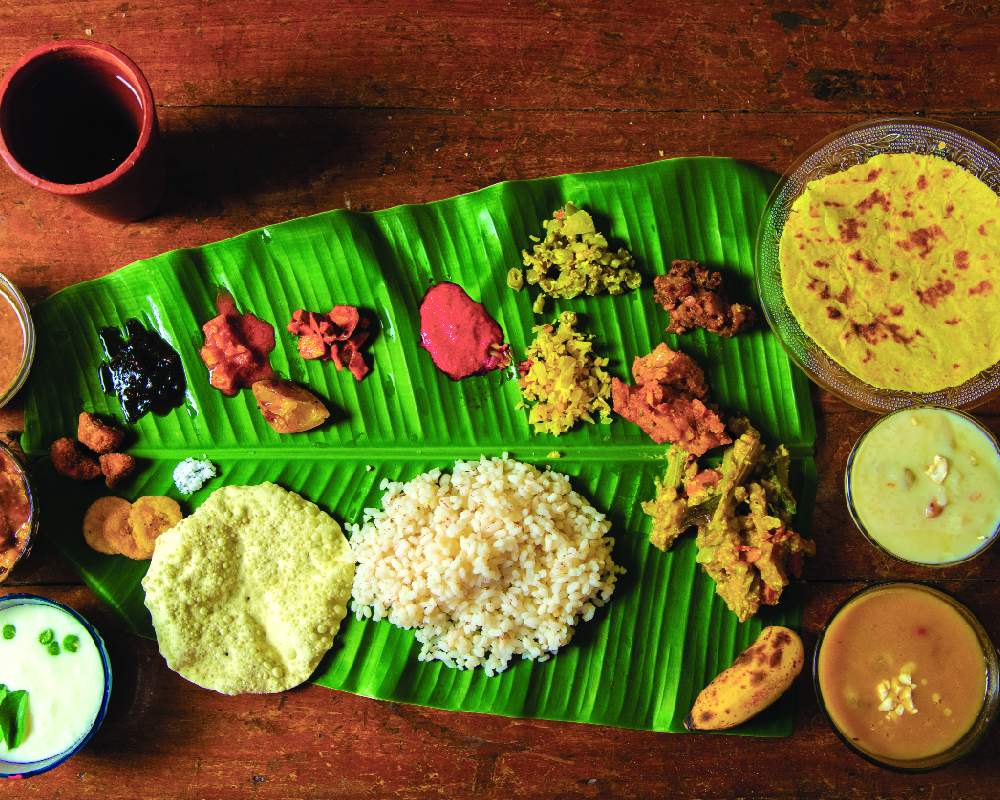
Our culinary journey continues with ‘Malabar Avial’ — a traditional mixed vegetable dish cooked in a coconut and curd-based gravy. It’s an essential component of the Kerala vegetarian feast, called a ‘Sadya’, and is enjoyed during celebrations like Onam. It is made with a variety of vegetables, cut lengthwise, cooked together in a specific way. Common vegetables include yam, raw banana, beans, carrots, and drumsticks. The dish is finished with a tempering of coconut oil, mustard seeds, and curry leaves for a distinctive aroma. ‘Pazham Pori’ is considered a classic and popular tea-time snack originating from Kerala, particularly known for being a favourite in the Malabar region. It is made from ripe plantains or bananas, dipped in a simple flour batter, and deep-fried until golden and crispy, creating a sweet and soft interior. The sweet palate is well nursed by legendary dishes in the Malabari cuisine. These include ‘Unniyappam’ — a sweet, round snack made with a batter of rice flour, jaggery, ripe banana, roasted coconut bits, and spices like cardamom, then fried to a crisp exterior and soft interior. This snack is enjoyed at tea time, and it also holds cultural significance, often served during festivals and auspicious occasions like the Onam Sadya. Then there is the delicious ‘Unnakaya’ — it’s a spindle-shaped dessert made from mashed ripe bananas or plantains, stuffed with a sweet filling of grated coconut and dry fruits like cashews and raisins, and then deep-fried until golden brown. This popular snack is often served during festive occasions like weddings, and also as an evening snack with tea. And my list is completed by ‘Ela Ada’ — it is a traditional sweet dish originating from the Malabar region. It is a steamed rice dumpling with a sweet filling, typically made of grated coconut and jaggery, and wrapped in banana leaves for a distinctive aroma and flavour. It is steamed, making for a healthy, oil-free preparation, and is historically made for celebrations connected to harvest and festivals. Ela Ada’s origins can be traced back to Kerala’s agrarian lifestyle exhibiting robust flavours. The cuisine of Kerala is a celebration of flavours, it operates on a wide canvas- proving to be a treat for all those who taste it. Malabar cuisine has over the centuries infused and imbibed different ingredients and dishes, and made it its own. It is now on our generation, to expose our children and youth to the multitude of regional cuisines — increasingly communicating their unique balance of flavours, variety of dishes and unmatched nutritional value. The objective is to make them savour these eclectic dishes, enabling them to make some of these, a part of their gastronomic journey. It is the collective responsibility of the current generation along with our children and youth — to not just keep the regional cuisines heritage alive — but make it thrive in the times to come!