As alternative and digital media reshape the communication landscape, the Government’s premier information arm — the Indian Information Service (IIS) — is poised for a major transformation. According to senior officials, multiple frameworks are being developed to retain and motivate IIS officers selected through the UPSC, ensuring that they view the service as a career destination rather than a stepping stone to the coveted IAS, IPS, or IFS.
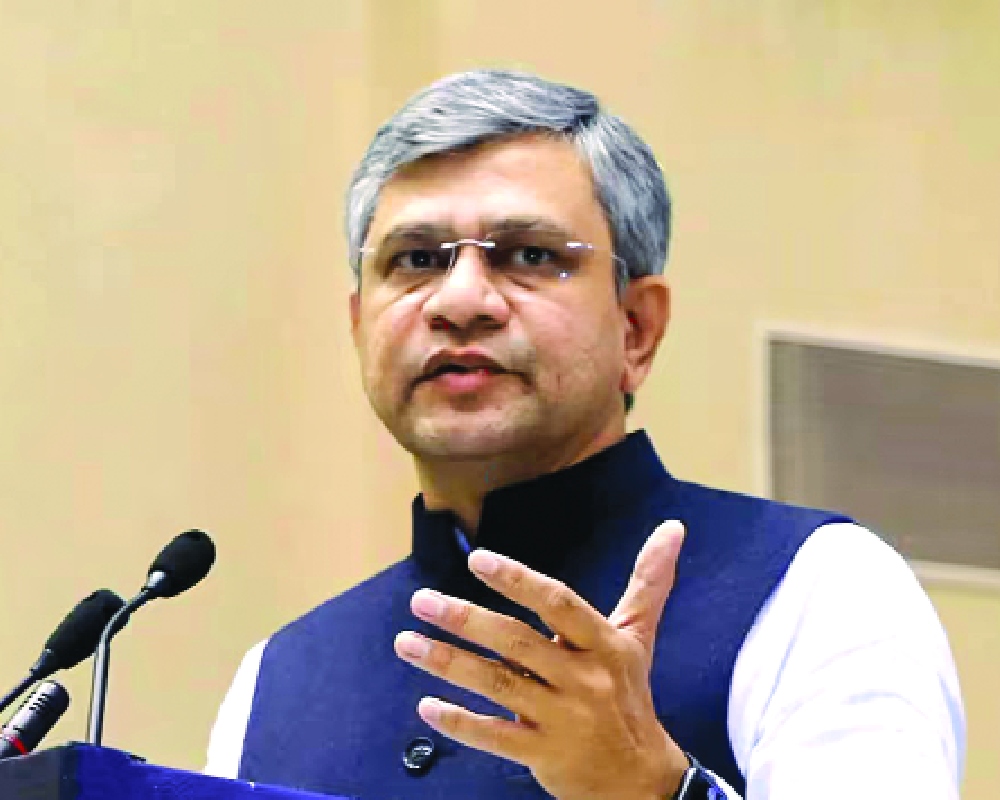
“Yes, the Government is paving the way to make IIS a more attractive and future-oriented service,” Information and Broadcasting Minister Ashwini Vaishnaw told The Pioneer. “In the coming years, we will be living in an information age dominated by Artificial Intelligence. With authenticity constantly challenged, the Government is strengthening the most crucial information arm of its ecosystem,” he added.
Vaishnaw, who also holds the Railways and Electronics & Information Technology portfolios, said that the revamped IIS will reflect a broader shift in India’s media and communication framework.
Officers involved in drafting the new structure noted that the overhaul aims to align the service with the fast-changing dynamics of digital, alternative, and social media. “There is an increasing demand for quick and credible information. The Government needs to stay ahead of the curve. Today’s media ecosystem is a lucrative and competitive space that requires specialised expertise — even within the bureaucratic setup,” said one official.
The minister also highlighted that the Press Information Bureau (PIB) has intensified its outreach, releasing regular backgrounders and research-based documents on critical national issues. “There will be integration of the RNI, PIB, and CBC to ensure better coordination, convergence, and efficiency across media outreach and regulatory functions,” Vaishnaw added.
Aligned with the Government’s vision to strengthen the ‘Creator’s Economy,’ the Ministry of Information and Broadcasting has launched initiatives such as WAVES Bazaar Global Outreach, which has already delivered tangible results at international film festivals and gaming events.
Sources said that creative content worth over `300 crore has found markets through this platform, positioning the MIB as a nodal ministry for India’s expanding information and content economy.
The proposed revamp, therefore, marks not just an administrative reform but a strategic realignment — one that aims to make the Indian Information Service future-ready in an era where data, storytelling, and digital influence are shaping governance itself.
The Government has planned a series of initiatives to shield the conventional media from the disruptions expected due to rapid digitisation in the sector. Vaishnaw further said the Government plans to remove the regulatory overhang in the radio industry and Television Rating Point (TRP) reforms.
Vaishnaw said the ministry is exploring ways to improve the television rating system to ensure fair revenue to television channels from government advertisements. He also said the government is also working on the integration of the Registrar of Newspapers for India (RNI), Central Bureau of Communication (CBC), and Press Information Bureau (PIB) to improve coordination across media outreach and regulatory functions. In a good news for conventional media, sources said the Government is also considering increasing the advertisement rates for print and television media by almost 27 per cent additional to the existing rate slabs.