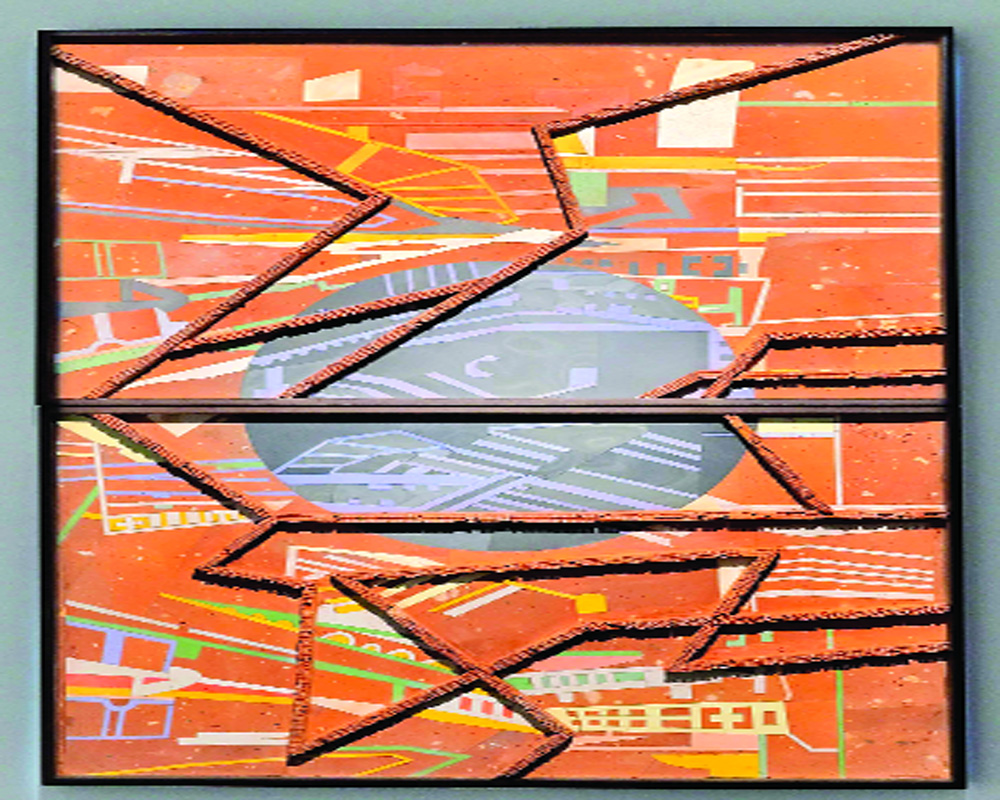
In Terraform, M. Pravat invites us to walk through a world that feels both familiar and unsettlingly fragmented. This solo exhibition, hosted at STIR Gallery, Delhi, is an ambitious exploration of how our built environments intersect, clash and coexist with nature. By using materials like bricks, pigment, dust and LED lights, Pravat creates pieces that feel like echoes of urban landscapes, half-built, half-ruined and wholly captivating.
Walking into the gallery feels like stepping into a suspended reality. The sculptures and installations seem to hold secrets, each fragment whispering stories of cities in transition. Pravat’s work doesn’t just replicate the urban environment; it deconstructs it, laying bare the tensions between construction and destruction, between human ambition and nature’s quiet defiance. As I moved through the space, I found myself reflecting on my own relationship with the city, its noise, its chaos and its beauty.
What struck me most was how each piece felt alive, as if caught mid-metamorphosis. There’s a raw, unpolished energy to the work that mirrors the constant flux of modern life. Pravat has a remarkable ability to take the ordinary, bricks, stone, dust land elevate it into something profound. The interplay of light and shadow adds another layer, creating moments that feel almost cinematic, as though you’re watching the city breathe. But beneath the aesthetic appeal lies a deeper message. Terraform is a powerful commentary on the relentless pace of urbanisation and its cost to the natural world. Pravat’s art is not preachy; instead, it nudges you gently, encouraging introspection. It’s a reminder that we are living in a delicate balance, one that we often take for granted. For me, the most thought-provoking aspect of the exhibition was its sense of incompleteness. These aren’t polished, finished works, they’re intentionally raw, mirroring the way cities are always in a state of becoming. It’s both unsettling and oddly hopeful, a expression to human resilience and the possibility of change.
Pravat’s ability to turn complex themes into visceral experiences is what makes this exhibition so memorable. Pravat’s Terraform goes beyond being a traditional art exhibition. It’s an immersive experience that urges us to pause and reflect on the way we shape and inhabit the world around us. It encourages a deeper look at the delicate balance between creation and destruction, challenging us to rethink our relationship with the spaces we build and the nature we often overlook.
As the artist explained, “This landscape is actually magical lands, a digital landscape. I’m inspired by the digital format and I started rendering a digital feeling. When you see it from a distance, it looks consciously faded, like it’s mathematically exercised in certain ways, cutting your land and developing your shape. The challenge is how I mixed everything together, where contrast exists between the elements, and people should think about why this context has changed.â€