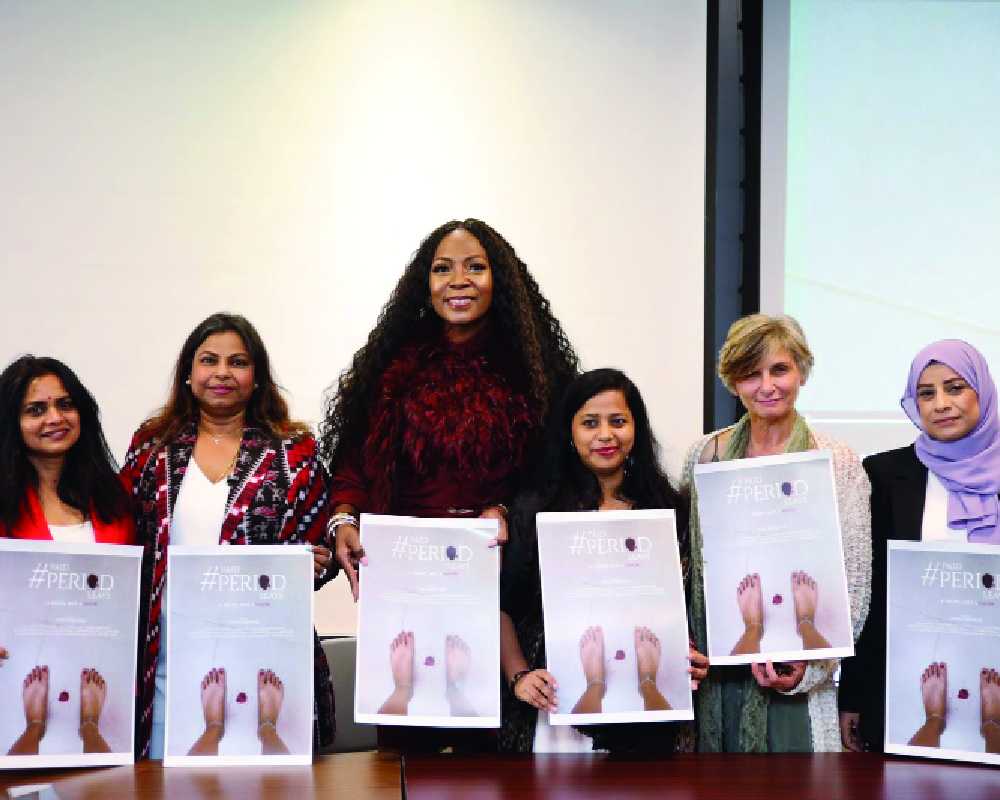
The 4th International Conference on Paid Period Leave was held on September 20 at the United Nations Church Centre in New York, marking a significant step in the global movement for menstrual equity. Spearheaded by Ranjeeta Priyadarshini, global campaigner and founder of the Paid Period Leave initiative, the conference drew participation from diplomats, health professionals, artists, entrepreneurs, and policymakers from across the world.
Sponsored by Ecof Enterprise and supported by CSNR, the Odisha Society of the Americas, and other national and international partners, the event sought to advance dialogue on menstrual dignity, workplace justice, and inclusive policy reform. The conference opened with the international screening of the documentary "Paid Period Leave — A Right, Not a Favour", directed by Pradeep Kumar Nayak and produced by Ranjan Kumar Dash, Jagamohan Tripathy, and Ansuman Nayak, with Ashish Kumar Nayak as Creative Director.
The film explores the lived realities of working women and calls for Governments and employers to treat menstrual health as a workplace rights issue. More than just a film, it was presented as a movement demanding structural reform. Renowned chef and humanitarian Vikas Khanna and US-based actor and author Renee Knorr officially launched the documentary. They praised its emotional depth and urgency, stating that the film "illuminates a silent struggle with grace and power," and emphasized the role of storytelling in driving social change.
A panel of distinguished speakers addressed the challenges and opportunities related to menstrual leave policies. Ranjeeta Priyadarshini shared her journey from Odisha to international advocacy, highlighting Odisha’s implementation of paid period leave and growing support in states like Karnataka, Rajasthan, and Bihar. Rui Dai, President of the International Artificial Intelligence Association, emphasized the issue’s global relevance, while Dr Omopeju Afanu of the United Nations Association of Nigeria called for UN-wide adoption of menstrual leave policies.
A special edition magazine chronicling Ranjeeta’s advocacy journey was launched during the panel. Subhasmita Mishra, Executive Magistrate of Odisha, moderated the discussion and spoke on the administrative challenges at the grassroots level, reinforcing the value of local governance in shaping national reform. Innovation and outreach were key themes. Lubna Dajani, CEO of Allternet Catalyst Now (USA), highlighted the power of digital platforms in amplifying menstrual health narratives. Fahima Atawna from Israel shared effective community engagement models, while Nagesh Rajanala, President of the Odisha Society of the Americas, stressed the diaspora’s role in pushing for policy change abroad. Business strategist Sushmita Pradhan added a corporate perspective, emphasising the economic value of workplace menstrual support.
The conference also celebrated the adoption of paid period leave by 74 companies across India, Sri Lanka, Dubai, and Kenya. Thailand’s official endorsement of the global memorandum was hailed as a major diplomatic achievement. More than a policy dialogue, the event was a collective call to action. Delegates urged international bodies, including the United Nations, to formally recognize paid period leave as a human right and integrate it into global labour and health policies.