India and Israel cross new agricultural milestone
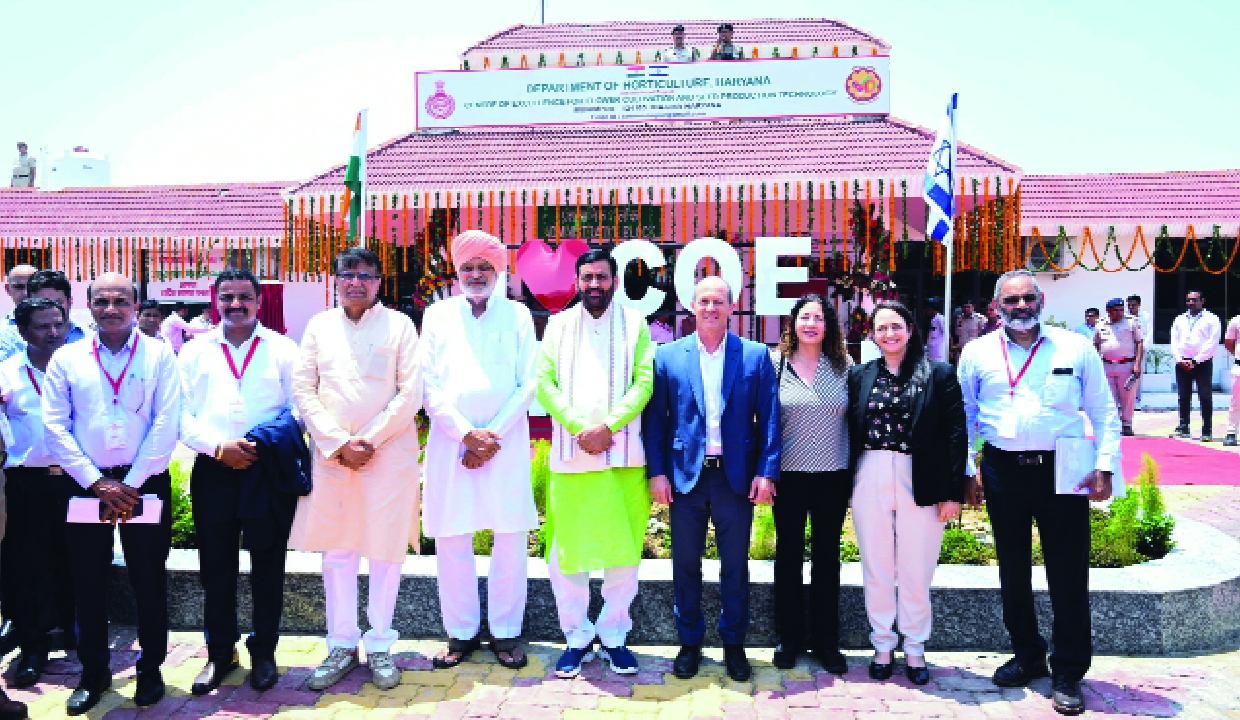
More than 3,500 farmers from across Haryana gathered in Munimpur village, Jhajjar district, on 17 June 2026 to inaugurate the 35th Indo-Israel Centre of Excellence (CoE) under the Indo-Israel Agricultural Project (IIAP).
Haryana Chief Minister Nayab Singh Saini, Agriculture Minister Shyam Singh Rana, and Israel’s Ambassador to India, Reuven Azar, joined the event, underscoring the growing trust in this long-running bilateral partnership.
The new centre, built at a cost of Rs 8.50 crore, specialises in seed production technology, floriculture, and quality planting material.
A companion Horticulture Research Centre at Raiya, costing Rs 13.27 crore, will focus on locally adapted horticultural crops and medicinal plants. Together, they mark another milestone in a programme that began with a single centre at Gharaunda in 2008 and has now expanded to 35 facilities across 12 states.
Chief Minister Saini highlighted the centres’ role in boosting farmer incomes through innovative technologies and international collaboration. Ambassador Azar pointed to a deeper shift: “The first Centre of Excellence, 30 years ago, was brought from Israel with Israeli components and technology. But this centre was built only by Indian companies with Indian components. Today and in the future, every technology we bring from Israel will be produced in India and owned by India.”
This evolution from technology importer to domestic manufacturer reflects the programme’s maturing model of practical knowledge transfer.
Rather than abstract research, the Centres operate as working demonstration farms showcasing protected cultivation, drip irrigation, fertigation, high-quality seedlings, and integrated pest management under Indian conditions.
The scale is impressive. The network annually produces over 25 million quality vegetable seedlings and 387,000 fruit plants, while training around 1.2 lakh farmers each year.
More than 250 Indian agricultural officers have received advanced training in Israel. The initiative has also grown into “Villages of Excellence” to spread modern practices across entire rural clusters.
In a country where agriculture consumes the lion’s share of freshwater and groundwater depletion is a pressing concern, the partnership’s focus on resource efficiency is particularly valuable. Israeli expertise in water-scarce farming — pioneered through precision irrigation and protected cultivation — has been adapted to Indian realities, helping farmers raise yields and quality while using fewer inputs.
A new example is N-Drip, a gravity-powered micro-irrigation system introduced through Israel’s MASHAV agency. By eliminating the need for pumps or electricity, it aims to bring precision irrigation within reach of small and marginal farmers.
The true measure of success lies not just in numbers of centres or trainees, but in higher incomes, better produce, and more sustainable practices.
As India balances the need to raise farm incomes with responsible resource use, the Indo-Israel model offers a proven template for long-term, practical technology transfer at scale.