LG Sandhu attends 100th martyrdom anniversary of Teja Singh Samundri
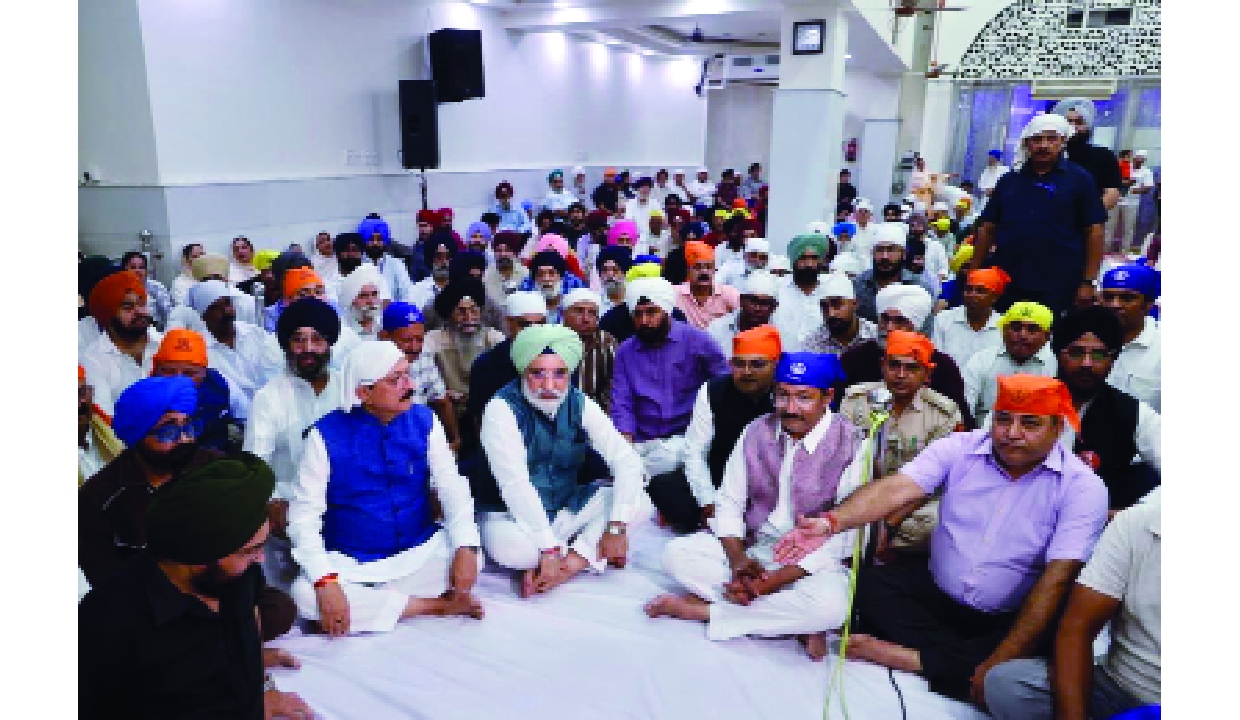
Delhi Lieutenant Governor Taranjit Singh Sandhu on Monday attended a Vishesh Kirtan Darbar at Gurdwara Sri Guru Singh Sabha in Janakpuri to mark the 100th martyrdom anniversary of Sardar Teja Singh Samundri. On the occasion, the LG recalled a figure who established a girls’ school in 1917 despite not having passed Class 6 himself, personally led Dalit residents to draw water from a village well from which they had been barred, and died in Lahore Jail in 1926 at the age of 43 after refusing to apologise for his release.
Delhi Minister Ashish Sood also attended the programme. Gurbani Kirtan was rendered by Bhai Surjeet Singh, Hazoori Raagi, and Bhai Jaskaran Singh of Patiala, followed by Ardaas.
Addressing the gathering, Sandhu recalled that of 53 Sikh leaders arrested and jailed in Lahore, only 11 refused to apologise and secure their release. Teja Singh Samundri was among them. He died in Lahore Jail under circumstances that Master Tara Singh had described as mysterious. Bhai Vir Singh called him a supreme, holy martyr. Master Tara Singh described him as a complete Sikh, remarking that his entire life was the life of a martyr.
Sandhu noted that Teja Singh Samundri Hall in the Darbar Sahib complex remains, to this day, the only building in that complex named after an ordinary Sikh, a distinction that reflects the singular esteem in which he continues to be held by the Panth.
On his contributions to social reform, Sandhu recalled that in 1921-22, Teja Singh Samundri personally led Dalit residents of Sarhali to draw water from a village well from which they had historically been excluded, drinking the water himself first. This act of deliberate equality, Sandhu said, came decades before such causes gained wider currency in Indian public life.
On education, Sandhu noted that although he had not passed Class 6 himself, Teja Singh Samundri established schools in Sarhali and Samundri in 1917, including a girls’ school. From those institutions have since emerged five Generals of the Indian Army, two Vice-Chancellors, and several Olympians.
On women’s franchise, Sandhu recalled that Sikhs exercised their voting rights for the first time in the 1926 SGPC election, with women voting as early as 1926, a year ahead of Great Britain, where women first voted in 1927.
On his role in the freedom movement, Sandhu said Teja Singh Samundri was among the first to court arrest during the Shaheedi Morchas between 1914 and 1920, and was chosen by the Sangat to lead the Kar Seva at Darbar Sahib in 1923.
He recounted an episode from the Guru Ka Bagh Morcha, where scholar Professor Ruchi Ram Sahni had asked how the agitation could be called successful. Teja Singh Samundri had pointed to the spontaneous support extended by the Hindu community of Amritsar in arranging mats and supplies for protesters, citing it as an example of Hindu-Sikh unity of that era.