US-Pakistan tilt: Shifting power game in South Asia
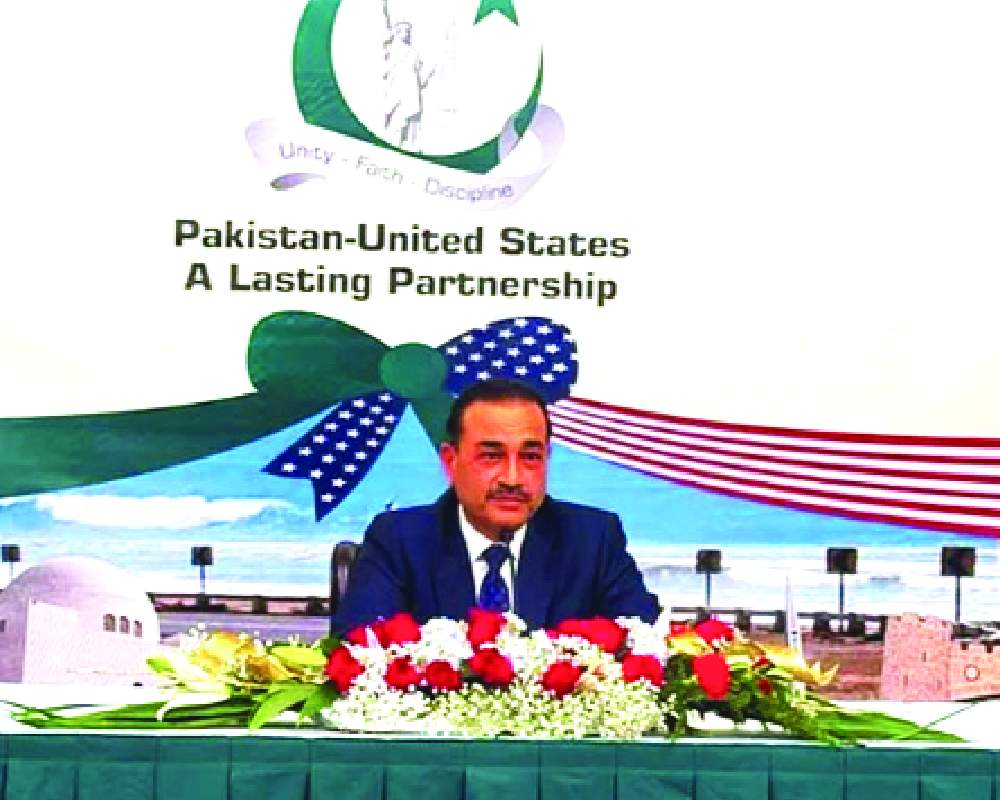
Pakistan Army Chief Asim Munir’s second visit to the United States drew considerable attention in diplomatic and strategic circles. His itinerary was far from routine: he shared lunch with US President Donald Trump and delivered remarks at the retirement ceremony of General Michael Kurilla, the outgoing head of US Central Command (CENTCOM). These gestures underscored Washington’s recognition of Pakistan’s continuing relevance in its regional calculus. Yet the visit also carried a sharper undertone. Munir, in a strikingly assertive manner, issued direct threats to India — including a nuclear threat — marking the first instance of such rhetoric being delivered from US soil. For Pakistan, the visit was an opportunity to reassert its strategic value; for the United States, it reflected a familiar pattern of “tilt tactics” used historically to preserve influence and recalibrate power balances in volatile regions.
Understanding Tilt Tactics
The concept of “tilt tactics” is deeply rooted in US foreign policy practice. It gained prominence during the Nixon administration, when three imperatives shaped American strategy: securing immediate strategic security, creating long-term geopolitical advantages, and maintaining Washington’s global relevance.
Tilt tactics are often paired with what scholars describe as “strategic de-hyphenation”—the deliberate attempt to deal with rival states independently, avoiding zero-sum choices.
In practice, this means the US may engage India and Pakistan separately, but tilt toward one at key junctures to serve broader objectives. The origins of this approach in South Asia date back to the early 1970s. Confronted with Soviet expansion and eager to open channels with China, Washington relied on Pakistan as a bridge. Declassified CIA files reveal how Yahya Khan played messenger between Nixon and Zhou Enlai. Pakistan facilitated secret diplomacy that led to Henry Kissinger’s historic visit to Beijing in 1971, paving the way for Sino-American normaliSation.
Yet, this tilt came at a moral cost. Washington turned a blind eye to Pakistan’s brutal Operation Searchlight in East Pakistan, which unleashed mass atrocities later documented in the famous Blood Telegram. Despite an official arms embargo, the US covertly supported Pakistan with spare parts and weapons routed through third parties like Jordan and Iran.
The tilt was therefore less about principle and more about expediency: while maintaining nominal ties with India, the US prioritised Pakistan to serve its China and Cold War strategy.
The First Abandonment
However, tilt tactics have historically been transactional, not permanent. After Pakistan’s defeat in the 1971 war and the birth of Bangladesh, Washington quickly reassessed. Financial aid dropped dramatically, military assistance shrank under revived embargoes, and by the late 1970s, Pakistan faced new pressures. The Symington Amendment imposed sanctions on nuclear aspirants, with Pakistan a prime target. CIA assessments increasingly focused on instability and proliferation risks rather than on cultivating Islamabad as a frontline ally. This first abandonment revealed the cyclical nature of US engagement: once Pakistan’s immediate utility declined, strategic indifference followed.
Power Management Beyond
South Asia South Asia was not unique. The US tilt-abandonment cycle also played out in Latin America. In Chile, Nixon and Kissinger funded covert operations to destabilise Salvador Allende, ultimately paving the way for Augusto Pinochet’s 1973 coup. Washington tilted heavily toward Pinochet, overlooking widespread torture and even the killing of American citizens. But when Pinochet’s utility waned in the late 1980s, Washington distanced itself, supporting democratic forces in the 1988 plebiscite.The Middle East offers similar examples. Saddam Hussein was courted in the 1980s as a bulwark against Iran, only to be discarded and destroyed once his power grew inconvenient.
Saudi Arabia, too, has experienced phases of tilt and disengagement — courted during energy crises, briefly shunned after the Khashoggi murder, then re-engaged when oil and Iran’s assertiveness demanded it. These cases illustrate the broader US strategy: power management through selective tilting, temporary indulgence, and eventual recalibration.
Renewed Tilt Toward Pakistan
Against this backdrop, Asim Munir’s recent US visit signals a renewed tilt toward Pakistan. Ironically, this comes at a time when Pakistan’s economy is fragile, its energy sector dependent, and its domestic politics unstable. Yet Washington perceives Pakistan’s strategic utility, particularly in relation to Iran. President Trump’s announcement of US investment in Pakistan’s oil refineries, despite Pakistan’s limited crude production, highlights how symbolism often matters more than substance in tilt phases. Several factors underpin this renewed engagement:
Strategic Intelligence on Iran
Declassified CIA assessments from the 1980s emphasised Pakistan’s role in monitoring Iran through SIGINT and HUMINT. Baluchistan’s proximity to Iran’s restive Sistan-Baluchestan province makes Pakistan uniquely placed to provide intelligence on insurgent movements and Iranian-backed groups. More recent assessments, particularly during US operations in Afghanistan, confirm Pakistan’s intelligence-sharing on Iran’s Quds Force. As tensions between Israel and Iran escalate, this role becomes vital.
Ideological Counterbalance
Pakistan’s Sunni-majority identity has long been leveraged by the US to curb Iran’s Shia ideological outreach. During Zia-ul-Haq’s Islamisation, Washington tacitly supported policies that checked Tehran’s influence over Afghan and South Asian Shia networks. Today, sectarian violence in Pakistan’s border regions — such as clashes involving Iran-backed Zainabioun Brigade militias —provides another justification for US-Pakistani cooperation framed as counterterrorism.
Backchannel Diplomacy
Historically, Pakistan has served as a discreet mediator. From shuttling messages between Washington and Beijing in the 1970s to offering mediation during US-Iran clashes in 2019, Pakistan has repeatedly filled this role. Declassified reports also note Pakistan’s facilitation of US messages during the Iran-Iraq war.
As Iran-US tensions rise, Pakistan again offers itself as a backchannel, mirroring its Cold War function. Thus, despite Pakistan’s limited economic weight, it is once again positioned as a valuable partner for Washington’s Gulf and Iran strategy.
India’s Strategic Response
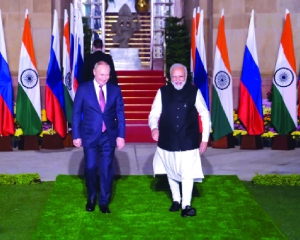
For India, this renewed tilt presents a familiar challenge. Each cycle of US —Pakistan engagement raises questions about balance in South Asia. Yet history shows such tilts are temporary and transactional. Washington tilts when expedient but rarely sustains exceptional support once circumstances shift. Prime Minister Modi’s doctrine of “Equi Closeness” provides India with a strategic cushion. By engaging multiple poles — US, Russia, Europe, Japan, and the Gulf — India ensures that no single tilt undermines its rise. This multipolar outreach also tempers US leverage. India’s larger economic weight, its centrality to Indo-Pacific strategy, and its growing partnership with Western powers ensure that Washington cannot afford to alienate New Delhi even while courting Islamabad. Nevertheless, vigilance is essential.
Pakistan may exploit this temporary tilt to amplify rhetoric, escalate tensions, or project renewed relevance in multilateral forums. India must respond with restraint, focusing on long-term economic and strategic consolidation rather than reactive posturing. By demonstrating maturity, India can prevent Washington’s tilt tactics from destabilising regional equations.
Conclusion
Asim Munir’s visit to Washington and his nuclear threats from US soil underscore the transactional nature of great-power politics. For the US, tilt tactics are not about loyalty or morality but about power management. Pakistan, despite its fragility, remains valuable for intelligence, ideology, and backchannel diplomacy vis-à-vis Iran.
Yet, as history shows, once Pakistan’s utility diminishes, abandonment is inevitable. For India, the lesson is clear: avoid emotional responses to temporary tilts. Instead, invest in strategic resilience, diversify partnerships, and remain the indispensable partner Washington cannot overlook. Tilt tactics may sway in the short term, but India’s steady rise provides the longer-term equilibrium in South Asia.
Abhinav is an advocate and columnist. Srijan is a national security analyst