Madhya Pradesh: The timeless heart of India and its culinary legacy
Madhya Pradesh, the heart of India where history lives not only in stone, but in simmering pots and the aroma of ghee. From Bhimbetka's caves to Ujjain's markets and Mandu's royal kitchens, food here is more than sustenance — it is memory, movement, and identity intertwined
Madhya Pradesh lies at India's core, a land where memory has always been carried not just in stories, but in landscapes, in rivers, and in long, patient fields. The Vindhya and Satpura ranges cut across its heart, the Narmada flows westward like a silver ribbon, and broad plateaus stretch outward into forests that once sheltered the earliest humans. Long before kingdoms and courts, before empires rose and fell, there were hunters and gatherers painting the stories of their days. In the caves of Bhimbetka, nearly 30,000 years ago, ochre and white pigments traced hunts, harvests, and rituals-records of lives in which food was the pulse of existence. Fires crackled in the dark, the scent of roasted meat drifted across the valley, berries were crushed in the hand. These images are more than art; they are the fragments of the earliest culture. By 1700 BCE, the Chalcolithic age arrived, and settlements such as Navdatoli and Eran sowed wheat, barley, and pulses into the fertile soils of Malwa. Villages rose beside rivers, fields yielded grain, and stone querns ground it into flour. Every roti (flatbread) still puffing over a griddle in this region carries within it that turning point when survival became tradition and food became heritage.
By the 6th century BCE, Ujjain had become the capital of the Avanti Mahajanapada (ancient kingdom), and the story of central India grew inseparable from trade. The Dakshinapatha (southern trade route), that great highway linking north and south India, ran through its streets, and with it came caravans laden with rice, pulses, gur (unrefined cane sugar), sesame oil, and spices. Ujjain became a cosmopolitan hub: merchants, teachers, astronomers, and pilgrims moved through its bazaars. Markets here were perfumed with haldi (turmeric), and the sweetness of stacked gur filled whole lanes. Feasts in the city would sometimes include elaichi (cardamom) and kali mirch (black pepper) carried from distant coasts, and Avanti's merchants dealt not only with neighboring regions but with Gandhara in the northwest and the Krishna valley in the south. When the Mauryans consolidated power around 320 BCE, Avanti entered a larger world.
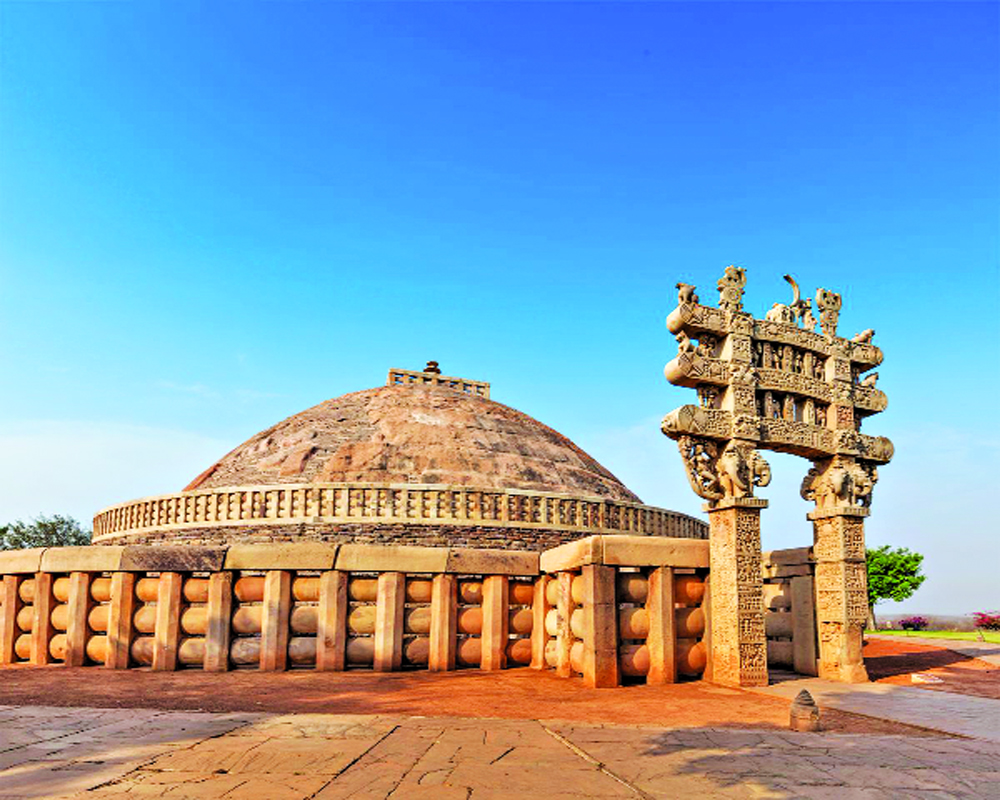
Under Ashoka (268-232 BCE), stupas (Buddhist shrines) rose at Sanchi and Satdhara, not merely as monuments of faith but as places where daily life gathered and where alms of rice and pulses passed from farmer to monk. The monks inside led simple lives; outside those quiet walls, Ujjain's markets thrummed with dalchini (cinnamon) from Ceylon, cotton on looms, and beads that sparkled in the sun. Two food cultures lived side by side-one of sacred restraint, the other of worldly abundance-and that contrast has threaded through the region's tastes ever since. As the Mauryans faded, new powers flowed through the plain. The Satavahanas looked southward from the Deccan, the Kushanas moved in from the northwest, and the Sakas (Indo-Scythians) established Ujjain as a center in the 1st century CE. By the 4th century CE, Gupta influence brought a season of stability; temples rose as cultural hubs and offerings of rice, ghee, and sweets tied worship to sustenance. Yet empires crumbled. In the late 5th century, Huna (Central Asian) invasions swept through the plains until Yasodharman of Malwa restored order in 528 CE. From the Guptas to the Hunas, the constant was the land: its rivers, wells, and granaries, the steady work of sowing and harvesting that kept people fed no matter which banner flew above them.
Through these shifts of power and faith, the land remained the stage on which both rulers and common people expressed themselves in what they built, believed, and ultimately, in what they ate. The medieval centuries layered more chapters. In Dhar, the Paramaras ruled, and their most famed king, Bhoja (c. 1010-1060 CE), patronized learning while investing in canals and reservoirs that deepened cultivation across the plateau. To the east, the Chandellas of Bundelkhand raised the carved temples of Khajuraho between the 9th and 12th centuries, marking both artistic and agricultural confidence. By the 14th century, Mandu had blossomed as the capital of the Malwa Sultanate: palaces and gardens spread across the plateau, fountains ran, and courts welcomed emissaries from afar. It was a place where taste met spectacle. The 16th century brought Mughal force and patronage. In 1556 Akbar incorporated Malwa, Gwalior, and Raisen into his empire; palace kitchens became places of refinement. Beyond courtly reach, tribal kingdoms such as Garha-Katanga held ground-Rani Durgavati resisted Mughal advances until her death in 1564, and her people's food remained rooted in forest produce and hardy grains. After Aurangzeb's death in 1707, Mughal power declined and the Marathas surged north. The Battle of Bhopal in 1737 marked the Maratha ascendancy; the Holkars made Indore their seat, the Scindias held Gwalior. The 19th century saw British dominance after the Third Anglo-Maratha War (1818), the creation of the Central Provinces (1861), and the arrival of railways that tied Indore and Jabalpur to Bombay and Calcutta. With those rails came new crops-maize among them-and with colonial pressure came new markets and new tastes. A century of political change arrived punctuated by rebellion; the Revolt of 1857 left its marks here too, remembered in the courage of Rani Avantibai Lodhi. Independence in 1947, states reorganization in 1956, and the carving out of Chhattisgarh in 2000 redrew maps, yet the long continuity of land, harvest, and table persisted.
If the first centuries are about who ruled and who traded, the next centuries are about what they ate-and how those choices were woven into identity. The kitchens of Madhya Pradesh absorbed each influence, not to erase what came before, but to layer it. Every dynasty brought tastes and techniques; every caravan left spices and stories. These exchanges-of goods, of ideas, of practices-formed the living grammar of the region's cuisine. And so history turns to the kitchen. In Mandu, where palaces gleamed, courtly meals became an art of display: kesar (saffron) from Kashmir stained rice amber, badam (almonds) and pista (pistachios) from Central Asia enriched puddings, and gulab jal (rosewater) perfumed confections. Cheeni (refined sugar) was now worked into crystals and syrup; kebabs hissed over charcoal. The memory of those tables is visible today in the sweetness of jalebis and the density of mawa baatis. The Mughal kitchens layered spice and technique on these foundations: mutton often rested in dahi (yogurt) and ripening papita (papaya) before being simmered with dalchini, laung (cloves), elaichi, and kesar until the meat yielded; pulaos glowed with ghee and saffron; kormas and rogan josh signaled courtly refinement. In courts and palaces the emphasis was on richness; in the hills and forests, grains and greens, forest fruits and bajra (millets) sustained life.
The Nawabs of Bhopal added their own stamp-Gosht Pasanda (slow-cooked marinated meat) and Keema Pulao (minced meat pilaf) refined hospitality into ritual. Maratha influence brought other tastes, and even humble staples were elevated: Dal-Bafla (the local cousin of dal-bati) became ceremonial, wheat balls boiled and roasted, served with dal and generous spoons of ghee. The colonial era forced further adaptation: maize arrived from the Americas and found a home in Bhutte Ka Kees (grated corn cooked with milk and spices). That simple appropriation-new grain, local spices, a skillet-became a dish that felt as native as any landrace grain.
The story of Madhya Pradesh's food cannot be told as a single thread, for the land itself speaks in many dialects of taste. In Malwa, poha topped with sev and the ghee-rich dal bafla are everyday comforts that embody both simplicity and indulgence. Bundelkhand favors rustic meals-rotis made from millet and corn, or slow-cooked meats that match the rugged terrain. In Baghelkhand, sweets such as chironji barfi (made with charoli seeds) and tilkut (sesame and jaggery rounds) ring with festival joy, while Mahakoshal leans on rice and forest produce, its people nourished by leafy greens and grains passed down from ancient times. Gwalior's kitchens still echo the finesse of Mughal courts in their kebabs and kormas, while Bhopal preserves a Nawabi aroma in dishes like gosht pasanda and saffron-perfumed pulaos. Among the tribal communities of Mandla, Jhabua, and Dindori, food remains inseparable from the forest-mahua flowers, bamboo shoots, and hardy millets sustaining lives much as they did for centuries. Together, these voices form a chorus of memory, each region distinct yet bound into one heritage of flavor.
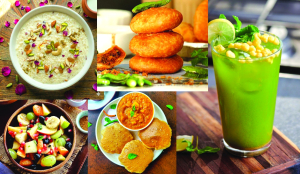
The dishes themselves are living history, and their methods tell the stories of adaptation and survival. Dal Bafla stands as an emblem of Malwa: wheat dough is kneaded with salt and sometimes a hint of haldi, shaped into balls, and boiled until glossy; these balls are then roasted over coals or in a tandoor until their crusts crack, after which they are split and anointed with warm ghee before serving. The accompanying dal-often a mix of toor, moong, or chana-slow-cooks with onions, tomatoes, jeera (cumin), and lehsun (garlic) tempered in ghee; the dal is finished with fresh coriander and a squeeze of lemon. Eating Dal Bafla is ceremonial: hands tear bread, ghee melts into crumb and lentil, and the act of feeding one another cements kinship. In Indore, Poha-Jalebi is the morning ritual made of two halves. Poha is rinsed and softened, then sautéed with rai (mustard seeds), curry leaves, pyaz (onion), mirch (chilies), haldi, and peanuts until the flakes bloom with fragrance; lemon brightens it at the end and sev crowns the plate with crunch.
Beside it, jalebis-batter fermented briefly, piped into sizzling circles, fried crisp, and plunged into sugar syrup-offer a sticky, celebratory sweet to balance the savory. The textures and the juxtaposition of sweet and salty are not accidental: they are a local grammar of comfort. Moving on we are introduced to Bhutte Ka Kees which shows how the new meets the old. Fresh corn is grated, its juices coaxed into a thick pan with a little ghee and a temper of rai and jeera; adrak is added for warmth, mirch for bite, and a slow fold of doodh (milk) renders the mixture creamy. A final flourish of grated coconut and dhania (coriander) lifts the dish. It is simple, seasonal, and utterly local-maize made Malwa's own. Then we have Chakki Ki Shak. Ingenuity made practical. Wheat dough-a stiff, steamed mass-was once pressed and sliced into slabs; these are then dunked into a tangy dahi-tamatar (yogurt-tomato) curry seasoned with jeera, haldi, and curry leaves, simmered until the pieces soak flavor. It's a peasant invention that turns staple grain into a textured curry, a way of stretching flour into a pot of shared warmth. Gosht Korma keeps the Nawabi signature of scent and silk. Cubes of mutton are marinated in dahi and spices, browned, then slowly cooked with ground almonds or khoya (dried milk solids) until the gravy is fragrant with elaichi and laung. Served with saffron-dotted pulao, it is a dish of hospitality-meals stretched in time to feed guests and to mark large occasions.
Not forgetting to sweeten the palate, Mawa Baati insists on ritual scale. Khoya (evaporated milk solids) is kneaded with a little flour, filled with chopped badam and pista, formed into balls, deep-fried until golden, and finally steeped in sugar syrup until glossy. Dense and rich, it is the kind of confection that speaks of festival abundance and the skill of the halwai (sweets-maker). Jalebis, spiralled in hot oil and soaked in syrup, appear across markets and weddings, their orange coils as much a signal of celebration as a taste.
Madhya Pradesh finds itself not only in forts and temples but in kitchens and markets, where history is remembered with every meal. Grains recall the first farmers, pulses the alms of monks, kesar and cheeni the courts of Mandu, meats the refinement of Mughal palaces, maize the exchange of empire and colony. Every bafla dipped in golden ghee, every jalebi lifted warm from syrup, every plate of poha crowned with sev carries centuries of memory. To prepare them is to preserve heritage; to serve them is to keep identity alive. These recipes, shaped by farmers and monks, queens and Nawabs, nourish body and spirit alike: grains and pulses provide strength, greens restore harmony, and ghee enriches the joy of festivals. By ensuring they live on in our kitchens, at our festivals, and in our teachings to children, we protect not only flavor but wisdom. I believe the responsibility is now ours to pass on these traditions and this culture to future generations, so they may carry them forward with pride and purpose. In this effort, we keep alive the true heart of India-sustained not only by its monuments and markets, but by the daily meals that carry nutrition and heritage across time.
(The writer is Secretary, Cuisine India Society)