Beyond the bars: Rethinking zoos in the age of climate change
Climate change is forcing us to rethink not only how we protect wildlife, but also where that protection should take place. The case for conventional display-oriented zoos deserves fresh scrutiny. The future of conservation may lie in healthier ecosystems, wildlife corridors and climate-resilient rescue and rehabilitation centres
Picture a lifetime spent inside a few hundred square metres, behind railings or concrete walls, watched by strangers who will never know your name. No court sentenced you to this — it is daily life for countless wild animals in the world's zoos. Humanity's fascination with wild creatures is centuries old. Under the Mughals and the British, hunting was proof of royal power and courage, a pursuit that drove tigers, lions and rhinoceroses toward extinction, for sport. We like to think we have moved on — today's language is one of biodiversity, not trophies. But has our relationship with wild animals changed, or only its outward form? The rifle has become the camera, the hunting ground the enclosure; nobody dies, yet the transaction persists — a wild creature's freedom traded for being watched. That is the question at the heart of the zoo debate: does our appetite to observe wildlife justify keeping it captive?
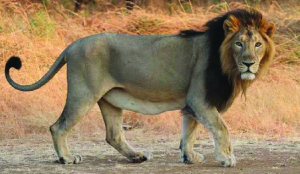
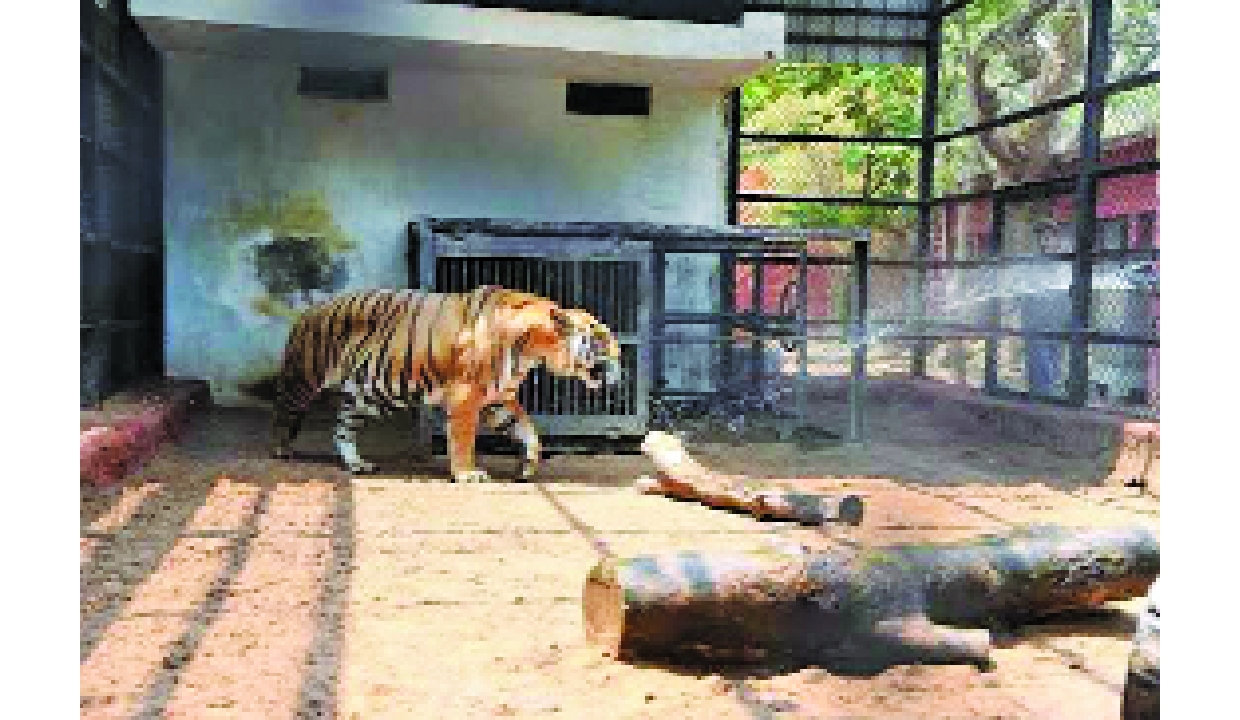
Today's zoos bear little resemblance to the royal menageries of the past. Many have improved animal welfare and contributed to breeding programmes for endangered species — credit they deserve. But that cannot undo a biological fact. Tigers range across vast forests, elephants travel with their herds over enormous distances, birds cross continents. These are not preferences but necessities, and no enclosure, however spacious, can replicate that complexity. Captive animals often develop repetitive behaviours — pacing, swaying, head-bobbing — that scientists recognise as chronic stress. Devoted keepers can soften, not erase, captivity.
Zoos have long defended themselves as engines of public awareness — an argument that carried more weight once. Today, anyone with a phone or television can watch wildlife documentaries, livestreams, satellite-tracked migrations and virtual reality, all without an animal losing its freedom. Nor does the conservation record hold up. Several zoos have bred critically endangered species and run recovery programmes, and that matters — but such cases remain a small fraction of animals held captive; most exhibits exist to entertain, not to save species on the brink. Are we conserving wildlife, or entertaining ourselves under a conservation label? None of this impugns the dedication of zoo vets, biologists and handlers; the real question is whether the display zoo still fits twenty-first-century ethics, where conservation increasingly protects ecosystems, not individual specimens behind glass. And there is now a sharper edge to this debate: a warming planet is changing the ground zoos stand on. Zoos as Climate Traps. Climate change is no longer a distant abstraction. Heatwaves, floods, droughts, cyclones and wildfires are growing more frequent and intense, threatening biodiversity everywhere. Animals in captivity face an often-overlooked version of this danger.
Wild species have spent millennia learning to cope with a changing environment — seeking shade or turning nocturnal in extreme heat, moving to cooler or higher ground, travelling toward water during drought, fleeing from fire or flood. Mobility is nature's most reliable survival tool, and captive animals have none of it: their world ends at the enclosure fence. Whatever the hazard, they cannot relocate; their survival rests on human intervention. Climate change is turning many enclosures into "climate traps" — places where extreme weather arrives, but movement, the one tool nature gave animals to survive it, is unavailable. Heatwaves illustrate this well. Most zoos sit in or near cities, already hotter due to the urban heat-island effect, and enclosures of concrete and metal heat up faster still; misting systems and air-conditioned shelters help but cannot reproduce a real forest's microclimates.
Cold snaps pose the opposite risk for tropical species dependent on uninterrupted power, where a prolonged outage can be fatal. Floods submerge enclosures and contaminate water; wildfires add smoke and panic to the danger; cyclones flatten cages and uproot trees; earthquakes can breach barriers — forcing agonising choices between evacuating people, saving animals and containing escapees. Shifting weather patterns are expanding disease-carrying mosquito and tick populations, and densely housed captive animals are vulnerable to outbreaks.
Zoos were once imagined as havens insulated from the wild's dangers; climate change has exposed how fragile that idea was. Keeping thousands of animals safe demands more cooling, water security and disaster planning — raising the question of whether the conventional zoo model can survive. What wildlife may need is not a better enclosure but healthier forests, wetlands and corridors where animals can adapt naturally.
If climate change teaches anything, it is that survival depends on freedom to move. From Cages to Conservation. The zoo debate cannot be settled by asking whether zoos are "good" or "bad." The real question is whether the display-oriented zoo still makes sense in an age of climate change, mass extinction and growing concern for animal welfare. Institutions evolve with society's priorities — zoos must too. We are living through the fastest loss of biodiversity in recorded history, as forests, wetlands and grasslands shrink. Wild animals need large, connected habitats, not enclosures — so conservation must shift from protecting captive specimens to protecting the ecosystems they depend on. That does not mean captive facilities should disappear.
Specialised centres will be needed to treat injured wildlife, rehabilitate orphaned animals, care for trafficking victims and run managed breeding programmes for critically endangered species. But their purpose should be conservation and welfare, not entertainment. The most sensible path is to convert existing zoos into Climate-Resilient Wildlife Rescue, Rehabilitation and Conservation Centres — combining emergency veterinary care, rehabilitation for disaster and conflict-affected animals, safe housing for seized wildlife, endangered-species breeding, and research toward reintroduction into the wild.
As disasters displace and injure growing numbers of animals, every country needs rescue infrastructure — and existing zoos, with trained staff and facilities, are well placed to become part of national disaster-management and conservation systems, given a change in mission. Equally important are investments beyond zoo walls: restoring habitats, protecting wildlife corridors, expanding protected areas and reviving wetlands through native afforestation. Protecting nature will outperform recreating it artificially.
Education needs to evolve too — from encouraging people to view captive animals toward teaching them to protect wild ones. Documentaries, national-park camera networks, virtual reality, satellite tracking and digital interpretation centres can teach millions without a single animal leaving its habitat. Few countries are as well placed to lead this shift as India, given its biodiversity and conservation record — from Project Tiger to the recovery of crocodiles and vultures. The task is to fuse wildlife conservation with climate adaptation and disaster resilience; a nationwide network of climate-resilient rescue centres would be a sound investment in both biodiversity and public safety.
What is at stake is not our love of wild animals — that will never fade — but how we choose to express it. We once expressed it through the rifle, then the cage. The twenty-first century demands something better: thriving forests instead of more zoos, wildlife corridors instead of larger cages, living ecosystems instead of exhibits. The true measure of our commitment will not be how many species we hold captive, but how many roam free in ecosystems that are thriving. In the age of climate change, it is time to trade captivity for coexistence — because no cage, however well built, can equal a habitat left whole.
Zoos have long defended themselves as engines of public awareness — an argument that carried more weight once. Today, anyone with a phone or television can watch wildlife documentaries, livestreams, satellite-tracked migrations and virtual reality, all without an animal losing its freedom. Nor does the conservation record hold up
The writer is former Executive Director, National Institute of Disaster Management, Government of India; Views presented are personal.