Delhi’s future lies in balancing urban growth with sustainability: LG Sandhu
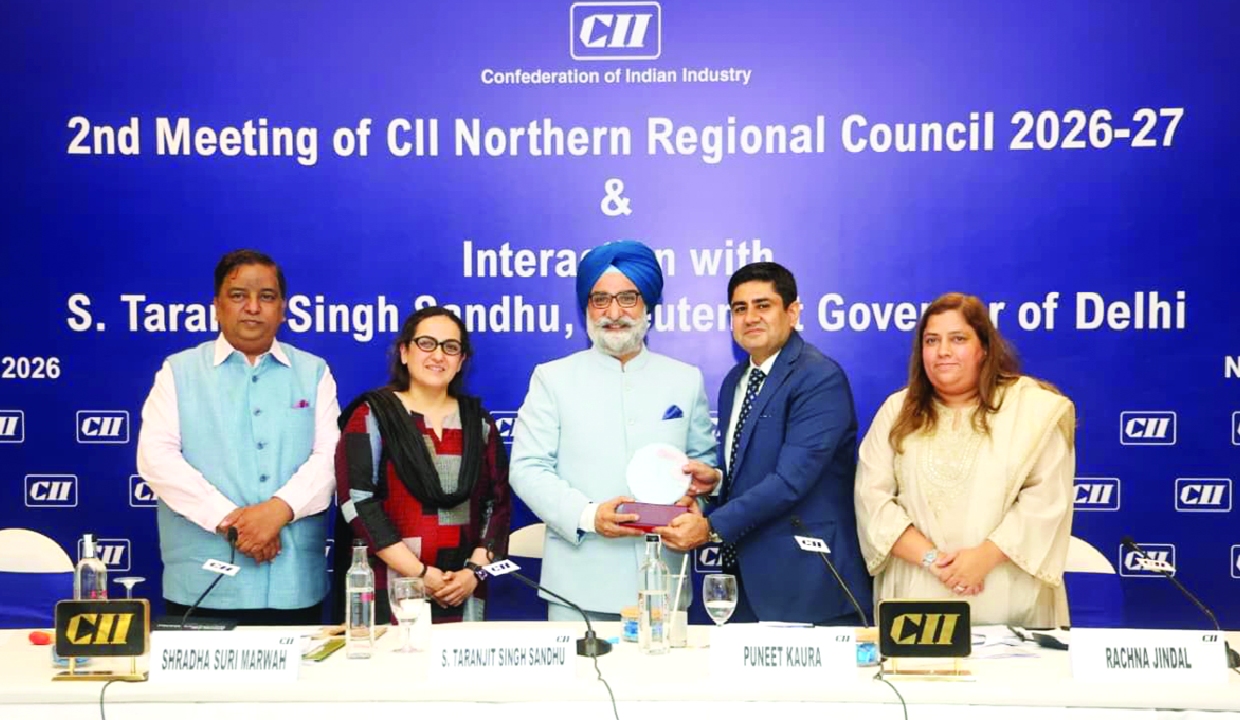
Lieutenant Governor Taranjit Singh Sandhu on Saturday said Delhi’s future lies in balancing urban growth with sustainability, protecting ecological assets such as the Yamuna floodplains and green belts, and fostering greater citizen participation.
He outlined a long-term roadmap for transforming the national Capital into a model city under the vision of Viksit Bharat 2047.
Addressing an industry forum attended by corporate leaders from northern India, Sandhu called for a fundamental shift in Delhi’s development model, saying the city must move beyond traditional “concrete expansion” and adopt an approach that integrates environmental protection, technological innovation and inclusive growth.
He emphasised that Delhi’s future competitiveness would not be measured merely by its skyline or physical infrastructure but by its liveability, connectivity and environmental resilience.
“The future identity of global cities will be shaped by how effectively they balance development with environmental responsibility,” Sandhu said, urging industry leaders to move beyond the role of service providers and become strategic partners in a collaborative governance ecosystem.
The lieutenant governor noted that Delhi’s green belts, biodiversity zones and the Yamuna floodplains should be viewed as integral to the Capital’s future urban identity. He described them as the city’s “legacy narratives” and said their preservation and restoration would be critical to ensuring sustainable growth.
Sandhu stated that the ongoing initiatives, including large-scale plantation drives, ecological restoration projects and the rejuvenation of public parks, reflect a transition towards urban planning that prioritises public health, climate resilience and heat mitigation. A key pillar of the proposed “Viksit Dilli” framework, he said, is the restoration and protection of Delhi’s ecological assets, including the Yamuna floodplains, ridge areas, green belts, water bodies and neighbourhood parks.
Highlighting efforts in this direction, Sandhu referred to the Jal Sanchay Abhiyan under which 101 water bodies across the city are being rejuvenated in the first phase. He said such initiatives represent a lasting shift away from a development model focused solely on physical expansion towards one centred on ecological balance.
A greener Capital, he said, is not only an environmental objective but also essential for addressing rising temperatures, improving climate resilience and enhancing public health, particularly for vulnerable sections of society.