Human encroachment worsened Mandi flash flood impact, study finds
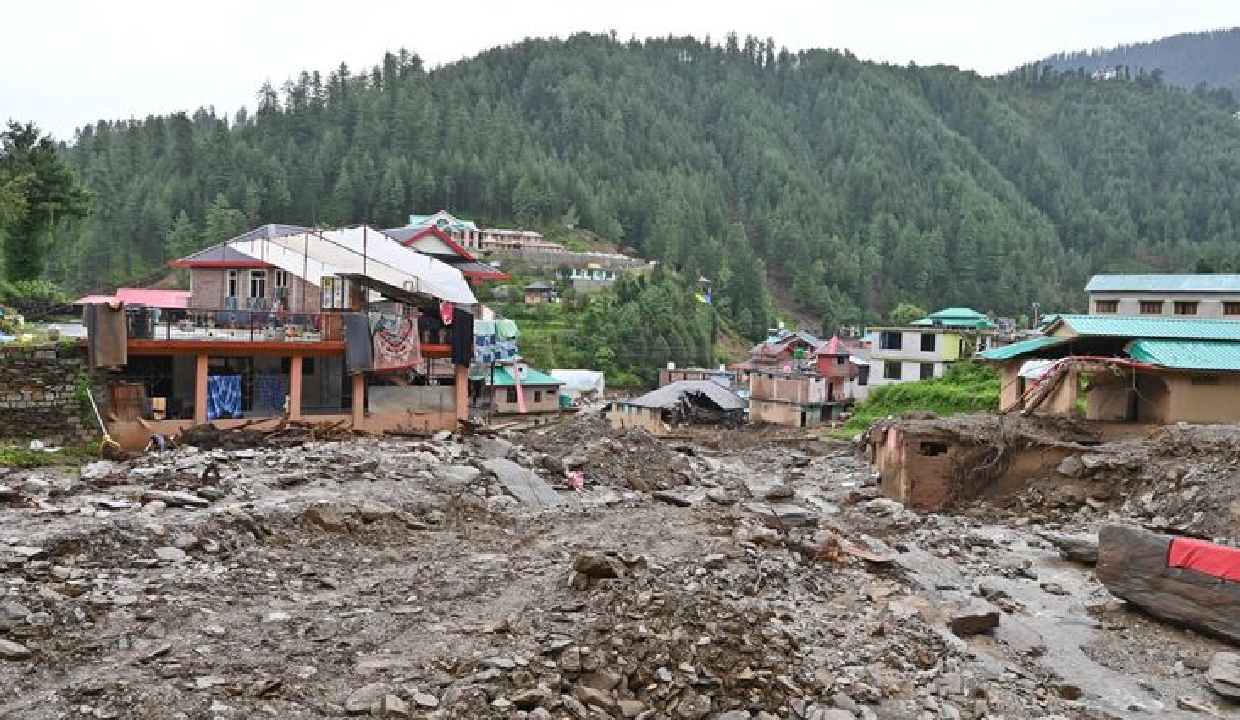
Extensive human-induced alterations to river corridors, encroachment of floodplains and the region's steep terrain significantly intensified the impact of the cloudburst-triggered flash floods in Himachal Pradesh's Mandi district last year, according to a new study.
The findings were published in the study titled "Assessment of 2025 Cloudburst-Induced Flash Flooding in Thunag Village, Mandi, Himachal Pradesh," conducted by the Centre for Disaster Risk Reduction and Resilience (CDRRR) at Himachal Pradesh University, officials said.
The research, which examined the flash floods that occurred between June 29 and July 1, 2025, has been published in the UK-based Taylor & Francis journal Geomatics, Natural Hazards and Risk.
The assessment was carried out by a research team led by Mahesh Sharma, Deputy Director of the Centre, to identify the factors that amplified the disaster beyond the extreme rainfall event.
According to the study, while the cloudburst was the immediate trigger, the scale of destruction was largely influenced by local topography, river dynamics and human interventions within the floodplain.
Researchers found widespread encroachment along the active floodplain of Thunag Khad, the rivulet flowing through Thunag village, with residential and commercial buildings, retaining walls and road embankments constructed within the river corridor. The findings were based on extensive field surveys and supported by high-resolution satellite imagery.
The study observed that structures located immediately adjacent to the river channel suffered the most severe damage regardless of their construction type, whereas buildings situated a short distance uphill remained largely unaffected.
Using HEC-RAS rainfall-on-topography simulations, the researchers found that channel constriction and artificial obstructions significantly increased flood depth, water velocity and the erosive force of floodwaters within the village.
The study concluded that a building's proximity to hydraulically constrained river flow paths was a stronger predictor of damage than its structural design or construction.
Officials also said the research team developed and validated a satellite-driven hydrodynamic modelling framework that could help assess and reduce the impact of cloudburst-induced flash floods in the Himalayan region.