India’s cultural tapestry takes centre stage at CWG closing ceremony
As the curtain came down on the Glasgow Commonwealth Games, India offered the world a vibrant invitation to Ahmedabad, blending ancient philosophy, contemporary artistry and cultural grandeur in a handover presentation that officially launched the journey towards the centenary edition of the Games in 2030.
The emotional centrepiece of Sunday’s closing ceremony at the OVO Hydro saw Glasgow formally pass the Commonwealth Games baton to India before a spectacular showcase of music, dance and storytelling projected India’s identity as a nation where tradition and modernity coexist.
Prince Edward, Duke of Edinburgh, representing King Charles III, formally declared the Games closed.
“Thanks for the manner in which you have competed, officiated, supported, organised the Games. You have once again brought the spirit and value of Commonwealth tonight. Thank you, Glasgow,” he said.
“I call up on athletes of all countries and territories to come to Ahmedabad, India in four years time to celebrate the 24th Commonwealth Games in what will be the centenary of the Games,” he added. Jaismine Lamboria carried India’s flag at the closing ceremony after winning gold in the women’s 57kg category boxing competition.
The formal handover began with the Commonwealth Games flag making its symbolic journey across the arena.
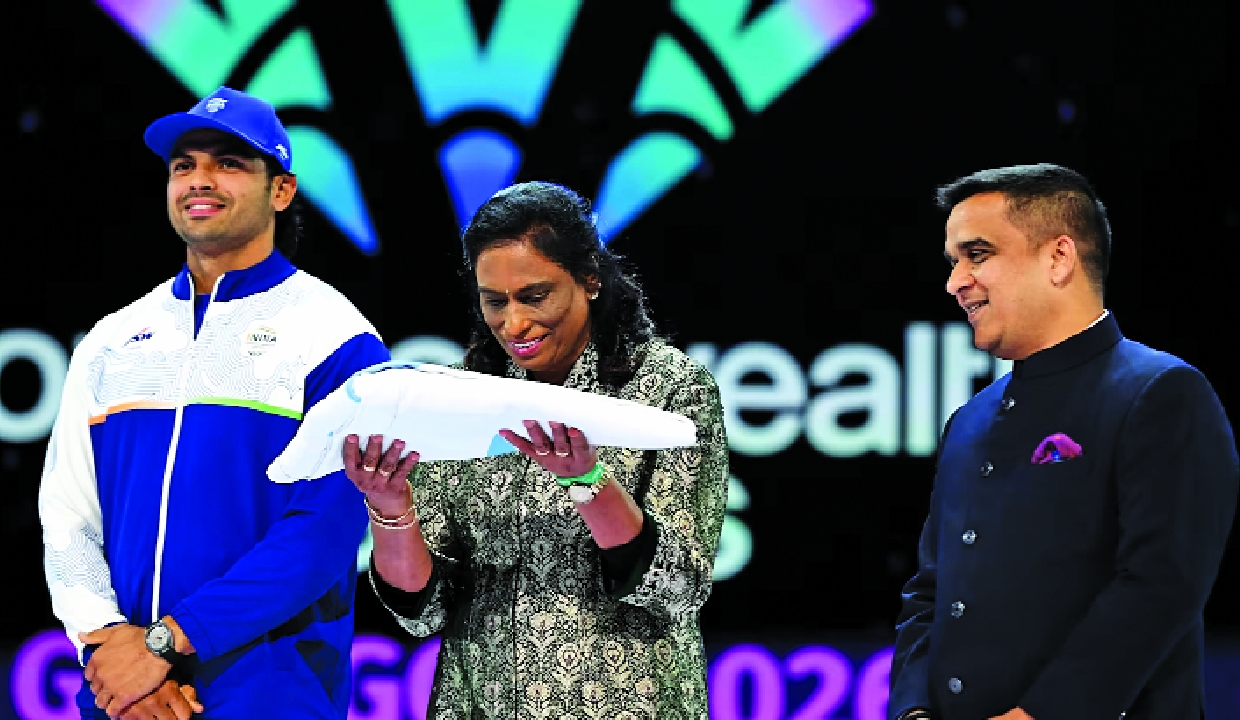
Led by bearers holding the Scottish and Indian flags, the procession lowered the folded Games flag. Glasgow’s Lord Provost Jacqueline McLaren then passed it to Commonwealth Games Scotland vice-chair Susan Jackson, Scottish netball player Emily Nicholl, Commonwealth Sport president Dr Donald Rukare, two-time Olympic medallist Neeraj Chopra, Indian Olympic Association president PT Usha, and finally Gujarat Deputy Chief Minister Harsh Sanghavi. This marked the official transfer of hosting responsibilities from Scotland to India.
From that solemn moment, the atmosphere transformed into a celebration of India’s civilisational ethos.
The Indian presentation unfolded over three acts, taking the audience on what organisers described as a journey celebrating shared values, culture and connection. The overarching message was rooted in the ancient Indian philosophy of Vasudhaiva Kutumbakam — “The World is One Family” — a theme that resonated strongly with the Commonwealth’s ideals of unity and friendship.
The opening act also commemorated 150 years of Vande Mataram, India’s national song, with a sweeping choreography led by actor Manushi Chhillar.
Set against immersive digital visuals, hundreds of dancers painted a vivid portrait of India’s diversity while maestro Shankar Mahadevan’s stirring score fused orchestral grandeur with Indian musical traditions.