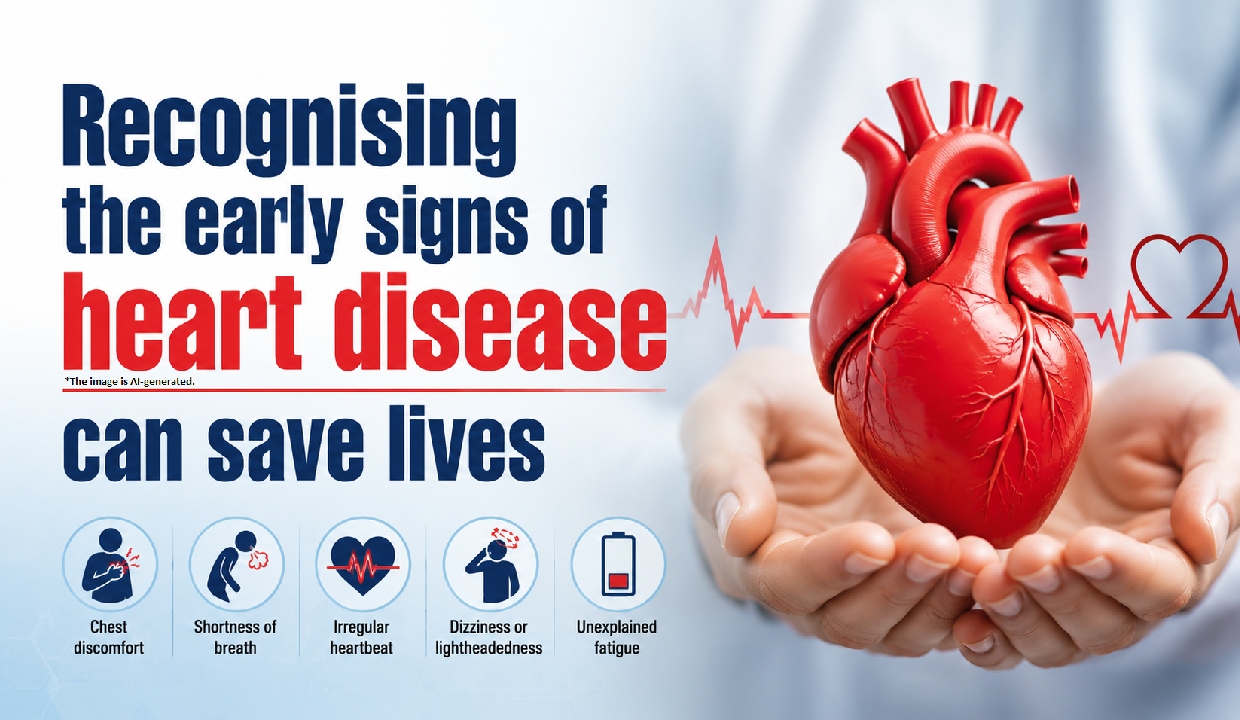
Recognising the early signs of heart disease can save lives
Heart disease is increasing rapidly in India, yet a large number of people still ignore its early warning signs. During my years of surgical practice and clinical research, I have repeatedly seen patients reaching hospitals only when their condition has already become critical. In many such cases, timely diagnosis and early treatment could have prevented serious complications and even saved lives.
One of the biggest misconceptions is that heart disease affects only elderly individuals. In reality, serious cardiac conditions are also found in children and young adults.
Parents often overlook symptoms such as excessive fatigue during play, shortness of breath, bluish discoloration of the lips or fingers, recurrent cough, fainting episodes, or poor physical growth in children. These signs should never be ignored, as they may indicate an underlying congenital heart defect.
My research and surgical experience involving complex and rare cardiac disorders have shown how dangerous delayed diagnosis can become. In one rare case, a young patient was found to have an unusual tumor inside the heart that initially appeared to be a routine cardiac problem.
Such cases remind us that persistent symptoms like breathlessness, chest discomfort, irregular heartbeat, dizziness, or unexplained weakness require proper medical evaluation rather than self-medication or neglect.
Work related to congenital conditions such as Tetralogy of Fallot has also demonstrated that timely surgical intervention can completely transform a child’s quality of life. Modern cardiac surgery today offers several effective treatment options, including cost-effective reconstructive techniques that can help patients even in resource-limited settings. What matters most is awareness and timely action.
Equally important is postoperative care. Many patients believe that treatment ends after surgery, but recovery depends heavily on following medical advice carefully. Fever, infection, breathing difficulty, chest pain, or unusual weakness after surgery should be reported immediately. Ignoring these warning signs can lead to avoidable complications.
Lifestyle also plays a major role in protecting heart health. Regular health check-ups, maintaining healthy blood pressure and blood sugar levels, avoiding tobacco, reducing stress, exercising regularly, and following a balanced diet are simple but powerful preventive measures. Prevention remains far better than emergency treatment.
As a cardiac surgeon and researcher, I strongly believe that awareness is one of the most powerful tools in modern healthcare. The human body often gives early warnings before a major cardiac event occurs. Listening to those signals and seeking timely medical attention can make the difference between life and death.
Heart disease should not be feared, but it should never be ignored. Early diagnosis, informed decisions, and timely treatment can save countless lives.
The author is the ex-director – professor & head of cardio thoracic surgery, GB Pant Hospital; Views presented are personal.