Table with Moral - The Treasure that lies Ahead
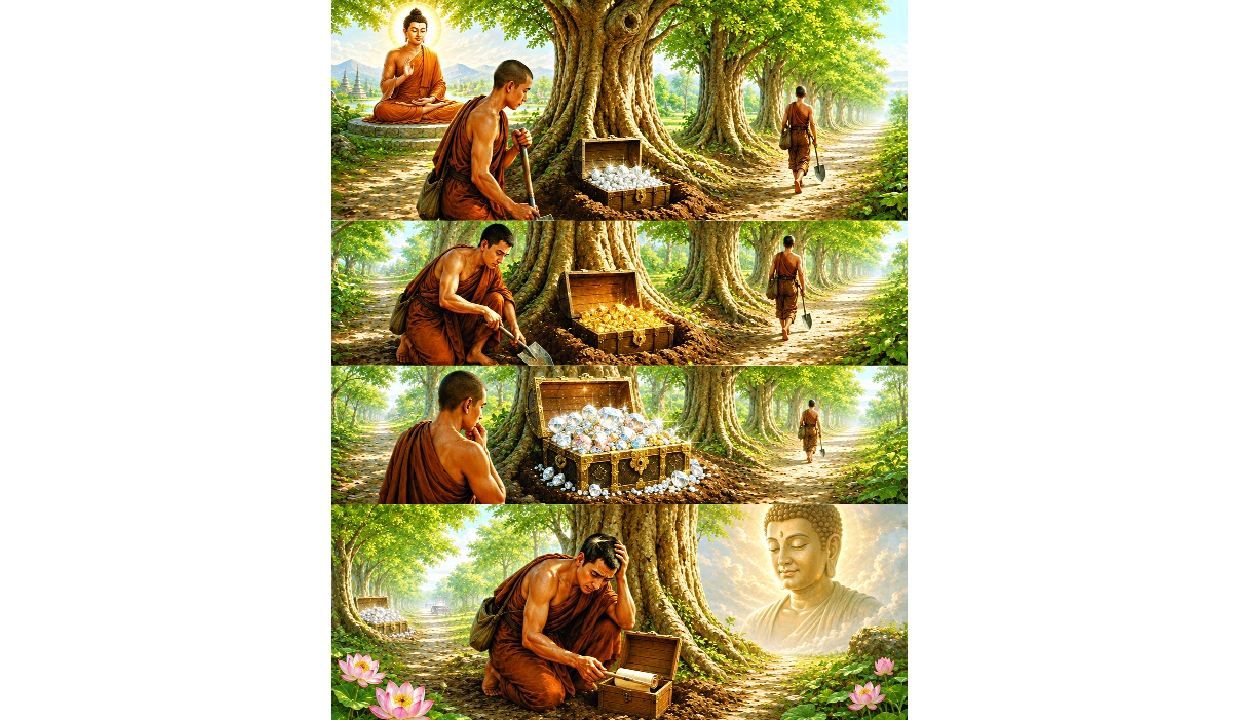
A weary disciple approached the Buddha, pleading for relief from his poverty. The enlightened one directed him to a row of trees, each concealing a chest of wealth. However, one had to follow the strict rule of taking only one chest and moving perpetually forward without turning back.
With a shovel in hand, the disciple began his quest at the very first tree. Merely minutes of digging revealed a chest brimming with brilliant silver and semi-precious stones. Tempting as it was, ambition whispered that more lay ahead, so he walked onward. Beneath the second tree, he unearthed a heavier chest gleaming with pure gold. Still, he hesitated and pushed further down the line.
With each step, the rewards multiplied. Eventually, he reached the second-to-last tree. There, buried deep in the earth, lay an enormous chest packed with the largest, most flawless diamonds he had ever laid eyes upon. The sheer value of this single find was enough to banish poverty from his entire village for generations.
Yet, a relentless greed clouded his judgment. Convinced the final tree would grant him unimaginable riches, he abandoned the diamonds and approached the last trunk. Trembling with anticipation, he drove his shovel into the soil and pried open a remarkably small wooden box.
Inside lay no gold or jewels, but a simple parchment bearing a profound message, "Opportunities will keep coming your way, you can take them. But extreme greed always leads to downfall."
In this tale, greed is presented not as a static flaw, but as a progressive trap. Each success the disciple experiences, does not satisfy him. By constantly looking to the next tree, he becomes incapable of appreciating his current abundance. The disciple operates under the illusion that he is multiplying his options, when he is actually exhausting them.
Moral of the Fable- Boundless greed guarantees one’s fall.