Had the famous novelist, Charles Dickens, the author of ‘A Tale of Two Cities,’ been alive today, and decided to write another historical fiction, the title of this saga would be ‘A Tale of Three Ports.’ The ports in question are along the Arabian Sea coastline. They include Pasni and Gwadar in Pakistan, and Chabahar in Iran. They lie almost next to each other, as if in a straight line. Dickens would have honed in on the leaders and businesspersons in the host nations, apart from those in India, China, and the US, as his characters.
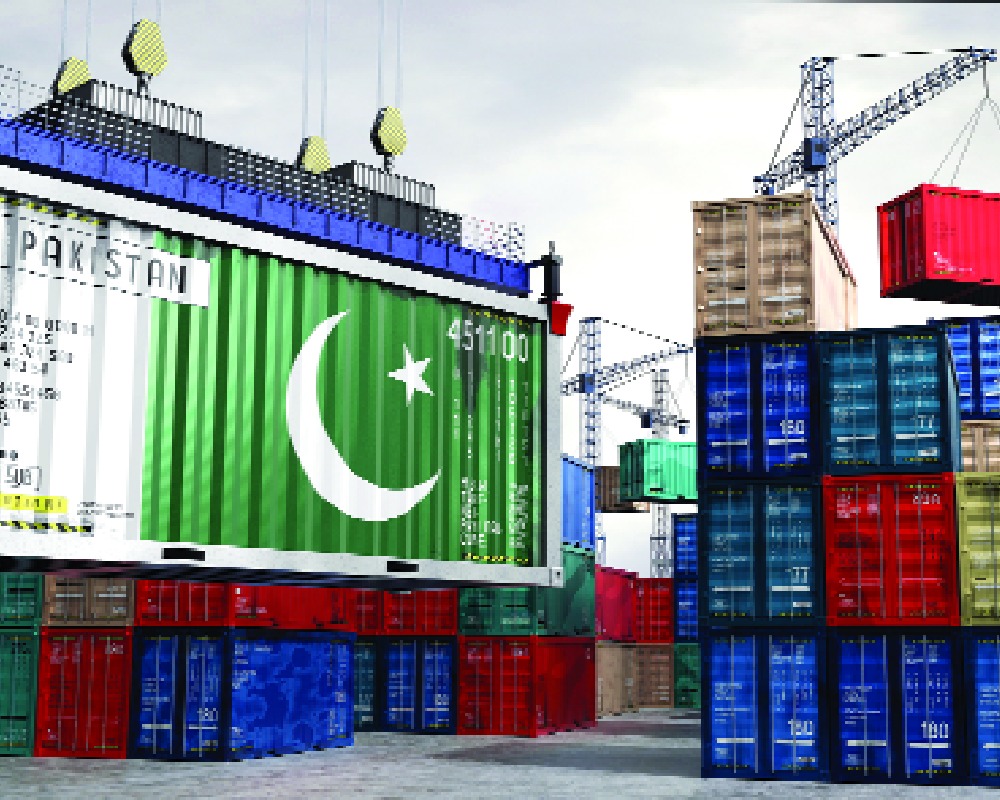
The five nations are involved in ongoing business efforts, and engaged in geopolitical games to influence trade in the regional waters. They vigorously and aggressively forge and reforge alliances to achieve their aims. Recently, Pakistan announced its intention to develop Pasni, a small deepwater port in Balochistan’s Gwadar district, which currently caters to fishing and coastal trade, and has a maritime security agency base, into a strategic mineral export terminal with the help of US. To cut India to size, and bring it to its knees, America has expressed a desire to source strategic minerals from Pakistan, and invest the requisite funds.
Recently, The Financial Times, which quoted unnamed sources, reported that Pasni was “one of several ideas floated publicly and privately by Pakistani officials to maintain momentum with the (Donald) Trump administration.” Another related idea was to build a new railway line to transport the minerals from the mines to the port. The minerals, anonymous Pakistan officials told the newspaper, would include copper and antimony, which is a vital ingredient to make batteries, fire-retardants, and missiles.
The report added that as per the initial estimate, the Pasni port would cost more than $1 billion. Pakistan would part-fund the project with help from the US-backed development finance. “Pasni’s proximity to Iran and Central Asia enhances (the) US options for trade and security…. Engagement at Pasni would counterbalance Gwadar (another Pakistan port) … and expand (the) US influence in the Arabian Sea and Central Asia,” the newspaper added. For America, it is a strategic decision, since Gwadar is under the Chinese thumb, and it desperately needs a maritime base in the region.
Over the past few years, China has been engaged in the ambitious China-Pakistan Economic Corridor (CPEC), a $60 billion vision which, apart from several infrastructure and energy projects, will connect the Gwadar port to China’s Xinjiang region via a network of roads and railways. Pakistan, which sees a chance to embrace the West, since Trump made overtures towards it, feels that the Pasni port can help to rebalance the relations with China. Like India, Pakistan wishes to have two superpower suitors: Russia and America for the former, and China and America for the latter.
Barely 56 nautical miles to the West of Pasni, the deepwater port of Gwadar, which is located on Pakistan’s southwestern coast, is in Balochistan. It was developed as the maritime centrepiece of the CPEC. Conceived as a regional transshipment, energy, and logistics hub, the win-win objectives included China’s access to the Arabian Sea, and Pakistan’s strategic economic gateway to the east, north, and west. The finances and implementation of the port stemmed from Beijing’s project funding, Chinese state-linked firms, and periodic initiatives from Islamabad. Pakistan retains regulatory control and responsibilities over the port as the host-state.
However, over the years, simmering insurgency in Balochistan due to local grievances over jobs, land rights, and revenue sharing continued to affect the project. China has shown its frustrations over the connectivity delays. This gave some space for India to intervene in the region. New Delhi set its eyes on Chabahar, Iran’s only oceanic deepwater port, which includes two terminals. It is positioned to provide a direct maritime link from the Indian subcontinent to Central Asia, bypassing the land routes through Pakistan.
A few years ago, an Indian private group was shortlisted to manage the Chabahar terminals, but it was not chosen. Last year, India signed a 10-year deal with Iran, which allowed a state-owned agency to manage one of the terminals, and invest $120 million in the port. Afghanistan, a landlocked nation, earlier used the Gwadar port as a transit point for trade and incoming aid. Following Kabul’s souring relations with Islamabad, the former is looking at Chabahar.
Hence, Kabul, which intends to use the Chabahar route, and seek better trade ties with India, sees New Delhi as a saviour. In the past, India sent relief materials and humanitarian aid to Afghanistan via Chabahar. But there is a bigger twist. The US, which had earlier waived off sanctions against Iran, has renewed them. This puts India’s efforts in Iran under a cloud, and blinds Afghanistan’s gaze for relief. In fact, the US may put some of its eggs in Pakistan’s Pasni, and force the Chabahar supporters to back off from Iran.
A recent US State Department press note, stated that “consistent with President Trump’s maximum pressure policy to isolate the Iranian regime, the Secretary of State has revoked the sanctions exception issued in 2018 under the Iran Freedom and Counter-Proliferation Act (IFCA) for Afghanistan reconstruction assistance and economic development, effective September 29, 2025.” Hence, those who operate the Chabahar Port, or engage in activities described in IFCA may expose themselves to sanctions.
New Delhi now needs to balance its investment and regional objectives, and mend the broken ties with the US. Washington may urge it to withdraw from Chabahar. Teheran may cajole it to meet investment and other commitments. Internal critics may ask the Government to protect sunk costs, and pursue diplomatic goals. Kabul may wish India to show its humanitarian face. There are many forces at work, if one includes Pakistan’s desire to isolate Chabahar, and promote Pasni, and China’s on-and-off strategy vis-à-vis Gwadar. Dickens’ three ports are on the edge.
During his visit to India, Afghanistan’s foreign minister, Amir Khan Muttaqi, urged for better US-India talks to unlock the Chabahar route. “Chabahar is a good trade route. Afghanistan and India should try to remove the obstacles following sanctions imposed by the US. We can sort it out through negotiations between Afghanistan-India, and the US,” exhorted Muttaqi. While links with Kabul are crucial for New Delhi to access Central Asia, it may be more interested in the US, Iran, Pakistan, and China at this juncture. Minus Chabahar, India has little trade access to Afghanistan, except for via Pakistan.
Afghanistan, which is roped into the story of the three ports, albeit as a minor player, has limited economic options. Only Russia has recognised the Taliban regime, and sanctions force neighbours like Iran and Pakistan to resort to barters, or settlements in non-Afghani currencies. Most nations do not wish to legitimise the Taliban.
(The author has more than three decades of experience across print, TV, and digital media)