










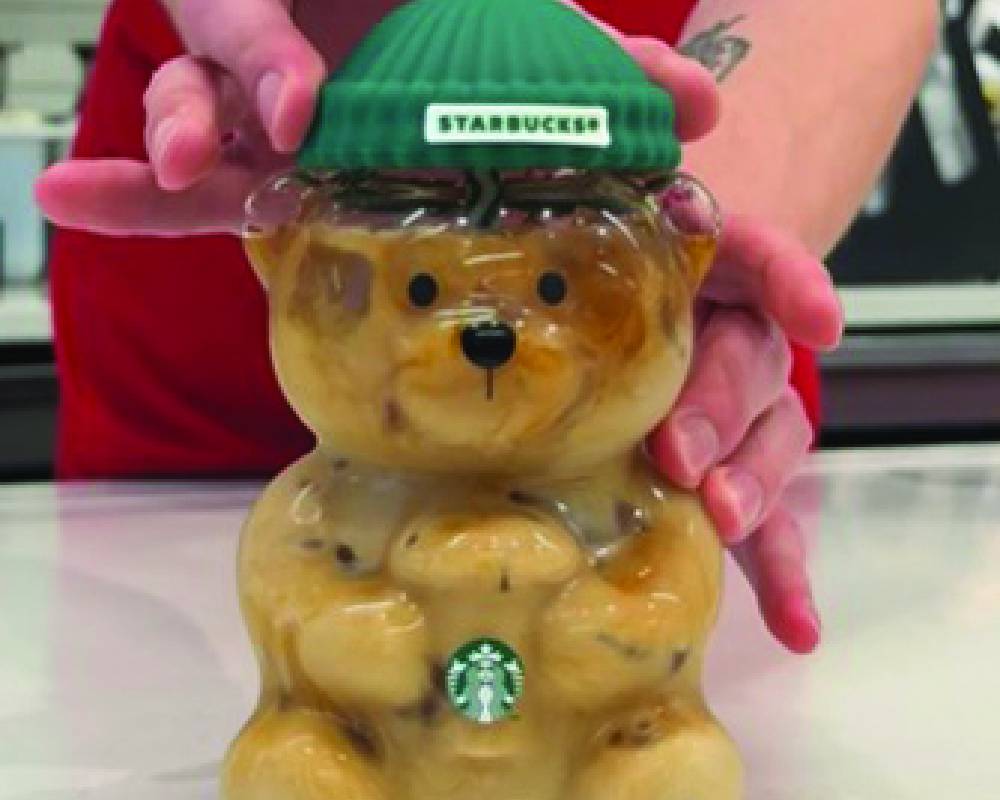
At 5 am on November 6, thousands of customers lined up in a long queue across the Starbucks outlets in the US. No, they were not waiting for a new coffee roast, or a free hot beverage. They wanted to buy the new $29.95 glass cup shaped like a teddy bear, with a green beanie lid. By sunrise, most outlets were sold out. It was not rocket-science, as some stores received five pieces. Within hours, the cups were being resold for $300 apiece on digital resale platforms (eBay).
The frenzy over ‘Bearista Cup,’ as they were called, forced the coffee giant, Starbucks, to publicly announce that it had shipped “more (quantities) … than almost any other holiday merchandise this season,” but the demand outpaced the estimated supply. Possibly, this was planned, as the same marketing ammo has been used before. Each Starbucks store received a limited stock, which was not enough. The FOMO-fueled unquenched buyers generated unpaid viral posts on social media. Videos under the #BearistaCup hashtag drew millions of views, which turned the quirky glass bear into one of Starbucks’ most-talked-about holiday collectables.
In such situations, scarcity is sometimes a deliberate strategy. According to the Business Insider website, a few Starbucks stores got 1-2 of the 20-ounce cups. One of the customers, who had camped out since 1 am in the night, found out that the store had two cups. Starbucks clarified in a statement, “The excitement for our merchandise exceeded even our biggest expectations … we understand many customers were excited about the Bearista cup, and apologise for the disappointment…. this may have caused.”
Although Starbucks does provide a break-up for merchandise margins, its FY 2024 annual returns indicate a retail mix of beverages (74 per cent), food (23 per cent), and others (three per cent; packaged coffee, tea, and serve-ware). The company-operated stores contribute 82 per cent of the annual revenue, which implies that merchandise may make up for a low single-digit share. Analysts contend that categories like tumblers and mugs have gross margins of over 50 per cent. Starbucks’ consolidated gross margin stood at 68 per cent in FY 2024, which was broadly flat year-on-year.
While the direct revenue impact of the collectables may be modest, the indirect effect is considerable. There is normally a drop in footfalls during holiday seasons, so such products woo customers, and help sell other products such as coffee, food, and gift cards. The company’s annual report acknowledged that limited-time merchandise, and menu offerings “drive incremental visits, and strengthen brand connection.” This underscores that one-time merchandise scarcity can act as a retail and marketing lever.
Months earlier, a TikTok video showed a Stanley tumbler, which is popular due to its “functional design… combined with its status as a trendy fashion accessory,” that survived a car fire in Nebraska, and the ice was still clinking inside. It was viewed more than 90 million times in a week. Stanley’s president, Terence Reilly, thanked the owner, and sent her both a replacement car, and new tumblers. Such virality, and follow-up action is crucial.
Between 2019 and 2023, the annual sales of Stanley’s parent company, PMI Worldwide, went up 10 times to $750 million, according to Retail Dive. Sales of the Quencher line grew 275 per cent in 2022, driven largely by TikTok content and affiliate marketing. Videos under the #StanleyCup hashtag attracted hundreds of millions of views. The revenue growth shows how a household product, aided by social media virality, either deliberate or coincidental, can become a cultural symbol.
Asia is not too far behind, and has its moments of collectable revolution. The star of this story is Labubu, a mischievous elf-like creature created by Hong Kong illustrator Kasing Lung, and produced by POP MART. What began as an art figurine became one of the most profitable intellectual properties in global toy culture. POP MART reported an annual revenue of RMB 13 billion (nearly $1.8 billion) in 2024. Its “Monsters” series, which includes Labubu creature, contributed more than $400 million.
The company’s overseas business grew sharply, and contributed nearly $700 million in 2024, up 375 per cent from the previous year. In the first half of 2025, the Monsters line generated $670 million. Labubu’s success is rooted in the fusion of art, scarcity, and community. Every figurine is in a sealed “blind box,” which turns each purchase into a suspense. Collectors queue before major releases, and stores sell out within minutes. Videos of the unboxing on TikTok and Xiaohongshu attract millions of views, and eBay and Carousell sometimes triple the retail tag for resales.
The Labubu craze crossed the Pacific. In early 2025, there were dedicated outlets in Los Angeles and New York. According to media reports, American collectors pay over $200 for exclusive figurines, and blind-box vending machines sell out within hours. On TikTok, hashtags such as #Labubu and #PopMart have accumulated hundreds of millions of views. The company is partnering with local pop-culture conventions, and lifestyle stores to cement Labubu as part of the American “Kawaii,” and art-toy subculture.
Fans describe Labubu as “cute but chaotic,” an aesthetic that captures Gen Z’s fondness for anti-perfectionism. It represents the same impulse that drives sneaker drops, or limited Starbucks cups, which is the desire to own something that signals identity through rarity. While the Bearista cup, and Stanley drops proved the success of the cups, Starbucks Malaysia introduced blind-box plush toys inspired by Frappuccino drinks. The strategy mirrors Labubu’s. What began as an experiment in themed merchandise has evolved into a new form of brand engagement in Asia.
Apart from the desirability of the collectables, shortage is sometimes crucial, as mentioned earlier. Starbucks’ apology about the Bearista cup was marked with brand storytelling. The company’s social-media clarification triggered a wave of parody posts. Indian brands such as JioMart, Wakefit, and Swiggy replicated the same apology format to poke fun at themselves, and highlighted their brand strengths. Starbucks’ post became one of its most-engaged tweets in 2025. The apology trend generated 25 million organic impressions, as per Sprout Social data, which reinforced Starbucks’ visibility.
Starbucks spends billions of dollars on marketing. Each viral drop represents a fraction of that spend, but delivers disproportionate impact. Both the Stanley partnership, and Bearista craze will help the company to achieve larger reach, and top-of-the-mind recall. The emotional connection builds a formidable bond that lasts beyond a drink. The impact of this transformation into cultural currency is limitless. Starbucks sells experiences, and lifestyle symbols. Stanley sells durability and nostalgia. LABUBU whimsy and collectability.



