Ever since I started reading newspapers, and getting interested in domestic and world events in the 1970s, political commentators have regularly laced their views on the US with invective, vitriolic, and rhetoric, coupled with deep-rooted conspiracy theories. From the 1970s to 1990s, America was largely perceived as a nation that was hostile to India's interests. Remember Indira Gandhi’s foreign hand, and both speculations and truthful events about the CIA’s meddling in the country, and subcontinent’s politics.
A welcome change happened at the beginning of this century, as the perceptions changed from hostility and indifference to a win-win strategic partnership with immense potential. Sadly, this lasted till the beginning of this year, when Donald Trump, during his second presidential term, went overboard on the other side. All hell broke loose, and those who never trusted the US said, I told you so. For reasons inexplicable and mysterious to most with common sense, America seems to have declared a de facto economic war on India.
I have little expertise on foreign policy, geopolitics, or the so-called games played by deep states. But what I do understand are facts and data, and from poring over them, I have no doubt that the US States has launched an economic war on India. I do not know the reasons, or what the end-game is, but a war is on, with multiple battle-fronts, which include tariffs, trade, visas, migration, outsourcing, etc.
Let us look at some examples. Rest assured that some of the battles on this front, as well as others, will continue even if India and the US ink a bilateral trade deal in the future. First, the punitive tariffs. Forget about the hypocrisy of singling out India. The fact is that the 50 per cent tariff on Indian exports has disproportionately imperiled the livelihoods of tens of millions of Indians. At least in the short term for a few months till a deal is signed.
Since the tariffs, Indian exports to America declined by more than 15 per cent in September 2025. But exports are in the range of $80 billion, which is a fourth of the trade deficit that the US runs with China. The value of trade between India and the US is like a drop in the ocean in the context of global, and American trade. It seems inexplicable that the US is punishing India. A drop of $10 billion or so in exports may not amount much for a $4 trillion-plus economy but the costs and implications are enormous for local livelihoods.
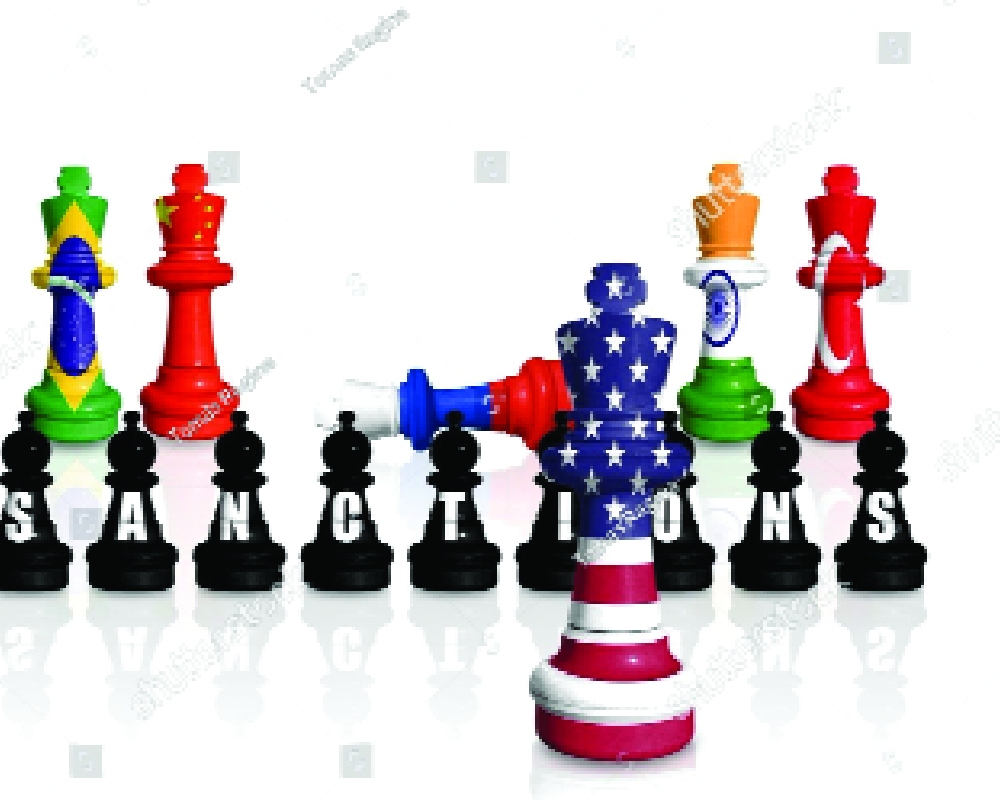
Let us look at another aspect. The US imposed sanctions on two of the largest Russian oil companies after the former failed to persuade India, China, or other major buyers from purchasing Russian oil. China did not care less. Germany and Europe got exemptions. But from October 22, 2025, India had no choice but to comply with the sanctions, and oil exports from Russia have begun to drop precipitously. For India, Venezuela is out of bounds to buy oil. Iran too is a no-no. With Russia out of the picture, the per barrel cost of oil will rise, which is an economic cost that the US will impose on India.
Large Indian groups such as Jindal, Tata, and Vedanta suffer from the American tariffs since they are major exporters of products like aluminum, steel, and other items. Mercifully, the tariffs have not impacted the pharma sector, or the iPhones, although there is pressure on Apple to make the phones locally. To my mind, the most unkind and savage decision was the withdrawal of the policy that enabled some Indian workers to have automatic extensions of their credentials to continue working. Now, these need to be verified.
The earlier policy of automatic extensions was of enormous help to two categories. The first included the spouses of H-1B visa holders, who could be skilled professionals, and thus find lucrative jobs in the US. The other category constituted young Indian students who had just completed their studies in the US, or were in the last year. They have been terribly hit. Between 2022 and 2025, Indian students spent more than $60 billion on tuitions, and living fees in the US to acquire higher degrees. In the past, they would have automatically assumed that they could work for 3-4 years without a problem.
This work surety gave them the confidence to repay large education loans, or borrowings from family and friends to study in the US. This is no longer true. This is a cruel decision on young Indians because effectively they will be hoodwinked of the $60 billion they spent. Last, but not the least, there are the restrictions on H-1B visas. The US accounts for close to 30 per cent of the remittances that flow into India in the form of dollars and greenbacks.
Most of this amount comes from H-1B visa holders, and their working family members, especially spouses, which totals a significant $35 billion or so. If the visa regime, as it exists, is disrupted, this huge inflow is at peril. Once again, although I am not an expert on these issues, the data shows signals that seem incomprehensible. The US has willy-nilly declared an economic war on India. Maybe other experts can tell us why. There is a hot icing, or rotten cherry, on the cake. Recently, before the US President Donald Trump met the Chinese counterpart, Xi Jinping, he put this line on social media, and in all caps: “The G2 will be convening shortly.” Most experts believe that the line signaled a power shift in the global order. It implied that the world now had two superpowers, though this was a hot war, not Cold War, between the two. The others might dream about a multi-polar world order, but that was not the case. America and China would decide the future.
Two decades ago, according to a recent media report, American economist Fred Bergsten proposed an idea in his book that the US and China could “be a caucus of two” that could work together to ensure “sustained recovery of the global economy.” While Bergsten distanced himself, and suggested that G2 would not “manage” but “cooperate” to ensure speedy global economic recovery. But in the mind of Trump at least, it seems evident that there is only one arch enemy left to deal with, and that is China. Europe has fallen in line, so has Japan. This includes most of the Asian economies. It is only a matter of time before India and Brazil do.
The author has worked for leading media houses, authored two books, and is now Executive Director,C Voter Foundation