A few weeks ago, I suffered multiple fractures and muscle ruptures on my left shoulder. Although the hospital did not have a cashless facility for medical insurance, I presumed that I could pay upfront, and claim reimbursement. Post-surgery, even as I was recovering in the hospital, I started reading up on insurance claims. It was horrifying to learn that more than Rs26,000 crore of medical claims were not paid by the insurers. According to the portal managed by the Insurance Regulatory Development Authority of India (IRDAI), the sector’s regulator, more than 95 per cent of the claims and complaints against the firms are about the failures to repay claims that the policyholders felt were legitimate and genuine.
There were more shocks. As I began to fill up the reimbursement form to claim the medical expenses, I struggled with the complicated paperwork that ran into dozens of pages, which included supplementary documents, attachments, proof, and photocopies. This was despite the help from my elder brother. Fortunately, the hospital was cooperative, and aided with the requisite documents. When I reached the insurer’s office, I was informed that the paperwork was incomplete and, despite my pain, I had to get more documents from the hospital. Thankfully, the reimbursement came quickly.
However, the episode made me realise how insurers make life hell for the policyholders despite the claims of ease, simplicity, and efficiency. IRDAI makes huge claims of how effectively it regulates the companies, but the on-ground reality is different, and people struggle to get the claims. If an educated professional like me needs to spend so much time, what is the state of normal, semi-literate, and illiterate individuals? What about those in the small towns and villages? Maybe, this state-of-affairs is limited to insurance.
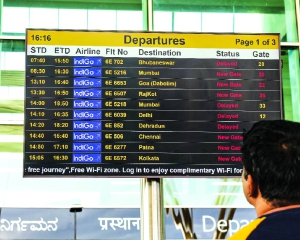
Weeks after my surgery, I toyed with the idea of taking a flight, but gave up since it was not urgent. Thank God for it! Usually, I would have booked a IndiGo flight, and I was relieved that I did not when I saw the newspaper headlines about how the airline, and its passengers were battered and shattered with canceled and delayed flights. Things are so bad that tens of thousands of passengers were across the airports in Delhi, Mumbai, Bengaluru, Hyderabad, Kolkata, and even the smaller cities like Bhubaneswar.
In Bhubaneswar, for example, 18 flights were cancelled. On December 4, 2025, more than 400 flights were cancelled. The next morning, the headlines screamed that not a single domestic flight would leave the Delhi airport until midnight. This is scandalous. Even more scandalous is the reason, or shall we say, the excuse given by the airline for the inexplicable and unacceptable delays and cancellations. According to IndiGo, the situation is due to a shortage of staff. The pilots’ union contends that the airline has limited its hirings due to its business model that focuses on costs and expenses.
Just imagine a situation if the Indian Railways suddenly, and without prior notice, cancels thousands of trains, and because it does not have enough engine drivers, and ticket collectors. The commonsensical question, which is not being asked by the media, is that how can an airline, which is operating for close to 20 years, has expanded at a rapid rate, is highly profitable in most of the years, and boasts of a 95 per cent punctuality rate, suddenly, find itself without adequate crew and staff. How is this possible?
According to a recent report by the aviation regulator, Directorate General of Civil Aviation (DGCA), IndiGo’s domestic market share is almost two-thirds, and its cancellation rate for scheduled flights in August this year was an amazingly-low 0.51 per cent. How can a seemingly-efficient airline resort to gross mismanagement tactics that it has to cancel not 1-2 flights, but hundreds of them? It seems mysterious, intriguing, disturbing, and glaring. There is something inherently wrong in the manner IndiGo operates, and none of us have looked at its business model closely or carefully.
Of course, apart from the airline, the behaviour of the DGCA is perhaps more scandalous. What exactly has the regulator done in the recent past, and what is its monitoring exercises that it could not pinpoint that things were so wrong with IndiGo. In any case, DGCA’s performance in 2025 is not something to be proud of. Most of us can recall the horrifying crash of the Air India flight, which was travelling from Ahmedabad to London a few months ago, and in which all, but one, passengers died. Inquiries were ordered. DGCA ordered one, and the preliminary inquiry report was submitted in time.
Shockingly, the internal confidential report was selectively leaked to foreign media outlets, which suggested that the crash was possibly due to pilot error. The 83-year-old father of the captain of the unfortunate flight approached the Supreme Court to clear his son’s name, and demand a fair inquiry into what exactly happened during the flight. The DGCA, of course, while publicly claiming that the investigations were on, did not explain how the inquiry report was leaked. The ongoing IndiGo’s imbroglio probably adds to the growing image of either a lax regulator, or an inefficient one.
Unfortunately, in India, this is the story with most regulators across major sectors. The harsh reality is that in the twenty-first century, most industries have moved towards a phase of consolidation, with repeated takeovers, mergers, and acquisitions. This wave of M&As have created either duopolies or oligopolies in the marketplace. One sees this across sectors and segments, from steel to tires, aluminum to telecom, aviation to e-commerce. While there is sufficient, and seemingly-stiff competition on paper, there is little or no doubt that there are indications of cartels, or dominance in market shares.
Sadly, the regulators have not done much to reverse the trends. India has the Competition Commission of India, which takes crucial decisions to pinpoint, and stop anti-market, anti-consumer, and monopolistic practices by the large firms. Although it does a commendable job legally, the actions and judgments have had a weak impact in some sectors, and minimal impact on the consumers. Perhaps, the policy-makers need to think of how to make the regulators better, and more efficient. In contrast, political pressures, and industry lobbies aim to influence some of the regulators.
Do not forget that 60 per cent of India’s GDP is related to private consumption expenditure. The consumers, therefore, need better protection, and more incentives to open their wallets.
The author has worked for leading media houses, authored two books, and is now Executive Director, C Voter Foundation; views are personal