The case of missing global Indian brands - Can India become an economic superpower without global brands?
Modi government’s agenda of ‘Make in India’ and export growth is receiving attention due to Trump’s protectionist tariffs. While India has recently made progress in growing exports of mobile phones, semiconductor chips, medical devices, and defence equipment, what is conspicuous by its absence is globally popular Indian product brands.
Almost all countries among the top ten largest economies, except India, have strong global product brands. Even relatively smaller economies like Switzerland and Sweden have global brands.
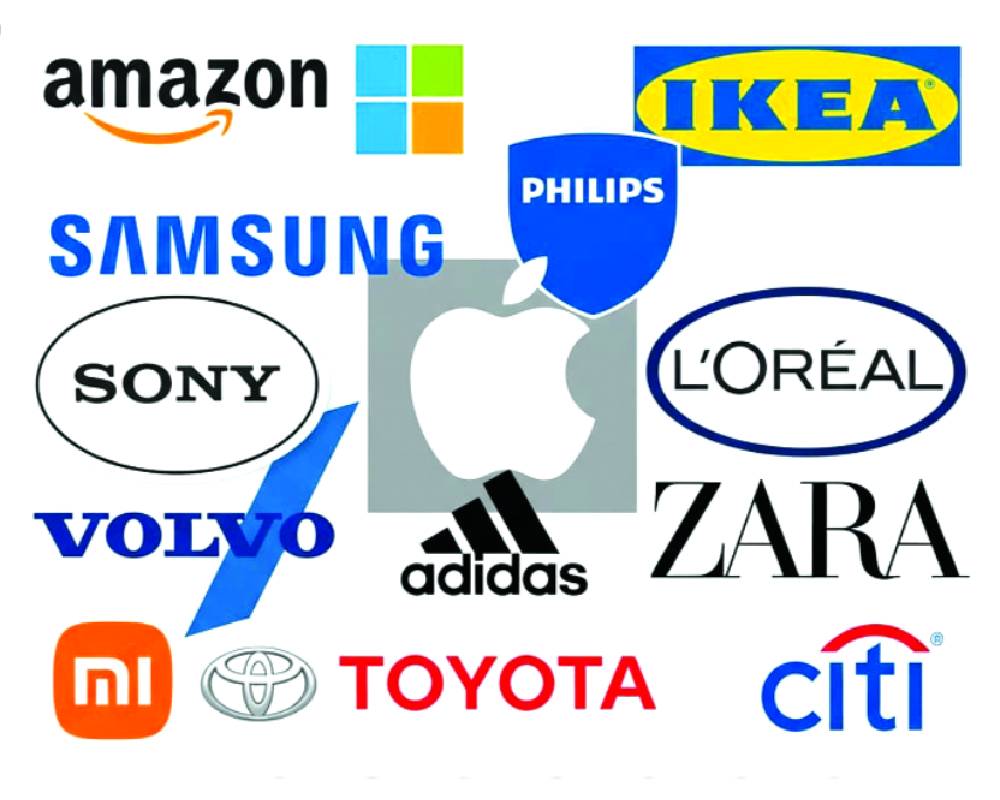
Our houses and surroundings are full of global brands like Amazon, Microsoft, Samsung, Sony, Philips, IKEA, Volvo, Apple, Samsung, Adidas, L'Oreal Xiaomi, Toyota, Zara, Citi, etc but in Europe or the US, Indian product brands aren't ubiquitous. No Indian product brand finds a place in the list of the world’s top 50 product brands.
To be sure, India does have great B2B brands like Infosys, TCS, L&T, Reliance and Aditya Birla group. The Indian pharma sector with companies like Sun Pharma and Cipla, commands about twenty per cent share of world’s generic drug production.
Recently, there has been a massive boost to mobile phone and semiconductor chip production with PLI schemes. The Indian startup scene is on fire as it is producing third third-highest number of unicorns in the world. Many Indians are CEOs of world’s best multinational companies. But in spite of these strides, what may bother Indian businesses and the government is the lack of Indian product brands that are globally successful. So why doesn’t India have many global product brands? And is it really important to have global product brands?
There are historical, economic and cultural reasons for India not having its own global product brands. Developing a brand (especially global ones) requires high, sustained investments towards R&D, product innovation and market research.
It calls for solidly institutionalising quality standards. It demands understanding consumers in other countries, liaising with governments of dozens of countries and complying with their regulations. It requires taking big risks and managing large capital globally to make upfront investments in new markets.
Companies that own globally successful product brands have the ability to be present across continents for sourcing the best talent, producing the best designs, manufacturing quality products and enabling the supply chain. Unfortunately, not many Indian businesses are very good in all of these aspects. Indian players have been focusing on servicing a massive domestic demand, which will gradually erode as population growth stabilises and reduces. Further, India has done better in the services sector compared to manufacturing which leaves out the opportunity of tapping global retail and consumer products.
To nurture global brands, the government too needs to play a role in terms of supporting global expansion, improving ease of doing business and improving law enforcement — again something that India is only slowly improving at.
Indeed, there are India-originated global product brands like Automation Anywhere, Zoho, Preplexity, Amul, Haldiram, Jacquar, Airtel, ISRO and Zomato. Indian companies have acquired global product brands like Tetley, Hamleys, Land Rover and Jaguar. But India is still not comparable to countries like Japan, China, Germany and UK on achieving scale and depth of product brand penetration globally.
But is it mandatory for a country to have global product brands to emerge as and remain a large economy? It is true that even large economies like Brazil and Canada don't have many global product brands but these are exceptions as all other top12large economies do have their own big brands.
Also true that countries with no global product brands could still be large economies because of oil exports, tourism, back-office services and mass manufacturing of white-labeled products. But countries (e.g. China) often need to rise from being the world’s back-office hubs to establishing their own global brands to become large economies.
High correlation between having global brands and being a strong economy may not indicate causation, but the presence of global brands offers a barometer of a country’s capabilities and industrial maturity. If being the world’s most preferred back-office calls for following production standards set by other companies, having its own global brands indicates the ability to understand global markets, adapt, move with speed, innovate, manage capital, source globally and set new standards.
Having global brands also helps countries in diversifying their economy, increasing cultural visibility and enhancing the country's soft power. After all, the presence of the Infosys logo at the Australian Open tournament venue helps not just Infosys in improving its branding, but India as a whole too.
The author is Founder & CEO of AI venture Rsutra Analytics & Consulting