











Marking twenty-five years of statehood, the state’s journey reflects how vision, perseverance, and people’s faith can transform potential into performance. Born in November 2000 from the belief that governance closer to citizens ensures fairness and opportunity, it today stands as a model of balance and confidence—rooted in tradition yet ready for the future.
From modest beginnings, the state has emerged as one of India’s most stable and forward-looking regions. Among the three states created at the turn of the millennium—Jharkhand, Uttarakhand, and Chhattisgarh—it has distinguished itself through steady governance, inclusive growth, and peace-building.
Good governance remains the foundation of progress. To strengthen administrative efficiency, our government established the Department of Good Governance and Convergence, the first of its kind in the region. It ensures time-bound service delivery, tracks grievances, and promotes transparency across departments. Evaluating performance through measurable outcomes helps institutions focus on citizens rather than procedures.
This framework is supported by Jan Chaupal forums for citizen dialogue, digitisation of land and revenue records, and e-office systems that reduce delays. Devolution of funds and authority to panchayats has accelerated local development. Together, these measures reflect governance that is participatory, responsive, and rooted in trust.
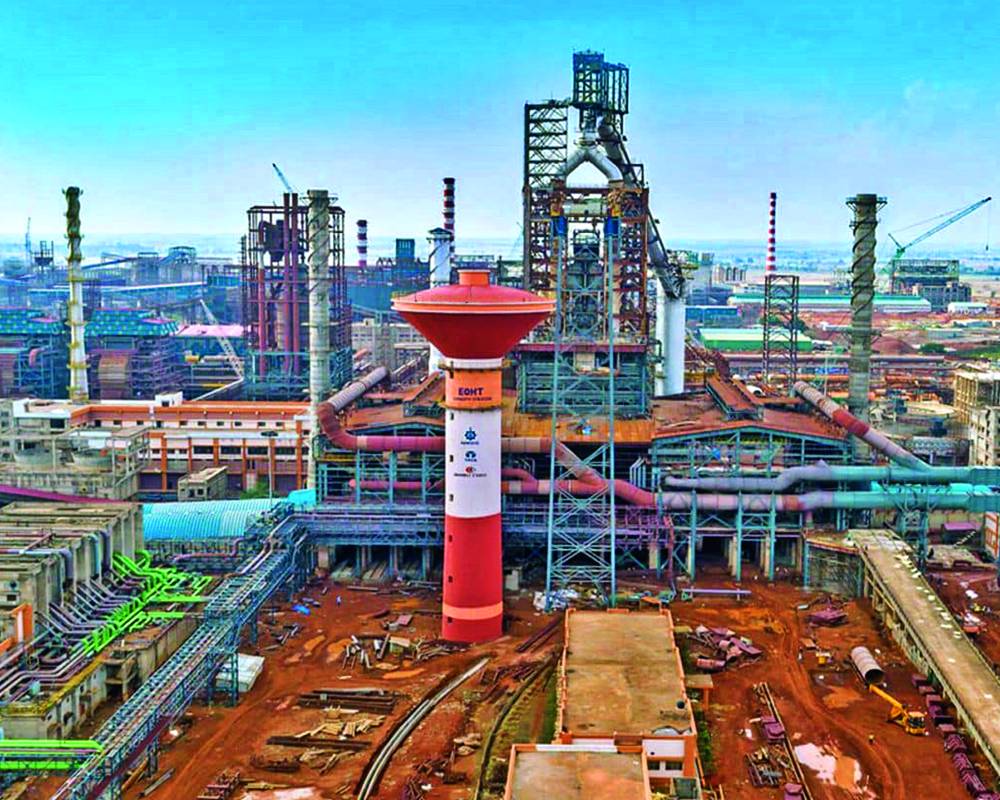
The economy has moved beyond extraction to enterprise. The Durg–Bhilai–Raigarh corridor continues to drive industrial output, while agro-processing, solar energy, and steel fabrication are emerging growth areas. Farmers remain central to this progress. The Krishak Unnati Yojana scheme ensures fair procurement and timely payments, and the Millet Mission has revived traditional crops, improved nutrition, and opened new markets. This balanced approach has strengthened rural incomes and restored dignity to agriculture.
The Industrial Development Policy 2024–30 lays the foundation for the next phase of growth, shifting focus to innovation-driven sectors such as semiconductors, artificial intelligence, data centres, robotics, and electronics manufacturing. A fully digital Single-Window 2.0 system now enables swift clearances, reinforcing a culture of efficiency and transparency. At Naya Raipur, the state’s modern capital, foundation stones for a Rs 1,000-crore AI Data Centre Park and a Rs 1,143-crore semiconductor fabrication plant by Polymatech Electronics signal the rise of a new technological economy.
Such initiatives demonstrate how Centre–State cooperation accelerates progress. Alignment with national goals under Prime Minister Narendra Modi’s vision of Viksit Bharat @ 2047 has strengthened policy direction and investor confidence.
Over two decades, connectivity has redefined geography and opportunity. Expressways now link major cities, while new rail corridors such as Dallirajhara–Rowghat–Jagdalpur connect the plains to the forests of Bastar. Airports at Jagdalpur and Ambikapur have reduced travel time and integrated remote regions into the State’s economic network.
Equally transformative has been digital connectivity. With BharatNet and State IT initiatives, broadband access has expanded rapidly, enabling e-governance, education, and financial inclusion in rural areas. Roads and fiber lines that once carried minerals now carry opportunity.
Among all newly formed states, Chhattisgarh faced the severest challenge of left-wing extremism. The shadow of Maoist violence once disrupted governance and isolated tribal districts such as Bastar, Dantewada, and Sukma. In recent years, sustained cooperation between the Union and State Governments has begun to change this reality. Security operations have been matched by development outreach—new roads, schools, power lines, and welfare schemes reaching deep interiors. Initiatives such as PM-JANMAN for Particularly Vulnerable Tribal Groups, mobile medical units, and forest-rights recognition have rebuilt citizen trust.
The patterns of insurgency are also changing. Over a period of 22 months, 2,227 Maoist cadres have surrendered—signalling a decisive shift. Under the Naxal Surrender/Victim Relief and Rehabilitation Policy 2025, each surrendering cadre receives incentives, housing, skills training, and livelihood support. Several former strongholds have since been declared Maoist-free following joint security and development drives, and Naxals are now confined to a small pocket in remote forested areas.
These gains stem not from force alone but from coordination between security agencies, administration, tribal communities, and Union Ministries. The goal is clear — to eliminate Maoist influence by March 2026. Violence and civilian casualties have declined sharply, and Bastar’s youth today speak the language of education and enterprise. This transition from conflict to participation remains one of the most significant achievements of the past decade.
The return of normalcy is also reflected in a revival of community life and cultural pride. The annual Bastar Pandum, rooted in tribal tradition and collective celebration, and the Bastar Olympics, drawing over two lakh participants, have become symbols of peace and renewal — a region once defined by fear now reclaiming its spirit through sport, culture, and confidence.
The government’s wider strategy ensures progress that is inclusive and sustainable. The new industrial policy offers special incentives for enterprises in former LWE-affected districts, encouraging balanced regional development. Roads, skills hubs, and educational institutions are transforming remote areas into active growth zones.
With 44 per cent forest cover, the State recognises that ecological balance is integral to growth. Its model integrates green energy, afforestation, and responsible mining so that economic expansion proceeds with environmental responsibility.
Education and health remain central to long-term progress. Literacy has risen from 65 per cent in 2000 to over 77 per cent today. A growing network of government-run English-medium schools has brought quality education to rural districts, giving every child a fair chance.
Skills development centres are preparing youth for jobs in technology-led industries, advancing Prime Minister Modi’s vision of a Skilled and Digital India. Women’s self-help groups and entrepreneurs are driving economic participation at the grassroots. Their success embodies the larger spirit of the state—self-reliant, industrious, and proud of its roots.
Health access has improved through the establishment of new medical colleges and mobile units, while the Ayushman scheme covers over 2.38 crore individuals.
As the state enters its next quarter-century, the focus is clear: to sustain growth with equity and responsibility. Industrial expansion must align with forest conservation, and urban prosperity must strengthen rural livelihoods. Political stability, fiscal discipline, and good governance remain guiding pillars.
The story of the state is, above all, the story of its people—their endurance, enterprise, and unity. From insurgency to industry, from scarcity to self-reliance, every milestone bears the imprint of their effort. The vision ahead is clear: a prosperous, secure, and self-respecting state contributing meaningfully to Prime Minister Modi’s goal of a developed India by 2047. The next twenty-five years will not merely extend progress but reaffirm faith—in governance, in partnership, and in the people who made this journey possible.
The writer is the Chief Minister of Chhattisgarh; views are personal



