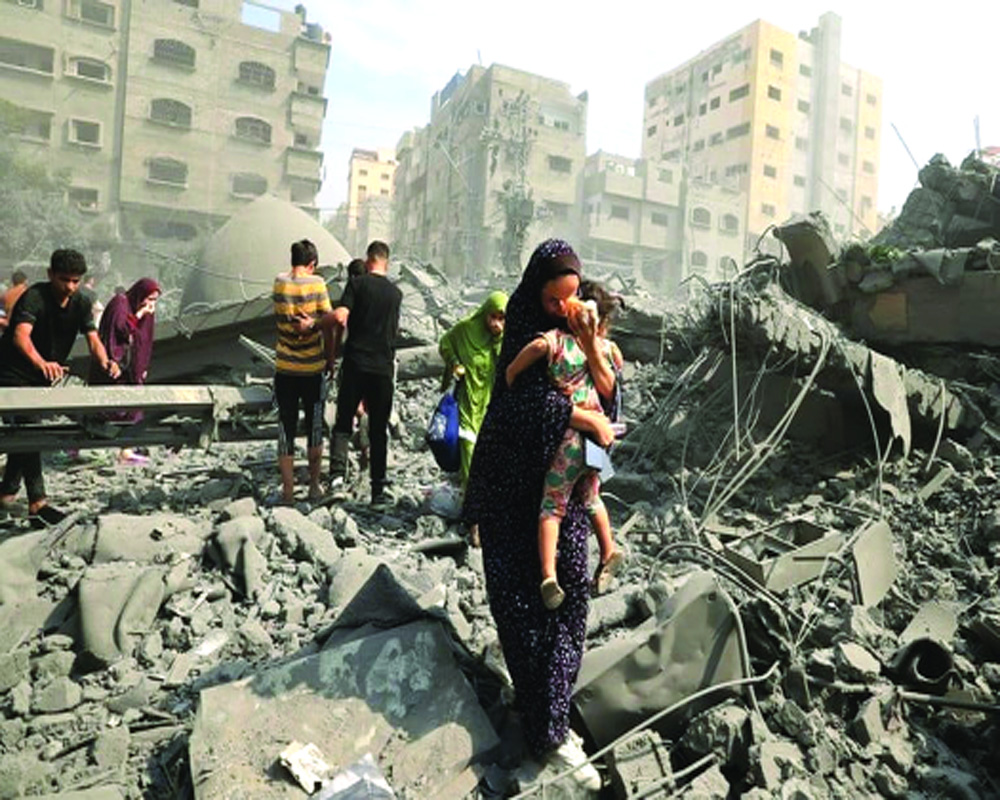
The ethnic cleansing of Gaza is not only a crime against humanity but also a geopolitical disaster in the making
Donald Trump’s proposal to take over Gaza and forcefully relocate its Palestinian residents has been met with an overwhelming wave of international condemnation. Leaders across the globe, from the United Nations to key US allies such as Jordan and Egypt, have firmly rejected the plan, calling it an act of ‘ethnic cleansing’ that would destabilise the entire region. Apart from being a morally repugnant and inhumane suggestion, Trump’s vision for Gaza is doomed to backfire, not only by igniting further unrest but also by damaging US alliances and deepening the ongoing conflict. Trump’s idea of ‘owning’ Gaza and resettling its 2.3 million residents elsewhere is not a spontaneous thought. It echoes long-standing discussions within the Israeli far right, where forced Palestinian displacement has been promoted as a means to secure Israeli territorial ambitions. Trump’s embrace of this agenda is unsurprising given his strong ties to Israel’s far-right politicians and his past decisions that have systematically undermined Palestinian sovereignty, such as moving the US embassy to Jerusalem and cutting aid to Palestinian refugees.
The response from regional allies has been unequivocally negative. Jordan’s stability is crucial to US interests in the region, and forcing the country to absorb another wave of refugees could have disastrous consequences. Egypt, which shares a border with Gaza, has also dismissed the plan, with its government warning that forced displacement would violate peace agreements and threaten national security. Any attempt to push Palestinians into the Sinai Peninsula would risk dragging Egypt into direct conflict, further complicating an already volatile situation. Saudi Arabia, yet another trusted US friend who has been a key player in US diplomatic efforts in the West Asia, has issued a strong rebuke of the plan, emphasising that any forced transfer of Palestinians would violate international law. However, the biggest danger of Trump’s plan is that it can spur terrorism globally. Trump’s plan, if enacted, would only fuel more extremism and conflict. The displacement of millions of Palestinians would create a new humanitarian crisis, radicalising those affected and providing extremist groups with powerful narrative for recruitment. History has shown that forcibly uprooted populations do not disappear quietly—instead, they often turn to resistance, armed struggle, or insurgency. Furthermore, any US military involvement in enforcing such a plan would likely draw direct opposition from other world powers such as Russia and China, fuelling more tension across the world. Trump’s motivations appear to be a combination of political opportunism and ideological alignment with Israel’s most extreme factions. Why Trump is doing it? By introducing a radical and controversial proposal, he shifts attention away from his legal troubles and domestic political challenges. The ensuing chaos allows him to portray himself as a decisive leader taking bold action, even if the plan is utterly impractical and morally indefensible.