While Delhi claims strategic success, key questions linger: Was nuclear escalation ever imminent? Who brokered the ceasefire? As media hails a new deterrence era, critics warn that silent victories may sow deeper uncertainties
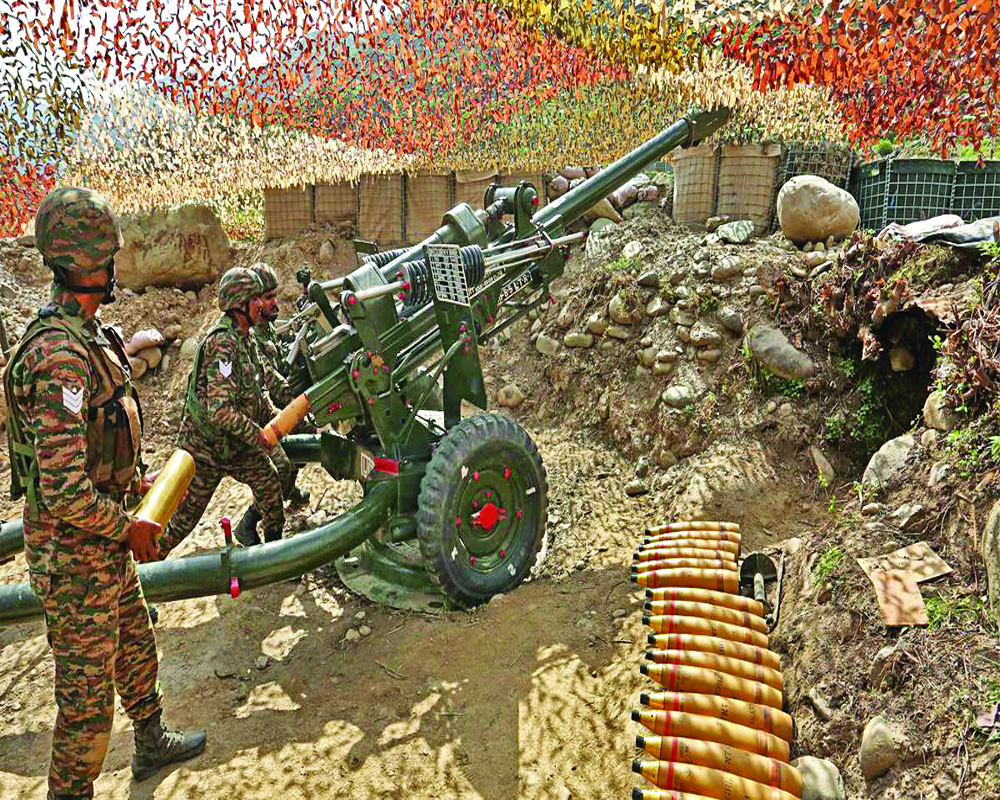
Op Sindoor may have moved from Page One to Page Three. But it won’t go away as PR people are making hay while the sun shines. In the 90-hour non-contact aerial skirmish, India’s military performance is being hailed by Western experts as ‘if not a victory, setting new benchmarks in precision strikes, deterrence domination and escalation control’. India, for the first time, achieved its stated objective with evidence of destroying terrorist infrastructure in the heart of Punjab, Pakistan and PoK in an unprecedented stand-off battle between two nuclear-armed nations. The IAF had to prioritise its counter-air operations between first neutralising Pakistan’s air defence network and targeting terrorist hideouts as tasked.
The limited political objective was achieved without deviation but with a bonus by inflating deterrence by punishment. By keeping the conflict limited and not inflicting further attrition of Rawalpindi’s key military assets, Delhi showed strategic restraint. As Pakistan stole the battle of narratives, two different versions of the skirmish are available — that’s how Rawalpindi is celebrating victory, promoting Gen Asim Munir to Field Marshal.
No clarity is obtained about any nuclear trigger. President Trump has not ceased claiming at least eight times, US intervention to avert a bad nuclear war. No evidence is forthcoming about nuclear signalling during the skirmish. Doubts about who brokered the cease-fire have been cleared. Delhi claims it was done bilaterally with Pakistan DGMO approaching his Indian counterpart.
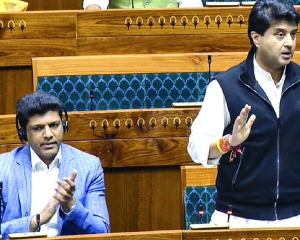
But recall Islamabad had held in abeyance all bilateral treaties as part of its non-kinetic retaliation to Delhi suspending IWT. Further, the IAF has withheld its combat losses, including aircraft. The Government has institutionalised its policy on silence. No parliamentary debate is likely on the military crisis, as in the past the Government had said it would affect the morale of troops and undermine national security. India is the only democracy that has prohibited discussion in Parliament — none after Uri surgical strikes, Balakot air strikes, Galwan fisticuffs and Op Sindoor. Yet, it will secure political dividends outside Parliament, hailing Prime Minister Modi’s leadership, while his sycophants have already launched publicity campaigns, including distasteful comments like the armed forces are at his feet; it was Modi’s Sena after Uri and on women. This time the plan is to extend Tiranga Yatra to year end to include Bihar elections. Op Sindoor will further politicise the military, endangering its professional, secular and apolitical hallmarks. But new age warfare military leadership doesn’t seem to mind. Coercive diplomacy has two strands: coercion and the use of force to change Pakistan’s congenital disease of waging CBT to keep Kashmir alive. At Kargil, India relied on the military backed by diplomacy. In Op Parakram, coercive diplomacy was supported by military mobilisation and the threat of war. During Uri, Balakot and Sindoor, military force dominated. Pakistan’s military, which has never been under civilian control except briefly after defeat and surrender in 1971, has not abandoned Kashmir. Delhi has attempted to change the Pakistan military’s behaviour either by coercion (including three imposed wars) or diplomacy. Munir’s fiery speeches before the Pahalgam carnage made clear the centrality of Kashmir and the jugular vein. On Kashmir Solidarity Day, February 5, Munir said: “We have fought three wars over Kashmir. We will fight another ten if required.†India’s non-kinetic measures are proving effective but, surprisingly, diplomacy lagged 15 days before the launch of Op Sindoor.
Again, between May 7 and 10, diplomacy went into static while Pakistani ministers were giving interviews to BBC, CNN and Al Jazeera. Delhi’s diplomatic outreach was too little too late. The seven politico-diplomatic teams will certainly earn goodwill, not active support in the UN. Islamabad too has sent out its teams to counter Delhi’s diplomatic offensive. Most of the international community is suffering from terrorism fatigue; the scourge has been contained. The wars in Ukraine and Gaza instead are grabbing headlines. So any preaching on terrorism by Indian diplomats will sway only a few in India’s favour.
Their support for Delhi is for the right to self-defence — not condemnation of Islamabad. Each country operates in the exercise of its self-interest, exposing the reality of India’s strategic autonomy. Except for Israel’s unqualified support, US, Russia and UK support is muted and issue-based. UK Foreign Secretary David Lamy visited Islamabad after Op Sindoor and said: “US and UK are working together for enduring ceasefire and dialogue is happening.†So who can say India and Pakistan are not re-hyphenated and Kashmir not internationalised? Why India took its neighbourhood for granted is unclear. Not one country has unequivocally backed India’s kinetic response while supporting its fight against terrorism. Foreign Minister Jaishankar has made some elucidations: first about informing Pakistan about the specificity of India’s targeting during the kinetic response on May 7. He said: “Strikes were only against terrorist infrastructure, not the Pakistan military so it could stay out (but it chose not to).†On May 17, he stated unambiguously that Delhi informed Pakistan about targets “at the start of the operationâ€, which was later corrected by MEA to read “Indian DGMO informed his counterpart at end of initial operation.†On the next terrorist attack being regarded as an “act of war†Jaishankar said: “Another terrorist attack like Pahalgam.†But no two attacks are similar. He has emphatically denied any third-party role in any mediation, alluding to the US and UK.
Finally, after years of insisting that terror and talks will not go together, he relented, saying: “We will talk — but only about terrorism and Kashmir, only return of PoK.†Every India–Pakistan crisis except during this BJP Government has led to dialogue. Intelligence and operational failures must not be overlooked. The four Pahalgam terrorists have still not been accounted for. Two additional brigades are deployed. Three terrorist encounters have taken place since Pahalgam. Pakistan’s warning of revenge after the explosions in Jaffer Express in Balochistan, attributed to India before Pahalgam, was ignored. The new Multi-Agency Centre in Delhi — an extension to the IB chief, like Munir’s promotion — should not mask failures. Non-kinetic measures, including dialogue, will be more effective than the new normal.
(The writer, a retired Major General, was Commander, IPKF South, Sri Lanka, and a founder member of the Defence Planning Staff, currently the Integrated Defence Staff. Views are personal)