Before the Ice Melts, the Ego Must: The Real Crisis Behind COP30
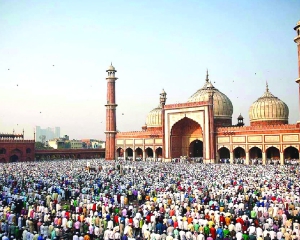
The 30th UN Climate Conference has opened this week in Belem, deep within the Amazon. The setting itself speaks louder than the speeches: humanity gathers in a burning forest to discuss how to stop the fire. Attendance is thin, finance remains uncertain, and the absence of the United States, the world's second-largest emitter, has been called "less disruptive than expected." Over a hundred American governors and mayors have arrived independently, declaring that "America is still in." But the Earth does not hear declarations; it registers emissions.
The Thresholds We Have Crossed
We are beyond the stage of uncertainty. The world has already crossed the 1.5 °C limit above pre-industrial levels. The last eleven years are the hottest ever recorded, and the pace of warming continues to accelerate. The climate's fever reflects the human one: restless, rising, and unwilling to stop.
The Global Tipping Points Report 2025 confirms that warm-water coral reefs have entered irreversible decline. Over eighty per cent have been bleached since 2023, threatening food security and livelihoods for nearly a billion people. These reefs once protected coastlines, fed nations, and hosted a quarter of all ocean life. Now they are turning to bone before our eyes. The ocean is not just warming; it is losing its foundation.
The Amazon, the world's largest rainforest, is nearing large-scale dieback. Seventeen per cent has already shifted to savanna, releasing more carbon each year than India's total emissions. Greenland and West Antarctic ice sheets are destabilising, together capable of adding three to five metres to global sea levels. Their grounding lines are retreating now, not waiting for the year 2100.
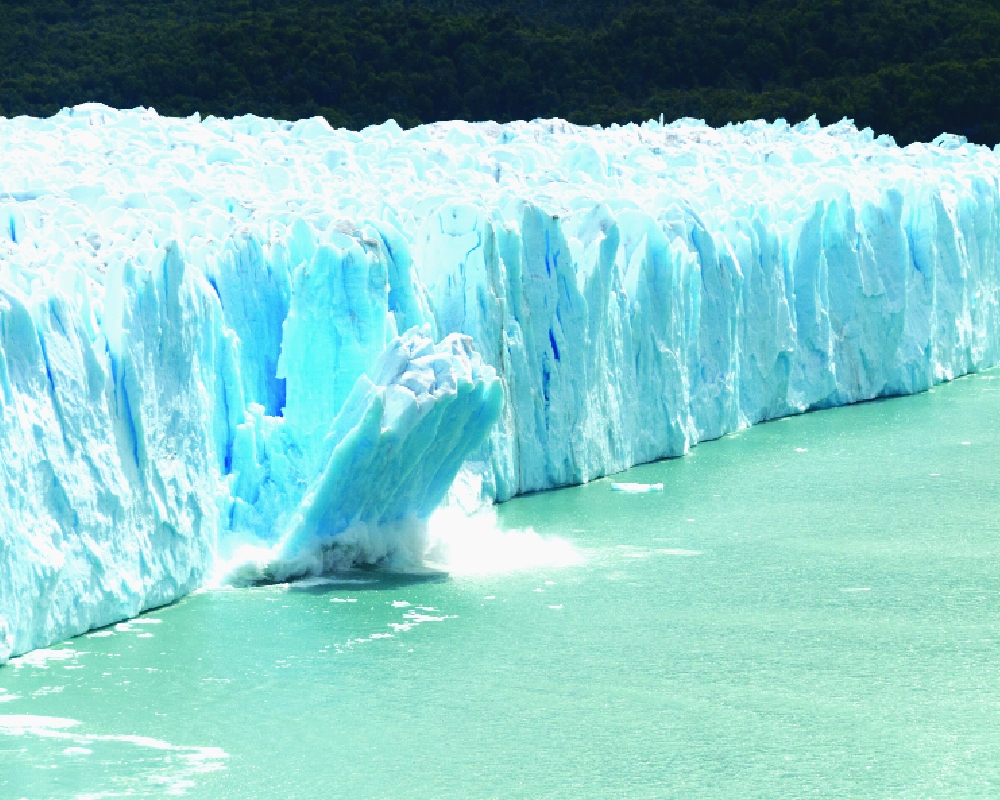
Antarctica has become the planet's silent alarm. The Thwaites "Doomsday Glacier" is cracking faster than predicted, with warm seawater intruding deep beneath its ice shelf. If it collapses, global sea levels could rise by more than three metres, submerging deltas and coastal cities across continents. Arctic winter sea ice, after the 2025 freeze, has reached the lowest level ever recorded. The poles were Earth's anchors; when they go, nothing holds the world in place.
The Arctic is warming 3.5 times faster than the global average. Methane is being released from thawing permafrost, while wildfires rage across continents. From March 2024 to February 2025, fires burned 3.7 million square kilometres (an area the size of India and Norway combined), releasing more carbon dioxide than any year before. These fires are not accidents; they are the Earth exhaling its ancient breath.
The United States alone has faced fourteen billion-dollar climate disasters in the first half of the year, with losses exceeding $100 billion. Yet global emissions, instead of falling by 44 per cent by 2030 as promised under the Paris Agreement, have risen by 3 per cent. Even if every COP30 pledge were fully honoured, the world would still be heading for 2.3 to 2.5 °C of warming by 2100. The fever will not break because the disease lies not in the atmosphere but in ambition.
Policy and Technology Alone Won't Help
Governments cannot enforce what people do not inwardly accept. The same person who demands climate action as a citizen demands consumption as a buyer. The voter and the consumer are the same person, unwilling to live with less. No political system survives long by asking its people to sacrifice comfort. So governments sign accords, issue statements, and return home to protect normalcy.
The blame is not equal. The richest five per cent, and within them the top one per cent, are responsible for the majority of emissions. Their excess has reached the point of obscenity, and the emission levels of the top one per cent are criminally vulgar. Yet those who contribute least will suffer most. The poor will face the heat with the least insulation and the least mobility.
We have come to worship technology as our new theology without examining the worshipper. Each new gadget is a prayer for redemption without reflection. Electric vehicles are a popular example. They can cut lifetime emissions by almost half when charged with clean energy, yet the same mind that buys one "green" SUV trades it next year for a larger model, builds more roads, drives more and in bigger vehicles, and gloats over it as progress. When greed drives the engine, every invention accelerates collapse.
Even to limit warming to 1.7 °C now requires removing ten billion tonnes of carbon dioxide every year, five times the emissions of global aviation. The pattern repeats everywhere: more flyovers, more power, more exhaustion. Technology cannot compensate for blindness. When the inner driver is greed, every outer solution turns into another form of harm.
We indeed need solar panels, wind farms, carbon removal, and clean transport. The physics of climate demands material solutions. But technology without wisdom is surgery on a patient who refuses to stop drinking poison. Both the surgery and the abstinence are necessary. We debate the operation endlessly while continuing the addiction.
Wisdom-guided technology asks, "How much is enough?" before asking, "How much is possible?" Japan's bullet trains were designed for sufficiency, not indulgence. They move millions efficiently without demanding that each person own a car. Kerala's low-carbon development model achieves high literacy and long life expectancy at a fraction of the emissions of wealthier states. These are not miracles of machinery but of consciousness.
Technology is not the villain; it is the mirror. The tools are innocent, the user is not. Science can heal the body, but who will heal the ego that keeps poisoning it? Until wisdom guides invention, cleverness will remain our curse.
The Existential Root
The deeper crisis is an artificially implanted existential sense of incompletion. The two forces behind the climate crisis (population growth and consumption) share one common root: the existential illusion that consumption brings fulfilment. The richest 10% produce half of all emissions; the poorest 50%, barely a tenth. A billionaire's jet may emit more in one flight than a farmer does in a lifetime, yet both, as human beings, are driven by the same restlessness to add, to acquire, and become.
Beyond the biological hardwiring of loneliness, social forces work overtime to make people feel incomplete so that they keep buying. Loneliness is sold as a problem and products as companions. Relationships and family become engines of commerce. Entire industries thrive on insecurity. The poorer one feels within, the costlier his life becomes.
We exploit the Earth for the same reason we exploit one another: because we feel hollow inside. The planet bleeds because we do. Climate change is not the disease; it is the symptom. The real disease is ignorance, the failure to know oneself. That ignorance breeds the illusion that happiness lies in accumulation. Trapped in that illusion, we extract more, consume more, reproduce more, and remain anxious.
Two centuries of industry have given us immense power but not the wisdom to use it. Real sustainability begins not with technology but with understanding. When consciousness awakens, restraint is not even needed, because excesses are not desired. A mind that knows itself needs no slogans to behave sanely. Consciousness is the ultimate regulator; when it shifts within, systems shift without.
On the outside, we must indeed reduce what we can (fewer children, less waste, lower consumption), but those actions matter only when they arise from insight, not from fear or guilt. Otherwise, one buys less plastic only to buy more gadgets. The real task is to observe the storm within: the urge to upgrade, to compare, to display. That same storm heats both the atmosphere and the psyche.
When awareness deepens, manipulation loses its hold. The person who knows his phone works perfectly will not bow to an advertisement promising completion through an upgrade. Multiply such clarity a millionfold, and the outer world begins to change. Regulation and awakening are not separate movements. Policy without inner change breeds resentment; introspection without public action is hypocrisy.
The climate mirrors our condition. The atmosphere will not cool while the mind burns. When the inner storm settles, the outer temperature will follow. Hope, by contrast, can be a narcotic. It soothes but postpones. What the world needs is not hope but understanding. Hope pleases the ego; clarity dissolves it. And only that dissolution heals.
Self-Knowledge For Right Action
All kinds of destructive attitudes arise from flawed notions of self-identity. One experiences a void within, clamoring to be filled, but does not pay it due attention. The result is a simplistic and apparently obvious conclusion: I must consume the world to feel internally fulfilled. This fundamental urge for consumption resulting from an absence of self-knowledge is at the root of the climate catastrophe.
When one observes her thoughts and her predictable actions ending in similar failures, one begins to check her tendencies. Change begins with attention. Before clicking "buy", one pauses and asks what she seeks: the thing, or evasive fulfillment through the thing.
Self-knowledge is solid action. Inner clarity can take social forms. Cooperatives in Europe run solar grids owned by residents, not corporations. Bhutan's "Gross National Happiness" shows that even states can measure success on an internal parameter rather than external growth.
One starts voting for policies that curb planned obsolescence, limit luxury emissions, and reward circular design. One demands that governments tax waste, not work, and that corporations disclose ecological facts, not glossy pledges. One supports green cess and carbon border tax. And all this comes not from morality or ethics, but from the same inner place that causes destruction, if left unilluminated.
Can personal transformation reshape political reality? It must, because politics ultimately reflects the consciousness of the populace. When enough individuals see through manufactured desire, industries lose their grip. When consumption is recognized as compensatory behaviour, markets adapt or collapse.
Multiply inner seeing a millionfold, and industries will shift, because demand creates supply. Policy without inner change breeds resentment; introspection without public action is hypocrisy. The atmosphere will not cool while the mind burns.
Humanity always had insight, but wisdom was rarely lived by the masses. Religion became ritual, not realization; belief, not understanding. The Gita calls Kama (desire) the destroyer of knowledge; the Buddha named Trishna (craving) the root of suffering; Lao Tzu counselled knowing when enough is enough. Yet economies were built on inflaming desire.
What went wrong? Wisdom was kept separate from commerce, confined to temples, while markets roared unchecked and society walked blindfolded. The crisis is not that wisdom was absent, but that it never left the books to challenge the factory floor. Forests fell while prayers rose; rivers died as shrines multiplied.
The philosopher's task does not end with meditation or publication. He must step into society and ensure the light he has seen becomes the living light of the common man. He must be both a rebel and a builder: challenging the system, yet shaping new institutions. If he retreats, his self-absorption will become the planet's ruin.
Reclaiming Joy and Responsibility
Be cautious of your role models. The celebrities and gurus who preach freedom while travelling by private jets or promoting luxury goods are not harmless entertainers; they are educators of desire. Every picture of a dream vacation, every advertisement of a new car, teaches that value lies in excess.
In India, cricketers who glorify high-emission lifestyles, actors promoting heavy consumption as virtue, influencers monetising aspiration, politicians selling deforestation in the name of development: all profit from planetary harm. Stop funding them through your wallet, your vote, and your attention. The like is not innocent; it is a micro-investment in vanity.
Demand public disclosure of celebrity carbon footprints; hold fame to the same scrutiny as factories. Concert tours that burn millions of litres of fuel and sports events that leave plastic mountains are industries disguised as entertainment. Insist on policies that make excess visible and costly. Reward moderation with respect, not extravagance with applause.
Above all, seek deeper joy. Will you burn fuel if a book can give you joy? Seek retail therapy if music can heal you? Scroll for hours if one conversation can move you? Watch a five-hundred-crore spectacle if a simple wisdom talk touches you more deeply? Chase luxury resorts, if a walk in a nearby forest quietens your mind, and the sky over your home still shows stars? Clamor for far-off destinations if your relationships offer intimacy? Upgrade devices yearly if you see that technology cannot fill an inner void. Consume status symbols if self-respect no longer needs proof? Hoard possessions if you discover that lightness is freedom? Accept the extinction of species once you see consciousness in all beings?
When joy is rediscovered within, compulsive consumption loses its purpose. A person with self-knowledge cannot be sold dissatisfaction. The cleanest energy on Earth is contentment. The greatest cleansing force on Earth is consciousness.
Acharya Prashant is a teacher, founder of the PrashantAdvait Foundation, and author on wisdom literature.