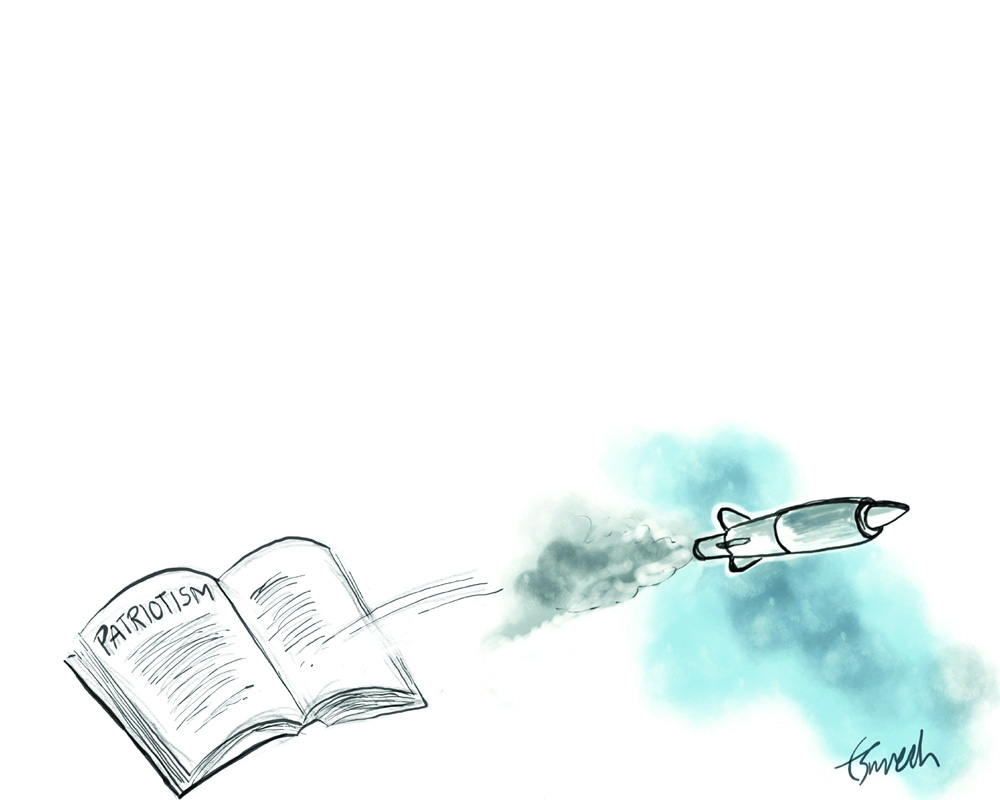
Former Army Chief Gen Nirmal Vij’s book, ‘Alone in the Ring: Decision-making in Critical Times,’ offers a candid insider’s view into pivotal moments in India’s defence history — ranging from Kargil and Op Parakram to the fencing of the LoC and the origins of the Cold Start Doctrine
Former Army Chief Nirmal Vij’s book Alone in the Ring: Decision-making in Critical Times was released earlier this year by former Army Chief Gen VN Sharma to a packed house. Several former Army Chiefs, like Gen Mukund Naravane — whose own book Four Stars of Destiny has been quarantined and is currently under review by the Ministry of Defence for nearly two years after publishers released revealing excerpts on decision-making during Operation Snow Leopard and the Agniveer scheme — remain unheard. It appears Naravane’s book is unlikely to see the light of day, as it does not portray the politico-military decision-making process under the present regime in a favourable light.
Vij’s book was also held up, and its inauguration delayed by several months. The latest book on defence is by CDS Gen Anil Chauhan: Ready, Relevant and Resurgent: A Blueprint for the Transformation of India’s Military. After a long hiatus, Army Chiefs have resumed writing about their experiences-a necessary step for institutional learning. Gens Ved Malik and JJ Singh have made useful contributions to Indian military literature: Malik on the necessity of institutionalised decision-making involving Service Chiefs, and Singh on China and the McMahon Line. Naravane has credibly illustrated deficiencies in decision-making, but his book has been suppressed. Vij’s book focuses on critical decisions taken by him as COAS and the recommendations that were accepted by the government. Vij recounts a historic fact about Pakistan, which, in collusion with Britain (perhaps more the other way round), had its eyes on Jammu and Kashmir — a region that has become Pakistan’s jugular vein. In order to seize it, Rawalpindi has tried everything: waging wars, instigating skirmishes, and conducting an unending proxy war, including Kargil and, most recently, the new-age beyond-visual-range skirmish, Operation Sindoor.
The book covers Kargil, Operation Parakram, and Operation Khukri in commendable detail. Vij also touches upon the LoC fence, Cold Start Doctrine, jointness, integration, and theatrisation; briefly covering Operation Iraqi Freedom and the initiation of several path-breaking welfare reforms. From his ringside seat, Vij played a pivotal role in the transformation of the Army. From May to July, 26 years ago, the Indian Army, supported by the IAF, fought its most gruelling infantry battles uphill due to a strategically imprudent political decision. This ill-thought decision, driven by an outdated policy of “not losing an inch of territory”, was not rectified; instead, it was exacerbated by misplaced parliamentary zeal to pass unanimous resolutions aimed at retaking territories lost to Pakistan and China — resolutions that have now become irretrievable legacy pledges. The decision not to cross the LoC proved fatal and led to avoidable casualties. Vij discusses integrated operations, but the use of two different names — Operation Vijay for the Army and Operation Safed Sagar for the IAF-tells a different story. Army Chief Gen Malik’s statement, “We will fight with what we have”, captures the sad state of preparedness at the time. Kargil was a bad deal that ended on a high note, earning the highest per capita awards for any war or military operation. It is described as a “skirmish” at the National War Memorial. Its spin-off was the Kargil Review Committee report and the formation of four task forces on intelligence, internal security, border management, and higher defence management.
Just months after Kargil, IC-814 was hijacked from Kathmandu to Kandahar by Jaish-e-Mohammed terrorists — another fiasco under the then BJP Government’s watch. Then came Operation Parakram — the war that never was-in December 2001, India’s second exercise in coercive diplomacy after its failure in Sri Lanka during Operation Pawan. The attack on Parliament by Pakistani terrorists on 13 December led to the largest mobilisation of armed forces in peacetime, believed by many to signal a full-scale, decisive war that came to the brink — yet India held back. India lost more soldiers during Operation Parakram than the 512 martyrs who reclaimed the Kargil heights. Vij describes how a minister called “restraint” a strategic asset. One man bitterly disappointed by the restraint was Army Chief Gen S Padmanabhan, who wanted to teach Pakistan a lesson for its proxy war.
Operation Khukri involved the rescue of 223 Indian soldiers and 11 military observers held hostage by RUF rebels in Sierra Leone during a UN peacekeeping mission. Efforts to persuade the UN to shift the mission mandate from Chapter VI to Chapter VII — permitting the use of force-were hedged even after a delegation led by Vij to the UN failed. Eventually, the UN Secretary-General allowed a rescue, which led to the successful conduct of Operation Khukri.
The LoC fence, which was Vij’s brainchild, was constructed in 2003. It transformed counter-infiltration and counter-terrorism operations, despite many detractors. The Cold Start Doctrine, whose existence was denied by the government, was revealed by Gen Deepak Kapoor in 2009 and was a direct fallout of Operation Parakram. It triggered panic in Pakistan, leading to the development of tactical nuclear weapons. The Integrated Battle Groups and the recently announced Rudra Brigades are the green shoots of Parakram.
Vij welcomes the appointment of a CDS and affiliated reforms, and Integrated Theatre Commands are expected. He criticises the appointment of a retired three-star General as CDS but makes useful recommendations for refining command and control structures under theatrisation and the Department of Military Affairs. The account of the US request for at least 17,000 Indian troops in Iraq in 2003 is well told, though deployment was not recommended due to command and control issues.
The crown jewel of Vij’s contribution lies in welfare reforms: improving career prospects in the Army, launching the ECHS scheme, upgrading the military education system, constructing the Manekshaw Centre, and implementing the Married Accommodation Project.
One of the pivotal issues in civil-military relations is the quality of interaction between the political and military leadership. In India, where neither the civilian bureaucracy nor political leadership is deeply versed in defence and strategic matters, political control and guidance often devolve into bureaucratic overreach. This lacuna must be corrected. Military commanders must discreetly provide strategic counsel while guarding against the politicisation of military operations and achievements.
It remains unclear whether, during Operation Sindoor, military advice was presented at the numerous meetings between the two hierarchies. Otherwise, Gen Chauhan would not have spoken in Singapore about “mistakes corrected”, nor would the Indian Defence Attaché in Indonesia have referred to political constraints during the initial strikes on 6/7 May. Vij has done well to allude to similar pitfalls in his book.
(The writer, a retired Major General, was the Commander of IPKF South, Sri Lanka, and a founder member of the Defence Planning Staff, which is currently the Integrated Defence Staff)