The Budget 2025 introduces transformative measures—including enhanced credit guarantees, the ME-Card initiative, BharatTradeNet— to empower MSME
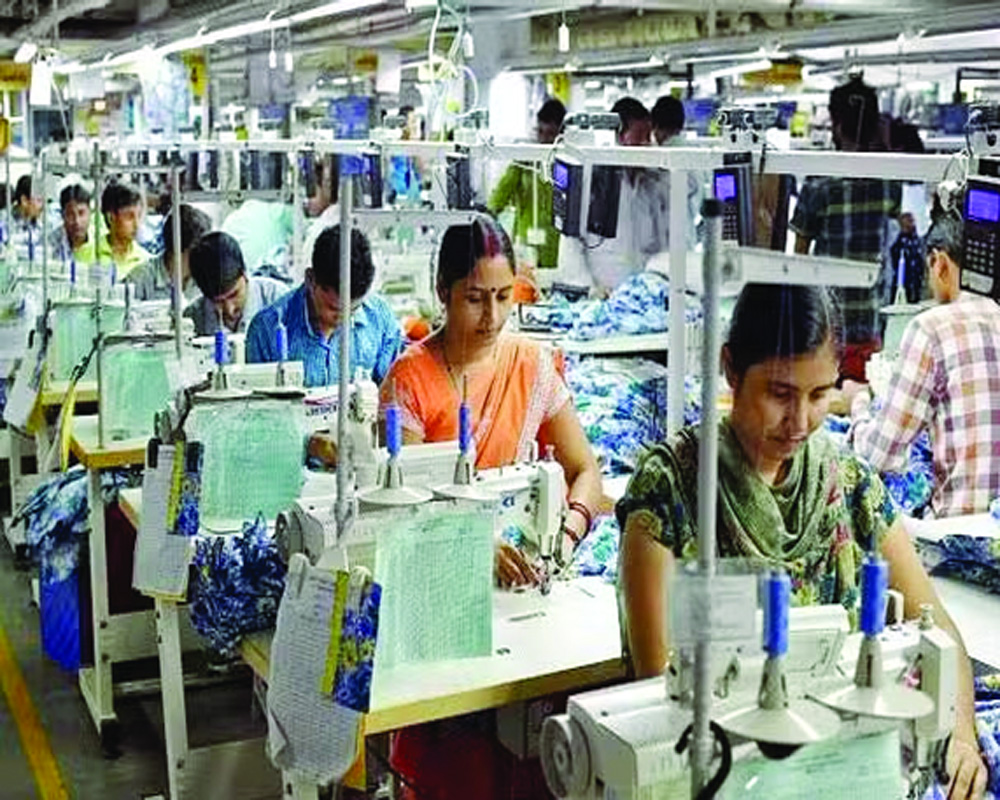
The Micro, Small and Medium Enterprises (MSME) sector, the backbone of the Indian economy, plays a crucial role in India’s socio-economic development by contributing significantly to employment, industrial production, and exports. Spanning across diverse industries, including agribusiness, manufacturing, retail and services, the MSME sector fosters entrepreneurship, innovation and growth. According to the Ministry of MSME, the sector comprises over 63 million enterprises, out of which 39 million are micro-enterprises.
This sector accounts for 30 per cent of the country’s GDP and contributes around 45 per cent to India’s total exports. In the fiscal year ending September 2024, the sector added 11 million jobs bringing total employment to about 121 million from 110 million in the previous fiscal. It is projected that the MSME sector will grow to USD 1 trillion by 2028 providing immense and diverse opportunities across industries and supply chain systems.
However, despite its significance, MSMEs in India are plagued by multiple challenges, such as inadequate infrastructure, regulatory and compliance burden, gaps in policy implementation, limited credit access, technological lag and digital illiteracy, delays in payments and cash flow problems, lack of skilled workforce, sustainability challenges and limited market reach.
To boost sectoral competitiveness and address these issues, the Union Budget 2025 introduced several reforms and policy measures designed to simplify regulations, promote digitalisation, ease financial constraints, enhance export promotion and support technological upgradation. Some Budget highlights are as follows:
Increase in Credit Guarantee cover
The Government has also doubled the Credit Guarantee cover for MSMEs. A credit Guarantee Scheme is a financial support mechanism created for MSMEs to access credit without the need for collateral. Under this scheme, the Government reduces the risk associated with lending to MSMEs by providing a guarantee. In Budget 2025, the credit guarantee cover for micro and small enterprises has increased to Rs 10 crore from an existing limit of Rs 5 crore. Similarly, for start-ups, this cover has increased to Rs 20 crore.
In addition, to boost global competitiveness, reporting MSMEs are now eligible for term loans up to Rs 20 crore.
ME-Card: Credit cards for MSMEs
To provide financial elbow-room to small businesses, Government has introduced a dedicated credit card for micro enterprises on the Udyam portal. With a credit limit of Rs 5 lakhs, this initiative will be helpful to small businesses in improving liquidity and managing their working capital requirements. Supporting inclusive entrepreneurship
To promote inclusive entrepreneurship and enhance participation of underrated communities in businesses, the Government has introduced a new financial inclusion scheme to provide targeted term loans of up to Rs 2 crore over the next five years to 5 lakh first-time women, Scheduled Caste (SC), and Scheduled Tribe (ST) entrepreneurs. This step in trying to create inclusive growth by empowering diverse entrepreneurs is a much-needed step to strengthen the MSME sector. Revision of MSME classification for continued benefits.
The criteria for classification of MSMEs has been enhanced. The investment threshold has been raised by 2.5X and turnover threshold by 2X to allow fast growing businesses to continue enjoying MSME benefits like tax incentives and priority sector lending. This move is likely to improve economic resilience, boost employment and strengthen global competitiveness.
BharatTradeNet (BTN): Streamlining trade processes Bharat TradeNet (BTN), a unified public platform for MSMEs, will be introduced by the government to integrate export documentation, financing solutions, and logistics, reducing trade complexities and making Indian MSMEs more competitive in global markets, thereby strengthening the digital ecosystem Introduction of National Manufacturing Mission The Union Budget 2025 introduced the National Manufacturing Mission which is an initiative aimed at boosting India’s manufacturing sector across MSMEs by helping reduce operational expenses, boosting innovation, technological adoption and market expansion, improving manufacturing capabilities and competitiveness, and developing skilled workforce.
Although Budget 2025 presents several notable steps supporting MSMEs, certain gaps still need to be addressed.
1. Complex Compliance and Regulatory Environment
Continued struggles with multiple compliances like GST filings, labour laws, and environmental clearances, is one of the major reasons for MSMEs not reach their growth potential. Simplifying regulatory environment and providing single-window clearance system for MSMEs can go a long way in strengthening MSMEs.
2. Export incentives and global integration:
With government taking a step in the right direction with BharatTradeNet (BTN) for export-oriented MSMEs, it can also look at addressing high logistics costs and tariff barriers. Export incentives, similar to that offered in countries like China and Vietnam, and further assistance to increase bilateral trade agreements with more countries can help MSMEs to gain access to global markets and become competitive.
3. Technology and Digital Adoption Gaps:
Although the emphasis in Budget 2025 was on technology upgradation, the initiative will take wings if governments invests in digital training programs and incentivise or subsidise technology infrastructure.
4. Access to credit and the challenge of last-mile financial inclusion:
For MSMEs, especially in rural areas access to formal credit is till elusive due to lack of awareness and complexity of the process.
The ME-card initiative aims to enhance credit access to manage their finances effectively, but its success depends on effective outreach and simplified application processes. To further enhance digital lending solutions and improve last-mile credit access, collaboration with fintech companies could be a solution.
5. High Cost of Credit and Delayed Payments: Efforts to increase the cover under the credit guarantee scheme may not be effective till the interest rates on MSME loans remain high. Making loans cheaper with lower interest rates can help MSMEs utilise this scheme better for their growth. A framework to incentivise large corporations for paying MSMEs on time can go a long way to ensure timely payments to MSMEs in turn increasing their liquidity.
Conclusion:
The Union Budget 2025 introduced several transformative reforms for MSMEs, focusing on manufacturing growth, credit accessibility, digitalisation and export facilitation. Initiatives like the ME-Card, enhanced credit guarantee, BharatTradeNet, National Manufacturing Mission, and expansion of SIDBI are some of the schemes to provide a strong foundation for MSME expansion and employment generation. However, to enhance the effect of the proposed reforms, the government must address several challenges that plague the MSME sector in India and focus on easing the regulatory framework, gaps in technology adoption, high credit costs, limited access to credit, delayed payments, and global trade barriers.
By effective implementation of the proposed reforms and relevant policies, India can realise the full potential of its MSME sector and drive continued economic growth and development.
(The writer is Associate Professor at Amity University, Noida. The views expressed are personal)