











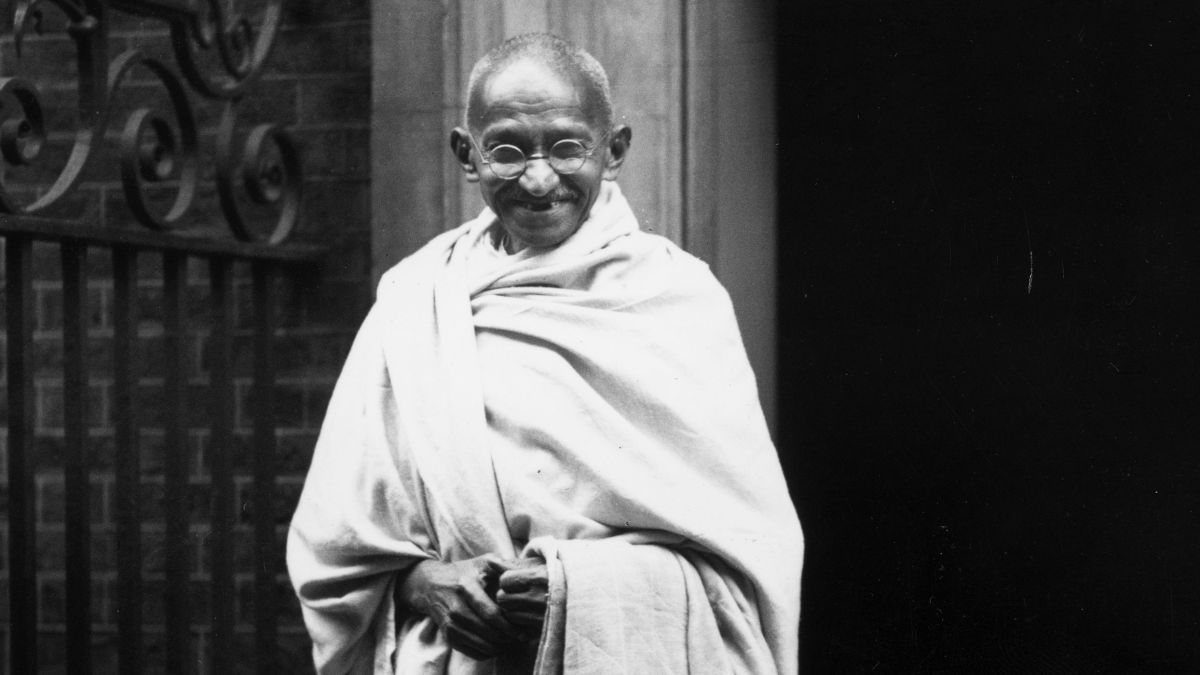
Gandhi’s statue in London has been vandalised—a stark reminder that in forsaking his values, humanity edges closer to violence, division, and chaos
In a popular satirical Hindi film “Lagae Raho Munna Bhai” Munna says, break every statue of Gandhi, remove his photos and do away with his name on streets; if you want to honour him, cherish his values, live by his ideals. This of course, came from a character who himself was a gangster trying to Masquerade as a professor. But the message was still loud and clear, we need Gandhi’s value even if you do not like him, for non-violence, compassion and empathy cannot ever go out of fashion. But unfortunately, the world is drifting away from these values.
Every year on October 2, India pauses to remember the birth of Mohandas Karamchand Gandhi, the Mahatma, whose ideas of truth and non-violence shaped not just a nation’s struggle for freedom but also offered the world a moral compass. It is no coincidence that the United Nations has designated this day as the International Day of Non-Violence. Yet, as the world prepares to mark this occasion, news from London casts a dark shadow. Just days before Gandhi Jayanti, the bronze statue of Gandhi at Tavistock Square — sculpted by Fredda Brilliant and unveiled in 1968 — was found defaced with disturbing anti-India graffiti. The High Commission of India in London has rightly called this act not mere vandalism, but a violent assault on Gandhi’s legacy and on the very idea of non-violence. That this happened in London, at a square known as a “peace park,” is both ironic and troubling.
The desecration of Gandhi’s statue symbolises the erosion of respect for values that once held humanity together: tolerance, compassion, and the ability to resolve differences without aggression. Gandhi believed that non-violence was not just a political tool but a way of life. In obliterating Gandhi, we risk obliterating the very possibility of peace. Sadly, the world around us today seems to be moving in the opposite direction. War continues to rage in Ukraine. Gaza burns under relentless conflict. South Asia, too, is not free from strife. Bangladesh and Nepal have witnessed unrest, while violent rhetoric increasingly passes for politics elsewhere.
Across continents, aggression is becoming the new normal, where nations are pitted against one another and individuals are encouraged to shout rather than listen. The vandalism in London, then, is a symptom of a larger malaise. It reflects how easily anger now spills into public life, how intolerance finds expression in desecration and violence.
Gandhi’s insistence on non-violence was not naïve idealism but a profound recognition that violence begets violence, leaving only bitterness in its wake. To honour him today is not merely to garland statues or sing bhajans, but to internalise his courage to stand against injustice without succumbing to rage. The defaced statue in London will soon be restored to dignity, but the greater challenge lies with us — to restore dignity to public life, to rebuild respect for difference, and to reassert the belief that peace is possible if we choose it.



