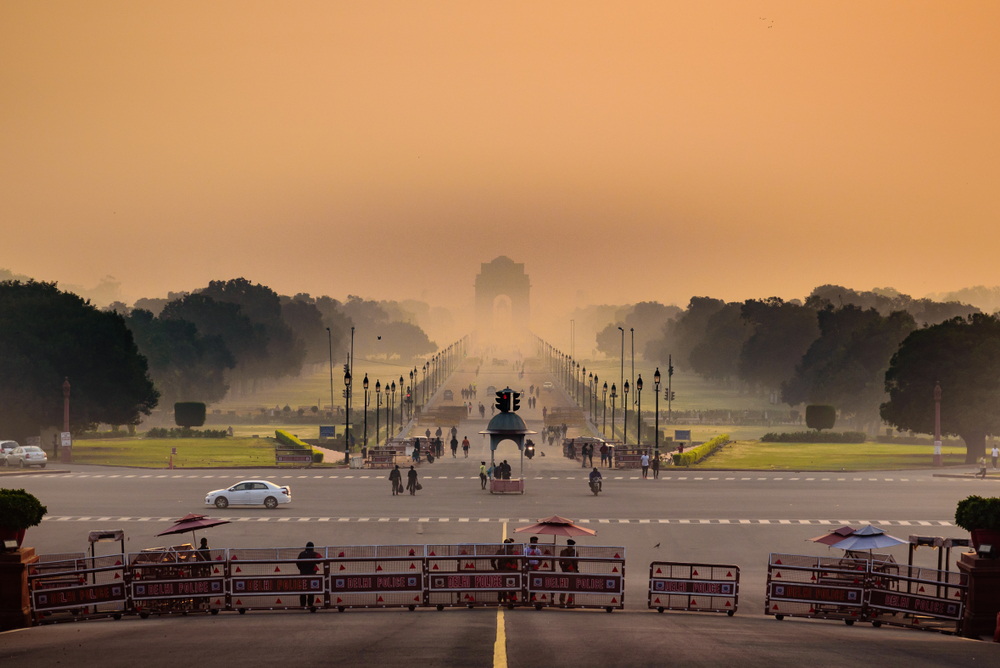
Come November, the city begins to resemble a gas chamber. The AQI worsens every winter, pollution levels soar, and relief remains nowhere in sight. What Delhiites endure daily has been starkly highlighted by a new analysis of Global Burden of Disease (GBD) data, which should serve as a wake-up call for both authorities and residents. The report paints a grim picture: in 2023, one in seven deaths in Delhi was linked to air pollution. With nearly 17,200 lives lost to toxic air, pollution has emerged not merely as an environmental nuisance but as the capital’s single largest health threat.
Each winter, as Delhi’s skyline fades under a thick, grey shroud, air pollution dominates headlines and claims lives. Yet the GBD data reveal that Delhi’s air crisis is not confined to November and December; it is a year-round killer, quietly eroding public health and shortening lives. Long-term exposure to fine particulate matter (PM2.5) is the primary culprit.
To put this in perspective, air pollution kills more people than high blood pressure, diabetes, or obesity. Yet official responses remain ambivalent, with authorities still debating whether air pollution can be “conclusively” linked to mortality. The data, however, speak for themselves.
Despite multiple interventions — from graded response plans and odd-even schemes to curbs on stubble burning - pollution-linked deaths have risen, from 15,786 in 2018 to 17,188 in 2023. This points to systemic failure: policies have remained reactive and seasonal, while the sources of pollution have multiplied and entrenched themselves in the city’s urban fabric.
Contrary to popular belief, Delhi’s crisis is not just about winter smog or Punjab’s stubble burning. CREA’s latest assessment finds crop residue burning contributed less than six per cent to Delhi’s PM2.5 levels this October. The real culprits are closer to home: vehicular emissions, industrial pollution, construction dust, and unchecked waste burning. Nearly half of Delhi’s air pollution originates from vehicles.
Air pollution must now be treated as a public health emergency, not merely an environmental concern. Framing it as a health issue demands stronger accountability, better monitoring, and targeted interventions akin to epidemic responses. Stricter vehicular emission norms, accelerated electrification of public transport, industrial emission audits, and dust control mechanisms must be implemented with the urgency of a pandemic response. The CREA findings are a wake-up call - one that demands not token measures, but transformative action.
The time for incremental measures is over; Delhi requires bold, systemic reforms. Citizens, authorities, and industry must act in unison to reclaim breathable air. Only sustained, coordinated action can halt the rise in pollution-related deaths and restore the city’s health. Delhi’s future depends on treating air quality as a non-negotiable public health priority.