Prime Minister Narendra Modi, in his address to the nation on 21 September, urged the people to promote swadeshi and buy indigenous goods. Prime Minister Modi’s appeal came amidst tariff tensions with the United States and growing challenges for India’s small and medium enterprises. In fact, India’s micro, small, and medium enterprises (MSMEs) have a very important role to play in strengthening local manufacturing and driving self-reliance in the wake of these challenges.
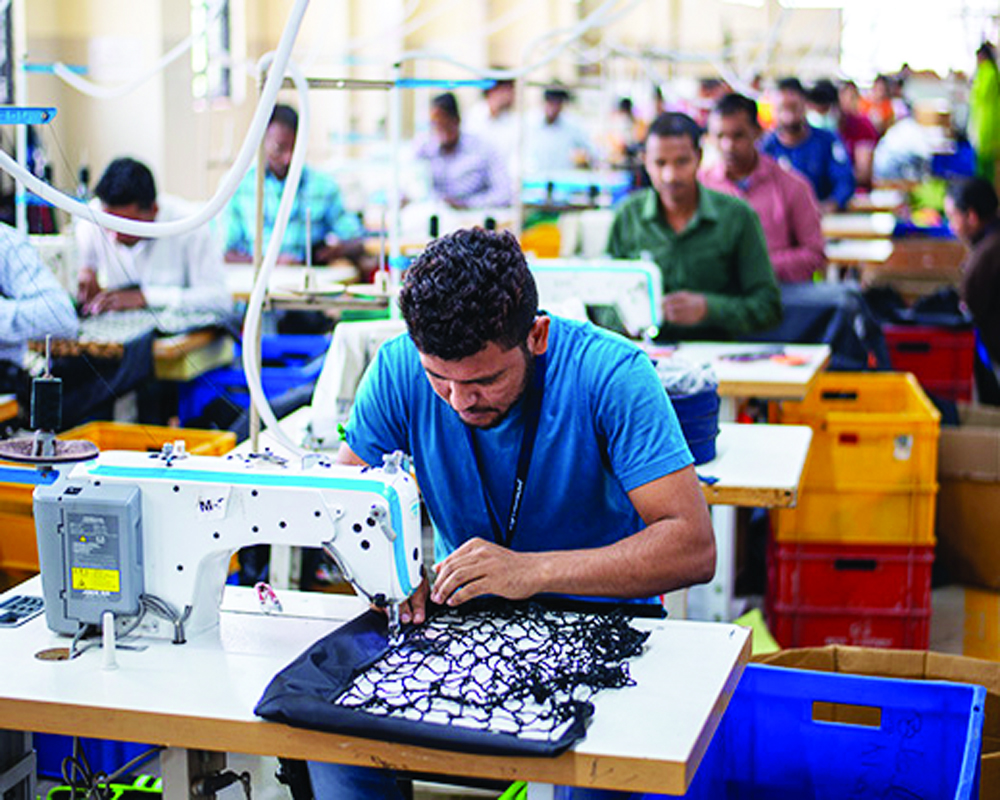
The most important issue is to have an empowered small and medium enterprises sector because that’s where the true strength of this country lies. There are over 7.34 crore MSMEs operational in India, employing approximately 26 crore individuals. If the entire sector is empowered and becomes a powerhouse, nobody can stop “Make in India”. The majority of MSMEs focus on selling in India, consuming material from India, and providing employment for India.
If we need to make “Atmanirbhar Bharat” a success and create a developed India by 2047, then this sector needs to be upskilled. This sector has the potential to generate employment for millions of unemployed youth in India. According to some estimates, the national youth unemployment rate in the 15-29 years category between April and June 2025 stood at 14.6 per cent. MSMEs account for over 90 per cent of all enterprises in the country and contribute nearly one-third of India’s GDP, along with around 44 per cent of exports. Yet, despite their significance, many MSMEs struggle when it comes to growth. The challenge they face is that they often do not know how to run their business. They try different ways to achieve their goals, but due to lack of proper training or guidance in many instances, this progress is slow. There is not enough attention on them, and we need to train these people. If they become strong, the country becomes strong.
The government has launched several initiatives to support MSMEs. The Udyam Registration Portal of the government has simplified the process of registration for small enterprises, thus making it easier for them to avail various facilities. Initiatives such as the Pradhan Mantri Mudra Yojana (PMMY), PM Employment Generation Programme (PMEGP), and the Credit Guarantee Fund Trust for Micro and Small Enterprises (CGTMSE) offer the MSMEs the much-needed funds, along with credit insurance and subsidies, which are very important for their growth. The government is also motivating the MSMEs to update and implement new technology and programmes such as the Credit Linked Capital Subsidy Scheme (CLCSS) and MSME Sustainable (ZED) Certification are helping in this regard. To help these businesses increase business and reach out to overseas markets, the government has started schemes such as the Production-Linked Incentive (PLI) Scheme and the Market Access Initiative (MAI).
However, there is a need to increase the outreach to these MSMEs and create awareness among them about the benefits of these schemes, especially in rural areas. In addition to the central government, the state governments also have an important role, providing grants, skill development initiatives, and helping them build market linkages. The government has taken various steps in successive budgets to ensure small businesses are able to avail themselves of higher credit limits, quicker loans, and access to digital tools.
With proper training and upgrading of their skills, these small and medium businesses can be empowered to grow exponentially. As I work closely with the SME sector, I am certain when I say, in majority of instances, they are not even aware of how to grow themselves.
They have the potential, but they need to be guided in the right direction, along with providing them with training and entrepreneurship development skills. The MSME sector is the backbone of India’s economy and key to achieving the goals of Make in India and a self-reliant economy.
The writer is leading business coach, and founder of Business Coaching India