











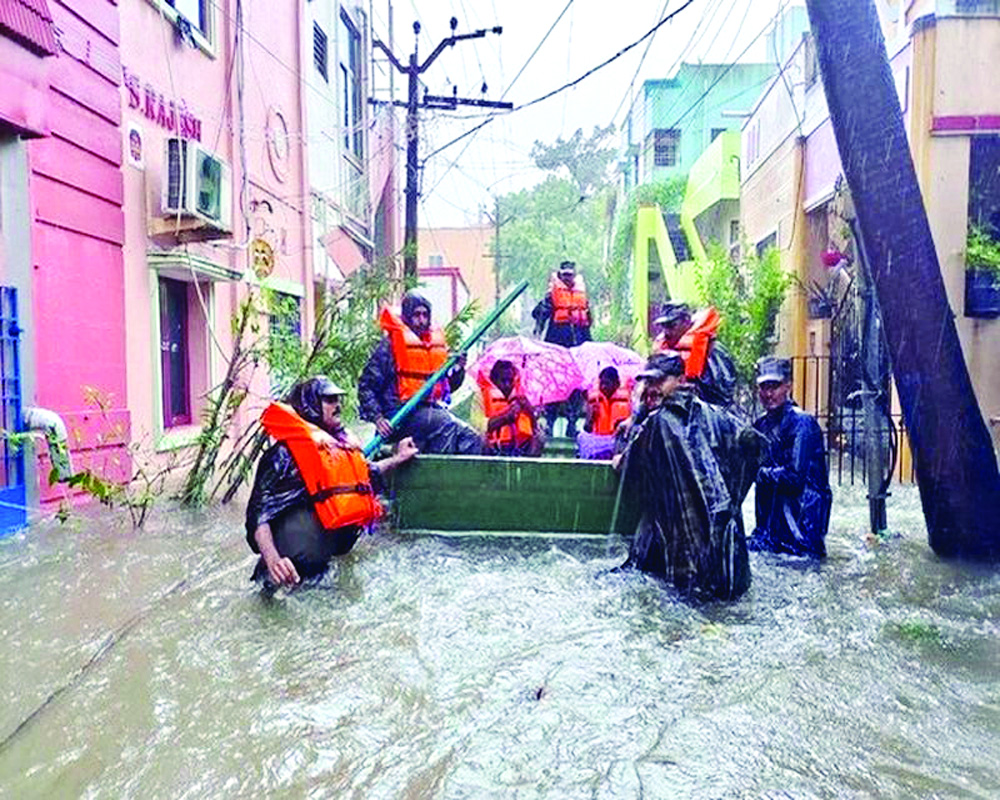
India’s preparedness continues to fall short of international benchmarks. With summer already showing signs of strain and systemic failure, the urgent need for a proactive, coordinated, and accountable disaster management strategy has never been clearer
India because of its varied geography, location, geological and climatic conditions coupled with its ‘reactive approach’ in dealing with things is prone to natural and other disasters. Time and again the national disaster response has not been at all commensurate with the desired level of preparedness as well as, technology and swift action. Our administrative system takes action and rises from slumber only when disasters happen. Every year time and again seasonal disasters occur and several lives are lost as also huge loss of property and life-sustaining resources.
The governance for disaster management during the last few years has improved after the creation of the National Disaster Management Authority (NDMA) but it falls short of the level of international standards. Take for example the recent Pahalgaon terrorist attack on 22nd April 2025 in which 26 innocent Hindu lives were brutally killed by Pakistan-sponsored terrorists by first asking about their religion. It was an attack on the soul of India but the administration there miserably failed to plan to prevent such attacks on tourist spots in Kashmir, even as in major tourist spots elsewhere in the country security arrangements are made to oversee law and order and all who matter in running security apparatus in Jammu and Kashmir know full well that Kashmir is always on the radar of Pakistan sponsored terrorists. It was a well-known fact that last year more than 2.35 crore tourists visited Kashmir and the government opened all tourist places without making any arrangements for the security of people.
Whatever, the political rhetoric about peace returning in Kashmir after the aftermath of abrogating Article 370, all Indians were sure that terrorists have been striking at will in Kashmir and Jammu as several cases of civilian killings were witnessed now and then. There was no coordination between the state and central intelligence agencies though intelligence inputs were indicating terrorist strike. In an era of modern technological innovation, there should not be collateral human loss of our armed forces during search operations to tackle the terrorists. We have a very professional Army no doubt but we need to learn a lesson or two from the Israeli Army and their leadership even though they too have a divided coalition polity. The state and central agencies failed to apprehend the local support to terrorists and Islamists not only in Kashmir but all over as the ecosystem that supports anti-national forces is yet to be given a fatal blow as they gleefully carry out their operations.
There have been talks of hunting down the perpetrators and their supporters for the last 35 years but with minimal lasting success as Pakistan keeps blackmailing about the use of their clandestinely achieved nuclear power status. This is so far about the threat to our national security. A solid standard operating procedure along with accountability and well-defined coordinated responsibility must be enforced.
The government also committed hara-kiri by opting for an early election as terrorist sympathisers also won and boosted their morale. The government should have told all who matter in clear terms not to have a ‘holier than thou’ approach on national security matters when the direction to hold elections and delimitation was carried out. Unless total annihilation of terrorism is carried out all such political activities should be suspended as politicians tend to confuse the issue for selfish electoral gains.
Let us discuss the other disasters looming large in the coming months. The coming summer is showing its fangs. Only a well-planned strategy can help prevent life and property losses. But what Delhi-NCR saw on 2nd May 2025 a severe thunderstorm, gusty winds, hails and rains that choked the roads with fallen trees and water logging killing 6 people in Delhi proves that no lesson has been learnt. The roadside trees fell as a pack of cards because for the last many years, the environmentalists have been arguing against the concretisation of soil around trees and pavements which dries up moisture, and trees become weak as their roots cannot spread and do not get water.
The weather pattern and westerly winds coupled with rising temperatures due to climate change are making flying challenging as has been noticed for many days in the last 15 days. A concerted pinpointed strategy is the need of the hour. India’s summer and monsoon seasons in 2025 are poised to aggravate challenges due to climate change, population pressures, poor planning, and systemic inefficiencies.
The issues needing attention are heatwaves, water scarcity, flooding, agricultural disruptions, and health risks as their intensity and frequency are increasing every year. While some measures are in place, India’s response remains inadequate, and at best policies are reactive, inadequate investment, and bureaucratic inertia with a lack of accountability.
The second important issue which need to be addressed is how to deal with Heat Island effects and Heat strokes. It is music to hear to notice that the Delhi Chief Minister had the other day proposed a 3 3-hour break from 12 PM to 3 PM for the labourers working on roads and construction works. Last year during 2024 the country experienced a severe heatwave, resulting in more than 700 reported heatstroke deaths across 17 states, according to the “Heat Watch 2024†report. It also identified around 40,000 cases of heatstroke. What this report misses is the actual data which is several times more as the reporting mechanism does not cover all such deaths in rural areas.
There are instances of heat island effects in cities mainly due to factors like reduced vegetation, impervious surfaces concrete pavement, and building materials that store and release heat. In this regard, the Metropolitan cities need to emulate the urban landscape management of Agartala city by the Tripura government where roads and pavements all over have been aesthetically redesigned with vegetation. The civic authorities must plan for at least 20 heat waves this season for each city and proper water management and availability in both urban and rural areas.
The heat-related mortality may increase in slums and rural hinterlands. A new building code be prepared by the civic bodies under the supervision of IDMA which should have provisions on how to deal with heat island effects and how greenery should be used to tackle it.
To deal with seasonal diseases like gastroenteritis and other viral diseases must have a plan of action. Yet another issue is managing the water resources in urban areas.
As more than 60 per cent of our districts in the country are water stressed. Cities like Bengaluru and Chennai may face “Day Zero†scenarios, where water supplies run dry, as seen in Cape Town in 2018. There is a complete absence of water use planning at the household level. We must prepare for rainwater harvesting and water harvesting at the landscape level in both urban and rural areas, especially in forestlands.
Tamil Nadu’s success in reviving water bodies should be replicated all over India so all other successful stories. The National Disaster Management Authority must be reformed and be given the role of policy planning and monitoring of disaster preparedness for the entire country and only qualified experts should be posted in it rather than making it a post-retirement sinecure for lobbyists.
(The author is the Chairman of the Centre for Resource Management and Environment. Views are personal)



